Style & wardrobe / A closer look
A Casual Office Capsule Wardrobe: Five Outfits Without Overbuying
Five workdays do not need five separate wardrobes. Build a few compatible combinations that fit the job, the commute and your body.

Start here
The useful answer
As an Amazon Associate, we earn from qualifying purchases. How our links work ↗
The useful answer
For a casual office capsule, confirm the dress code, keep two or three useful trouser options, and rotate compatible shirts or tops with a removable layer. Check seated fit and shoe compatibility before buying. Plan the five outfits from clothes you own first, then fill only the missing role. T-shirts, hoodies and denim need workplace approval rather than a universal office label.
Compare the buying routes ↓| Day or situation | Outfit formula | Practical check |
|---|---|---|
| Ordinary desk day | Plain shirt + straight trousers + clean suitable shoes | Seated comfort and shirt length |
| Internal meeting | Neat knit or layer + shirt + dark trousers | Comfort with the layer removed |
| Approved relaxed day | Plain tee + open shirt + permitted denim | Actual office rules and condition of clothing |
| Client-facing day | Your most polished approved combination | Specific meeting expectations |
| Commute-heavy day | Comfortable approved base + appropriate outerwear | Weather and footwear before appearance |
“Smart casual” can be an unhelpful instruction when you are standing in front of the wardrobe at seven in the morning. One office uses it to mean shirts and trousers; another welcomes plain T-shirts and jeans. A useful work wardrobe starts with the office you actually attend. It does not start with a shopping list that assumes every workplace has the same rules.
This guide is for a relaxed office where you have some choice, not a substitute for formal dress requirements or protective workwear. We will build five repeatable outfit formulas, then identify which purchases might genuinely help. The examples are researched models from our collection. We do not claim to have worn every garment through a workweek, and the illustrative scenes illustrate styling rather than exact fit.
1. Translate the dress code into visible decisions
Check the written policy first, then look at normal practice in roles similar to yours. Are jeans permitted? Are plain T-shirts acceptable on ordinary days but not in client meetings? Does footwear need to meet a safety requirement? Those questions are more useful than asking whether a garment is universally “office appropriate.” Context decides where the line sits.
If you are new, choose a slightly more adaptable starting outfit while you learn. A plain shirt and suitable trousers can be easier to adjust than a heavily branded top. That does not mean buying formal clothes you will never use. It means avoiding an extreme interpretation of a vague policy before you know what your workday involves.
List any days that have different expectations. A weekly client meeting, presentation or site visit may need a specific outfit or equipment. Keep that requirement separate from ordinary desk days. Trying to make every piece cover every situation can lead to expensive compromises. Sometimes one clearly defined meeting outfit is more practical than making the entire wardrobe more formal.
Now write a short rule set you can use while shopping: perhaps clean plain tops, dark non-distressed trousers, approved shoes and a removable indoor layer. The details will vary, but the result should be specific enough to reject unsuitable offers. A useful capsule reduces the number of decisions you make before work rather than creating a daily styling puzzle.
2. Start with trousers because you sit in them all day
Trousers affect the comfort and proportions of nearly every outfit. Try your existing pairs while seated, not only standing. Check the waistband, rise, seat and thigh room. If the waist feels acceptable only when you hold your stomach in, it is not a convincing eight-hour choice. If the belt must pull the waistband into large folds, the fit may need a different approach.
Choose two or three useful directions based on your office and laundry needs. Dark trousers can anchor a more polished day. A clean straight-leg jean may work where denim is allowed. A slimmer trouser can be an option if it still permits comfortable movement. You do not need all three simply because they appear in a capsule diagram; keep the pairs that already work.
Check the hem with the shoes you normally wear. Excess length can collect at the ankle, while an unexpectedly short hem may change the feel of the outfit. Decide whether an alteration is needed before counting a sale price as the final cost. A modest adjustment can be useful, but not every fit problem can be solved by hemming.
Our jeans versus work-pants guide separates the fit questions more fully. For this capsule, the key is compatibility: choose bottoms that work with several tops and your actual shoes. A trouser that only works with one special shirt is not automatically bad, but it contributes less to an easy weekday rotation.
3. Choose tops that still work when the layer comes off
A shirt or tee should make sense indoors on its own. If you overheat in a sweater and feel underdressed without it, the base outfit needs attention. Select a shirt cut and length that suit how you will wear it, tucked or untucked. A shirt designed for one approach may not sit as neatly in the other, especially when you move or sit.
Use compatible colors and manageable patterns. A pale blue or plain neutral shirt can connect several trouser colors without demanding exact matching. A pattern you enjoy can work too, provided it does not require a special set of partners. The aim is not to remove personality. It is to make most tops work with more than one pair of trousers.
If T-shirts are allowed, check fabric, opacity, collar and fit rather than relying on a heavyweight label. A roomy workwear tee can feel casual and substantial, but it is not automatically the right shape under a fitted shirt or suitable for every meeting. Measure a tee you already like and compare it correctly with the seller's chart. Our T-shirt measurement guide shows the distinction between body and garment measurements.
Plan enough clean tops for your real laundry cycle. Repeating a silhouette is fine; needing to wear an unclean garment because the capsule count was too strict is not useful. If you commute actively or work in a warm room, your rotation may need more basics than a desk-only example. Let hygiene, comfort and care requirements set the quantity.
4. Add one layer with a clear purpose
A useful indoor layer handles temperature changes and adds another outfit option. It might be a neat sweater, cardigan, overshirt or other approved garment. Choose it for the office temperature and the base layers underneath. A bulky hoodie may be comfortable at home but unsuitable for a particular office or awkward under a fitted outer coat.
Try the layer over at least two shirts before buying. Check the shoulders, sleeves and body length while seated and reaching forward. If you need to size up dramatically to fit one unusually bulky base, consider whether that base belongs in the capsule. Layering works better when the pieces are designed to coexist rather than merely fitting individually.
Consider where the layer goes when you remove it. A light layer that fits your bag may be more useful for a changing commute than a heavy item you have to carry in your arms. If you keep a layer at work, choose one that works with the rest of your rotation. The everyday routine should be part of the choice, not an afterthought.
Do not confuse an indoor layer with weather protection. Rain, cold and exposure can require appropriate outerwear and footwear. The fact that a work shirt has sturdy-looking fabric does not establish insulation or waterproofing. Build the outside and inside parts of the outfit separately, then check that the complete combination moves comfortably.
5. Plan Monday and Tuesday from the same foundation
For Monday, use a plain shirt, your most reliable dark trousers and clean shoes permitted by the office. Add the indoor layer only if needed. This is the reference outfit: something that feels comfortable and gives you one fewer thing to think about. It should not depend on a new purchase if your existing clothes already do the job.
For Tuesday, change the top and keep the same trouser direction if the garment is clean and appropriate to repeat. A different shirt color or a neat knit can make the outfit feel distinct without requiring another pair of shoes. Repeating a useful pair of trousers is normal; the capsule is not a challenge to make every day visibly unrelated to the previous one.
Check the proportion of both outfits. If one shirt is much longer or roomier, it may need a different approach to tucking or layering. Do not assume every top becomes interchangeable because the color matches. Body length, sleeve shape and fabric weight affect the result. Take an ordinary photograph if you find it hard to judge the combination in a mirror.
Write down why these two outfits work. Perhaps the trousers have enough seated room, the shirts stay comfortable indoors and the shoes handle the commute. Those reasons become buying criteria later. When you see a new garment, ask whether it improves one of those jobs or simply adds another version of something already solved.
6. Make Wednesday, Thursday and Friday respond to real needs
For Wednesday, consider a relaxed formula only if your office permits it: a plain tee under an open shirt with clean approved denim or work trousers. This can be useful for an ordinary desk day, but the open layer should not be a way to hide an unsuitable base. If the tee is not acceptable on its own, choose a different base for a warm room.
For Thursday, prepare for the more polished part of your week. Use your neatest approved shirt-and-trouser combination, suitable shoes and a layer that does not overwhelm the outfit. If the meeting has specific requirements, follow them. You do not need to buy a blazer simply because the word “meeting” appears; equally, a casual work shirt is not a universal replacement for formal attire.
For Friday, return to a comfortable combination that suits the actual schedule. If the day includes a long commute, prioritize movement and appropriate outerwear. If there is an after-work plan, a clean adaptable shirt may be enough. Avoid treating Friday as permission to ignore the policy or as a reason to buy an entirely separate weekend wardrobe.
Lay out all five formulas together. Look for a missing role rather than five empty shopping baskets. You may already have the trousers and shoes, but lack two compatible tops. Or the tops may be fine while every trouser feels uncomfortable when seated. The gap is the purchase opportunity. Everything else can stay in the wardrobe and keep working.
7. Compare concrete pieces without treating them as uniforms
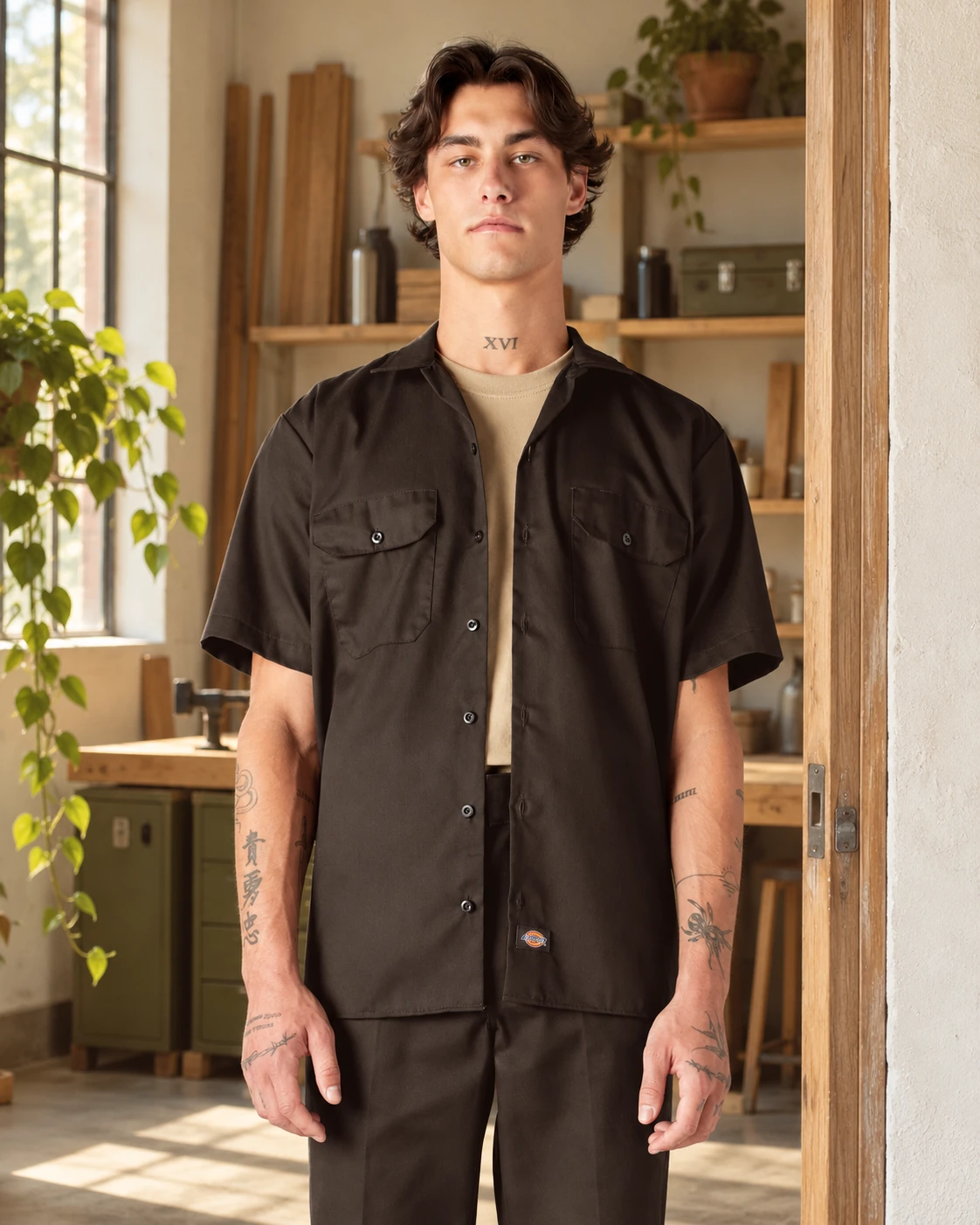
The Dickies 1574 work shirt is one option for a relaxed workwear-influenced office. Check the exact fabric, fit and color in the published brand information, and compare its length with how you intend to wear it. Consider it if its structure fits your style. Pass if your office expects a more formal shirt or if the cut does not sit comfortably on your body.
The Dickies 874 is a separate trouser direction. Its workwear association does not make it universally suitable for office clothing or protective work. Check the exact version, waist, inseam and fabric. A trouser can look neat in a photograph yet feel wrong at the rise or thigh. Use the fit checklist rather than buying it simply because it is a familiar basic.
Levi's 511 Slim jeans offer a slimmer denim route where jeans are allowed. The specific Throttle reference is the right place to check the selected construction and care. Pass if the cut restricts seated movement or if denim is not permitted. “Slim” is a shape description, not a promise that it will flatter every body or suit every task.
The Carhartt K87 is a loose-fit pocket-tee route for offices that allow that level of casual clothing. Check the selected color's fabric and the size chart. It can also remain a weekend piece if your office does not permit it. None of these examples needs to be in every capsule, and clothes you already own can fill the same roles.
8. Make care and storage part of the plan
Read the care label before keeping a garment. If the required washing, drying or pressing routine does not fit your week, consider another option. A shirt that looks easy in a product image may need more attention than you want to give it. The most useful basic is often the one you can keep presentable consistently, not the one with the most impressive fabric description.
Build a laundry schedule around the rotation, with enough clean tops and suitable bottoms to cover delays. Avoid washing instructions borrowed from a different fabric or colorway. Our black-clothing care guide explains how to distinguish fading from residue and follow the actual label. Do not assume every dark garment benefits from the same detergent, temperature or drying method.
Store ready-to-wear outfits where you can see them. Repair a loose button before it becomes a morning problem, and set aside anything that needs attention. Keeping useful clothes in service can make the capsule more effective than adding new pieces. A tidy rail is helpful when it makes the usable options visible rather than hiding a large pile of unresolved fit or care problems.
Review the rotation after two working weeks. Note which combinations felt natural, which needed constant adjustment and which never left the hanger. If an item is unused, ask why before purchasing another color. The answer might be a dress-code mismatch, an uncomfortable collar or a fabric that feels too warm. A specific explanation helps you buy better next time.
9. Buy the missing role, then stop
Before ordering, name the role the item will fill and two outfits it will complete. Check the exact reference, selected size, color, fabric and seller. Our Amazon searches may show multiple variants or unrelated products, so compare the listing with the brand information. Do not let the first result or a discount decide the fit for you.
Allow for required alterations and delivery in the budget. Read the actual return conditions before washing, hemming or removing tags. On arrival, try the garment with the trousers, shoes and layer it is meant to join. Sit and move normally. A standalone mirror impression is useful, but the complete work outfit is the test that matters.
If you are between sizes, use the brand's measurement method and advice rather than guessing that all brands size the same way. If an offer lacks enough information, ask a precise question or choose a clearer listing. A purchase that takes slightly longer to verify can save a week of awkward clothes and another return parcel.
Once the five formulas work, use them. You can change a color, add a personal detail or adapt for weather without rebuilding the whole plan. The purpose of a casual office capsule is to make ordinary mornings easier and spending more intentional. If it gives you comfortable clothes and a few spare minutes before leaving, it is doing its job.
Before you decide
Common questions
Are T-shirts suitable for a casual office capsule?
Only where the workplace permits them. Check condition, opacity, fit and the expectations for meetings. A plain tee can be useful in one office and unsuitable in another.
Do I need five pairs of trousers for five days?
Not necessarily. The right quantity depends on cleanliness, activities, fabric care and laundry access. Plan usable outfit combinations and a reliable wash routine rather than buying one complete set for each weekday.
Should I buy every item in the examples?
No. They illustrate different roles and cuts. Keep existing clothes that work, then purchase only a missing role after checking fit, dress code and care requirements.
Featured in this guide
The next good question
Keep exploring.
 Read the story ↗
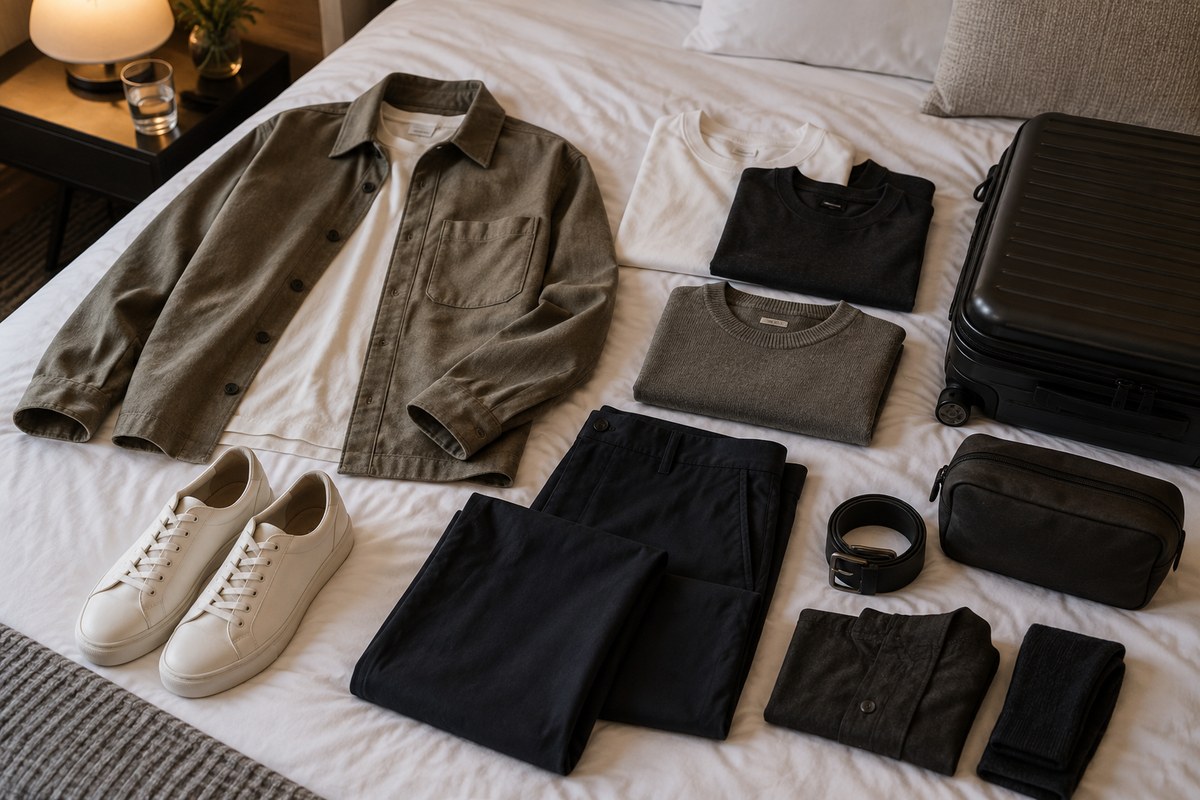
Men’s Travel Capsule Wardrobe: A Practical Packing List for a Week
A useful one-week travel capsule starts with the weather, activities and laundry access, then repeats a small set of compatible colors. A practical baseline is two trousers, one optional short, four or five tops, one versatile outer layer and two shoe choices. Adjust for formal plans, climate and baggage limits rather than packing a fixed internet checklist.
 Read the story ↗
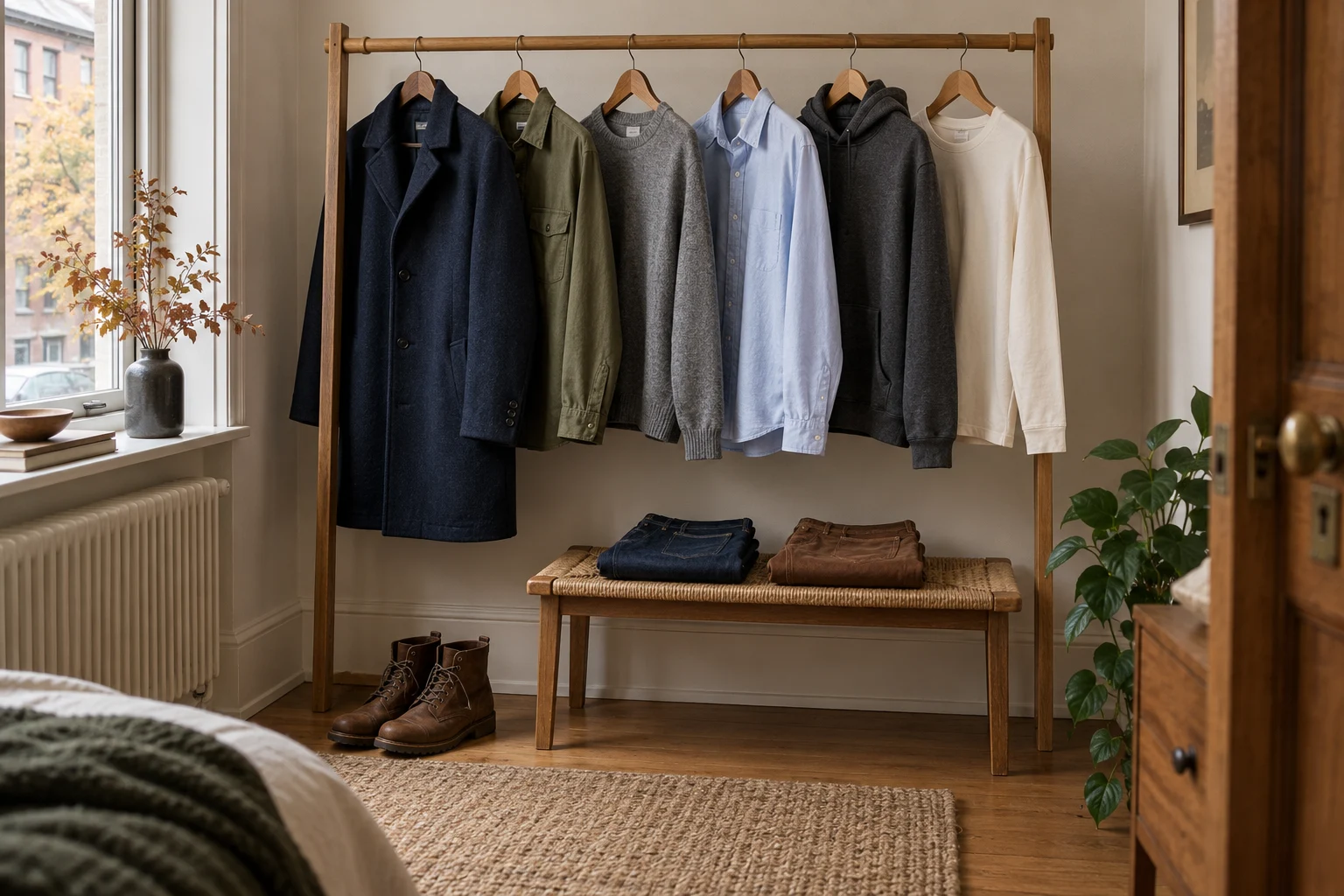
A Men’s Fall and Winter Capsule Wardrobe That Fits Your Actual Week
Warm enough outside, comfortable inside, and easy to put together on a normal morning. Build the wardrobe around those jobs.
 Read the story ↗
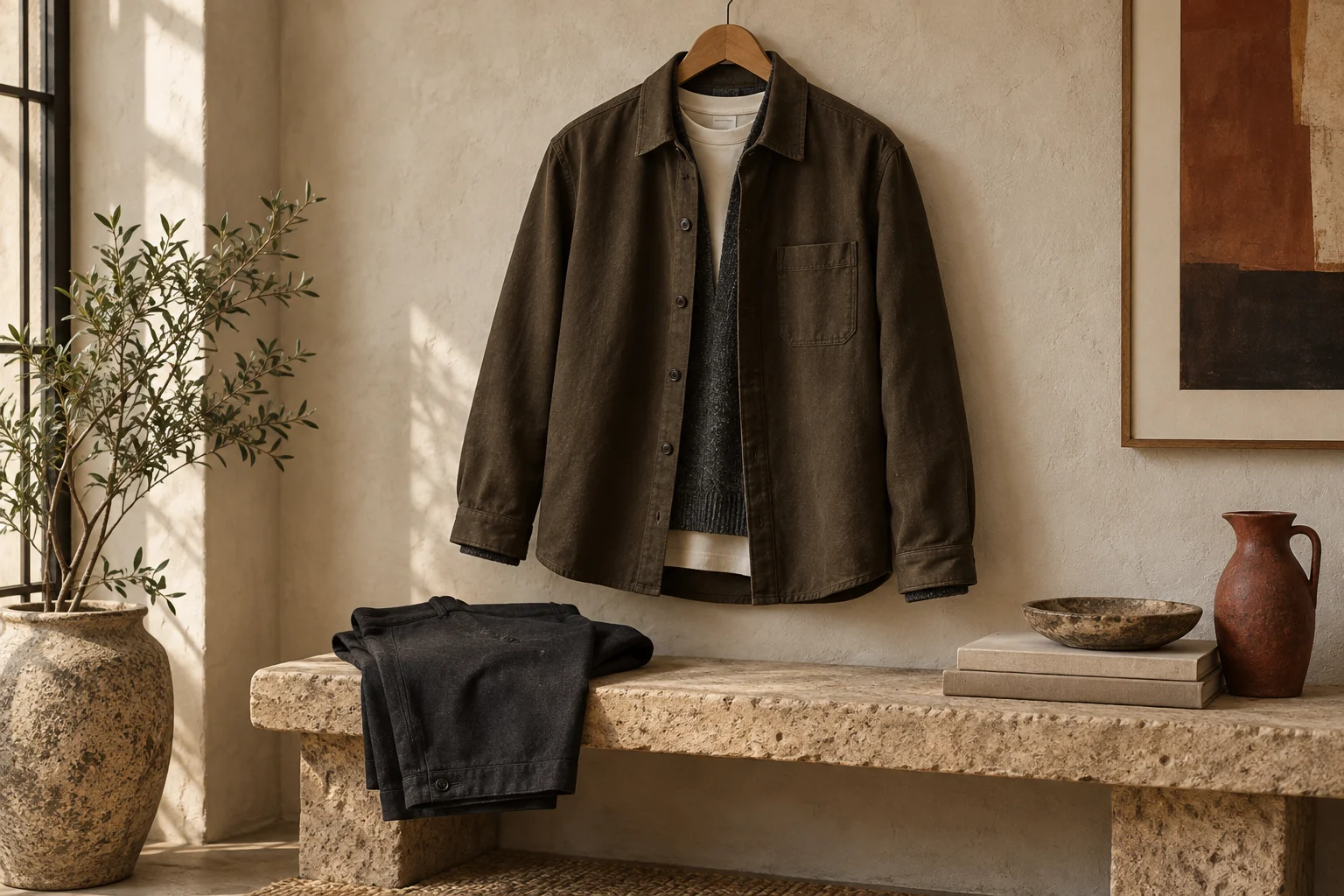
Overshirt Fit & Layering: A Capsule Wardrobe Guide
How one well-fitted overshirt can bridge a T-shirt and jacket without becoming another rarely worn layer.