Style & wardrobe / A closer look
A Men’s Fall and Winter Capsule Wardrobe That Fits Your Actual Week
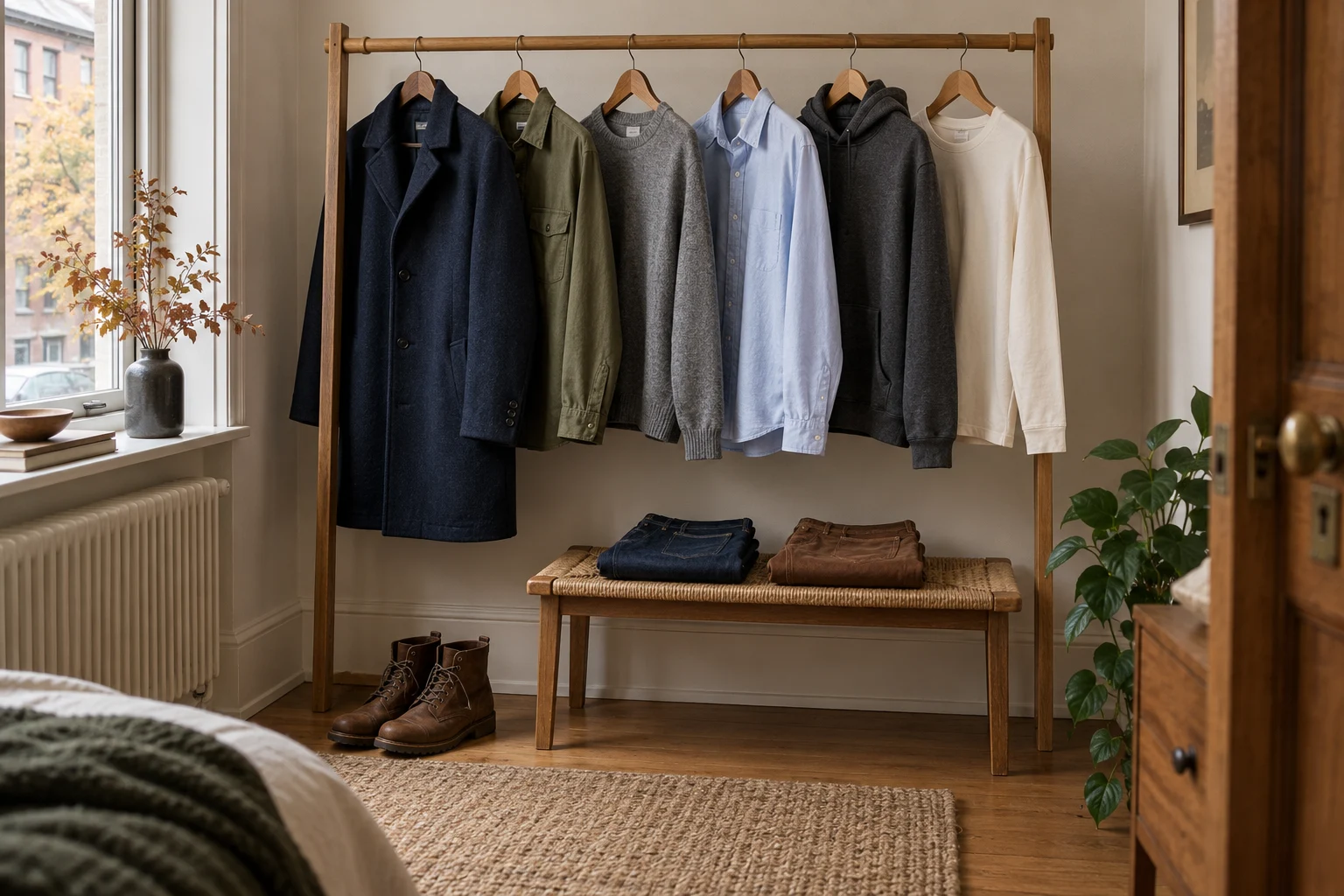
Warm enough outside, comfortable inside, and easy to put together on a normal morning. Build the wardrobe around those jobs.
Start here
The useful answer
As an Amazon Associate, we earn from qualifying purchases. How our links work ↗
The useful answer
Start a fall and winter capsule with your actual weather, commute and laundry schedule. Keep useful clothes you own, choose compatible colors, and check complete layered outfits before buying. Prioritize weather protection and footwear where needed, then fill gaps in everyday tops and trousers. A hoodie or overshirt is not a substitute for appropriate winter outerwear.
Compare the buying routes ↓| Part of the week | Clothing job | What to check |
|---|---|---|
| Cold outdoor commute | Weather protection with room for layers | Forecast, exposure time, outerwear and footwear suitability |
| Heated office or public transport | Easy temperature adjustment | Removable layers and a presentable base outfit |
| Casual weekends | Comfort and useful repeat wear | Movement, care and clothes already in rotation |
| Laundry day | Enough clean basics to bridge the gap | Actual wash and drying time, not a fixed capsule count |
A fall and winter wardrobe can fail in two opposite ways. You can own plenty of clothes and still feel cold on the way to work, or buy a heavy collection that leaves you overheating on the train. A useful capsule is not a magic number of garments. It is a small, workable set that fits your weather, week and washing routine.
You do not need to replace everything at the start of a season. Begin with what you already wear, then buy the missing part of the outfit. This guide offers a process and a few identifiable product examples from our collection. It is a researched wardrobe guide, not a claim that we tested every fabric in winter conditions. Climate and personal comfort remain essential to the decision.
1. Build a weather brief, not a seasonal mood board
Write down what “winter” means where you live. A short walk from a car to an office is different from waiting outside for a bus in rain and wind. Record typical conditions, the coldest conditions you reasonably need to prepare for, and how long you spend exposed. A photograph of a cozy sweatshirt does not establish whether it is suitable for that commute.
Think about the transitions too. You may leave a cold street, enter a warm train and spend the day in a heated office. Removable layers can help you adjust, but they need somewhere to go. Consider whether you can carry a layer in your bag, hang a coat at work or store shoes. The practical routine matters as much as the outfit's appearance.
For severe cold, wet conditions or specialist outdoor work, choose equipment appropriate to the actual exposure and any workplace requirements. This casual capsule does not replace technical clothing guidance. A cotton hoodie and an unlined shirt should not be presented as all-weather protection. Build the weather requirement first, then choose the everyday pieces that sit underneath it.
Turn the brief into a sentence: “I walk twenty minutes, ride a warm train and work in a casual office, so I need an outer layer that handles my local weather and an indoor outfit that works without it.” That sentence is more useful than copying a ten-piece list. It tells you what every layer is supposed to do.
2. Audit the clothes you already reach for
Take out the pieces you wore regularly last season. Put aside anything damaged, uncomfortable or unsuitable for your present routine, but do not discard it automatically. Some items may need a repair, a different layering partner or a fit adjustment. Others can remain useful for home or weekend tasks even if they no longer belong in a work outfit.
Try complete outfits rather than judging each garment alone. A sweater may be perfectly comfortable until you add a fitted coat. A shirt may look fine untucked but bunch when worn under a sweatshirt. Those interactions explain why a wardrobe full of individually attractive pieces can still be difficult to use. The capsule's job is to make combinations easier.
Make three piles: ready to wear, needs attention and genuine gap. A ready-to-wear pair of jeans is not less useful because it is not new. A shirt that needs a button is a small repair, not necessarily a shopping emergency. A missing weather-appropriate coat is a real gap. Keep those distinctions visible before browsing seasonal sales.
Write down the colors and shapes that already work. If most of your useful clothes are navy, gray and olive, a compatible new layer can create more outfits than a dramatic color with no partners. You can still add color deliberately. The point is to know whether a purchase extends the wardrobe you wear or starts another wardrobe you will have to fund.
3. Choose a small color system that leaves room for personality
Start with two or three colors you genuinely like wearing. They do not all need to be dark, but they should combine with your trousers, shoes and outerwear without much thought. Navy, gray, cream, brown and olive are common starting points because many people already own them. Your existing clothes are a better guide than somebody else's idea of the correct palette.
Use contrast intentionally. A pale shirt under a dark sweater can look clearer than several nearly matching dark layers. Different textures can add interest without adding more colors: smooth cotton, knitted fabric and denim can work together if their weight and shape suit the outfit. You do not need a new patterned garment every time a combination feels plain.
Check colors in ordinary daylight when possible. Product photographs and screens can change how a shade appears, and color names are not standardized across brands. “Charcoal” on one listing may not match another. If you need two items to match closely, do not assume the names prove it. A deliberate contrast can be easier to manage than an accidental almost-match.
Keep one place for a color or detail you enjoy. A scarf, shirt or knit can supply it without forcing every purchase to become a statement. A capsule should make getting dressed easier, not remove all preference. If you dislike every neutral in a proposed list, the list will not become useful simply because it looks organized on a page.
4. Give each layer a different job
Think of the first layer as the piece you can comfortably wear indoors. It should suit your skin, movement and dress code. A T-shirt, long-sleeve top or shirt can fill that role depending on the day. Avoid choosing a heavy base only because winter sounds like a reason for maximum thickness. You still need to feel comfortable once the coat comes off.
The middle layer adds adjustable warmth and shape. A sweater, sweatshirt or suitable overshirt can work, but they are not interchangeable. A bulky hoodie can crowd a fitted coat; a light work shirt may offer little warmth on its own. Try the exact combination you intend to wear. Raising your arms and sitting down tells you more than arranging garments neatly on a bed.
The outer layer handles the conditions your indoor outfit cannot. Check its actual intended use, room for the middle layer, closure and care. Do not infer waterproofing, insulation or wind performance from appearance. A coat that looks substantial in a photograph may have different construction from the one you imagine. If weather protection is the main need, documented suitability matters before styling.
Finally, include socks, footwear and any accessories needed for your conditions. They are not decorative afterthoughts if your commute depends on them. Choose footwear for the surface, weather and workplace, then check the trousers with those shoes. A complete outfit can be practical without every item being new or linked to a shopping page.
5. Plan enough clothes for your laundry rhythm
A capsule with too few clean basics creates a maintenance problem. Count the days between realistic laundry opportunities, including drying time and a small margin for unexpected events. The right number of tops depends on your work, activity and care requirements. There is no universal rule that five or ten pieces will cover every person's autumn and winter.
Keep the most frequently washed pieces easy to rotate. If your everyday shirt needs care you cannot provide during a busy week, it may be less useful than a simpler option. That does not make delicate clothing bad; it means the care routine is part of the purchase. Check the actual label and plan for it before deciding a garment is an effortless basic.
Avoid assuming that every cotton garment shrinks by the same percentage or every blended fabric stays unchanged. Construction, finishing and care matter. Our hoodie shrinkage guide explains how to compare measurements and reduce avoidable mistakes. Do not buy an uncomfortable size on the assumption that you can shrink it into exactly the fit you want.
Make space for drying and storage. A heavy item can take longer to dry than expected in a cool apartment, and crowding damp clothes into a wardrobe does not help. Buy quantities that fit your real routine. A useful capsule balances fewer decisions with enough redundancy to keep you dressed when the washing schedule slips.
6. Check layered fit with movement
Try the outfit from the inside out. Put on the base layer, then the middle layer and coat. Button or zip them normally. Sit, reach forward and lift your arms as you would while commuting or working. Watch for pulling at the shoulders, pressure under the arms and sleeves that become awkward when the layers move together.
Oversized does not automatically mean comfortable layering. Excess fabric can bunch inside a coat or make a shirt difficult to tuck. Equally, a close-fitting outer layer can compress the clothing underneath. Compare measurements where available, but remember that a body-size chart and finished-garment measurements describe different things. Use each chart as the brand intends rather than adding arbitrary allowances.
For trousers, test the waist and rise while seated. Winter layering may change how a tucked shirt or base layer feels at the waistband. Check the hem with the shoes you will wear, not barefoot in front of a mirror. A workable length and enough movement can make an ordinary pair more useful than a trendier cut that becomes annoying on a train seat.
If the outfit fails, identify which layer causes the problem before sizing everything up. A different shirt cut or lighter middle layer may solve it. If tailoring is an option, ask what can reasonably be changed and what it will cost. Do not assume a tailor can remake any garment economically or that a sale item remains a bargain after extensive alterations.
7. Use product examples as roles, not a compulsory basket
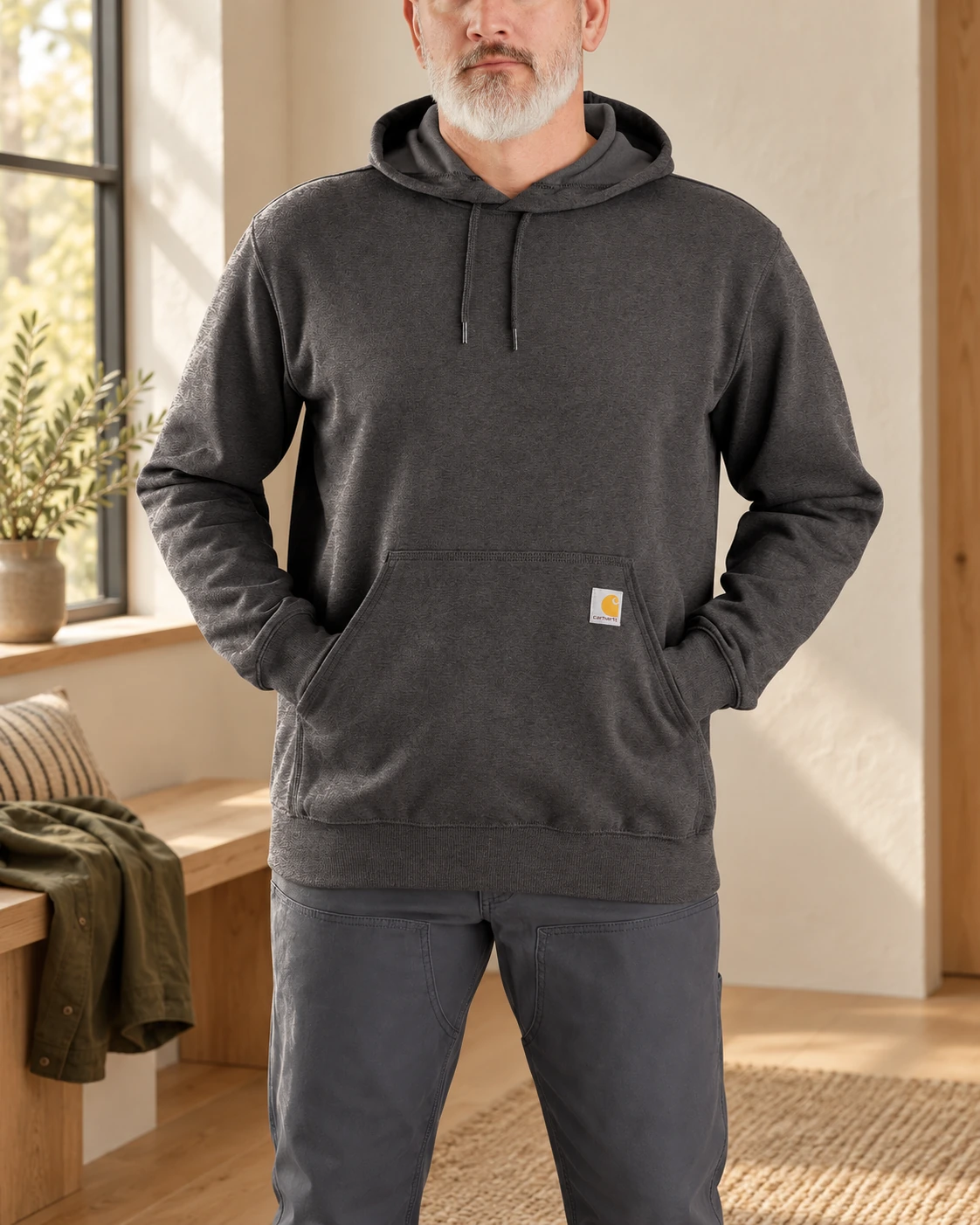
The Carhartt K121 is one casual hoodie route in our collection. Carhartt's current model information describes a loose-fit midweight sweatshirt, with fabric blend varying by color. Check the exact size, Regular or Tall option and selected color. Consider it if you want that relaxed shape; pass if your office or coat needs a neater, less bulky layer.
The Dickies 1574 work shirt is a different role: a casual shirt or light layering piece depending on how you wear it. Do not treat it as an insulated winter jacket. Confirm the exact version, measurements and fabric in the brand information linked from the Shop card. It can be useful when its workwear styling fits your wardrobe, not merely because it is described as durable.
Levi's 501 Original jeans are one straight-leg direction to compare with trousers you already own. The specific Dark Stonewash reference is more informative than the family name alone. Fit, fabric and finish can differ across offers. Pass if the rise, leg shape or workplace rules do not suit your actual use.
The Carhartt K87 pocket tee can serve as a casual base in the right setting, but a heavyweight label does not establish weather protection or universal comfort under layers. Compare the selected fabric and fit. None of these examples supplies a complete cold-weather wardrobe by itself. Keep your suitable existing coat, shoes and basics if they already solve those jobs.
8. Build three repeatable outfit formulas
For a mild casual workday, start with a plain shirt or tee, a removable sweater or overshirt, dark trousers and suitable shoes. Add the outer layer your weather requires. The useful feature is adjustability: the indoor outfit still works when the warm layer comes off. Make sure the workplace actually permits the casual pieces before treating the formula as office-ready.
For a colder commute, keep the indoor outfit manageable and let appropriate outerwear do the outdoor work. Do not stack several bulky casual tops simply to avoid choosing a suitable coat. Check that the coat fits over the intended middle layer and that your footwear matches the conditions. The right formula can look simple because the clothing has clearly separated jobs.
For a relaxed weekend, a comfortable sweatshirt, jeans or work trousers and appropriate footwear may cover the plan. Add weather protection rather than assuming a hood is enough. If the day includes a meal or visit where you want a different look, a clean shirt can change the feel without requiring an entirely separate outfit. Choose the formula around the activities, not a seasonal costume.
Photograph the combinations you like and keep them as a private reference. On a rushed morning, an ordinary photo of your own clothes is more useful than a polished mood board. If a purchase does not work in at least two realistic combinations, ask whether it fills a special need or simply duplicates something you already own.
9. Shop the gaps in a sensible order
Buy the most consequential gap first. If your commute lacks suitable weather protection, solve that before adding a third sweatshirt. If your trousers do not fit while seated, address fit before buying another color of the same problem. A capsule becomes useful when the missing link is fixed, not when the number of items matches a published checklist.
Set a total seasonal budget that includes any necessary alterations, delivery and care costs. Compare the exact variant and seller. Our Amazon searches can include other brands or versions, so match the reference before ordering. Read the actual return terms and avoid washing or altering an item before you understand how that affects your options. A discounted wrong size is still a wrong size.
On arrival, try the new piece with the actual outfit it is meant to complete. Check movement, color and the care label. Keep it only if it solves the gap you identified within the seller's conditions. Do not let a nice standalone photograph persuade you to buy several more items to make the first one useful.
Review the capsule after a few weeks of real weather. Note what you wear, what stays unused and what you repeatedly miss. That record will make the next seasonal change easier. The goal is not the smallest wardrobe on the internet. It is a wardrobe that gets you out of the house comfortably, appropriately and without another unnecessary shopping project.
Before you decide
Common questions
How many pieces belong in a fall and winter capsule?
Enough to cover your weather, activities and laundry schedule. Count useful complete outfits and clean basics rather than chasing a fixed number. Outerwear and footwear requirements can vary substantially by climate.
Can a hoodie replace a winter coat?
Only when the actual conditions and garment suitability make that reasonable. A casual hoodie is not automatically insulated, waterproof or appropriate for severe exposure. Choose outerwear for your local weather and time outdoors.
Should every capsule item be a neutral color?
No. Compatible colors help, but personal preference matters. Keep a small repeatable palette and add colors you enjoy when they work with your existing trousers, shoes and layers.
Featured in this guide
The next good question
Keep exploring.
 Read the story ↗
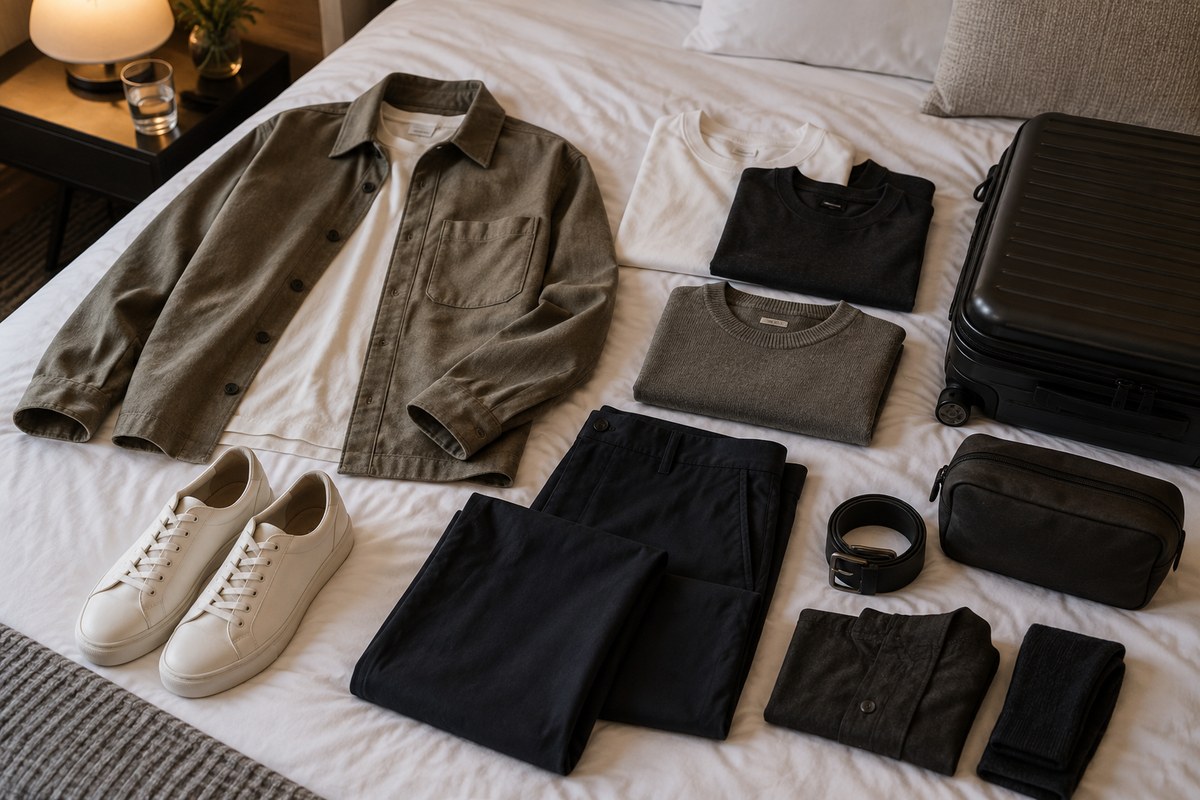
Men’s Travel Capsule Wardrobe: A Practical Packing List for a Week
A useful one-week travel capsule starts with the weather, activities and laundry access, then repeats a small set of compatible colors. A practical baseline is two trousers, one optional short, four or five tops, one versatile outer layer and two shoe choices. Adjust for formal plans, climate and baggage limits rather than packing a fixed internet checklist.
 Read the story ↗
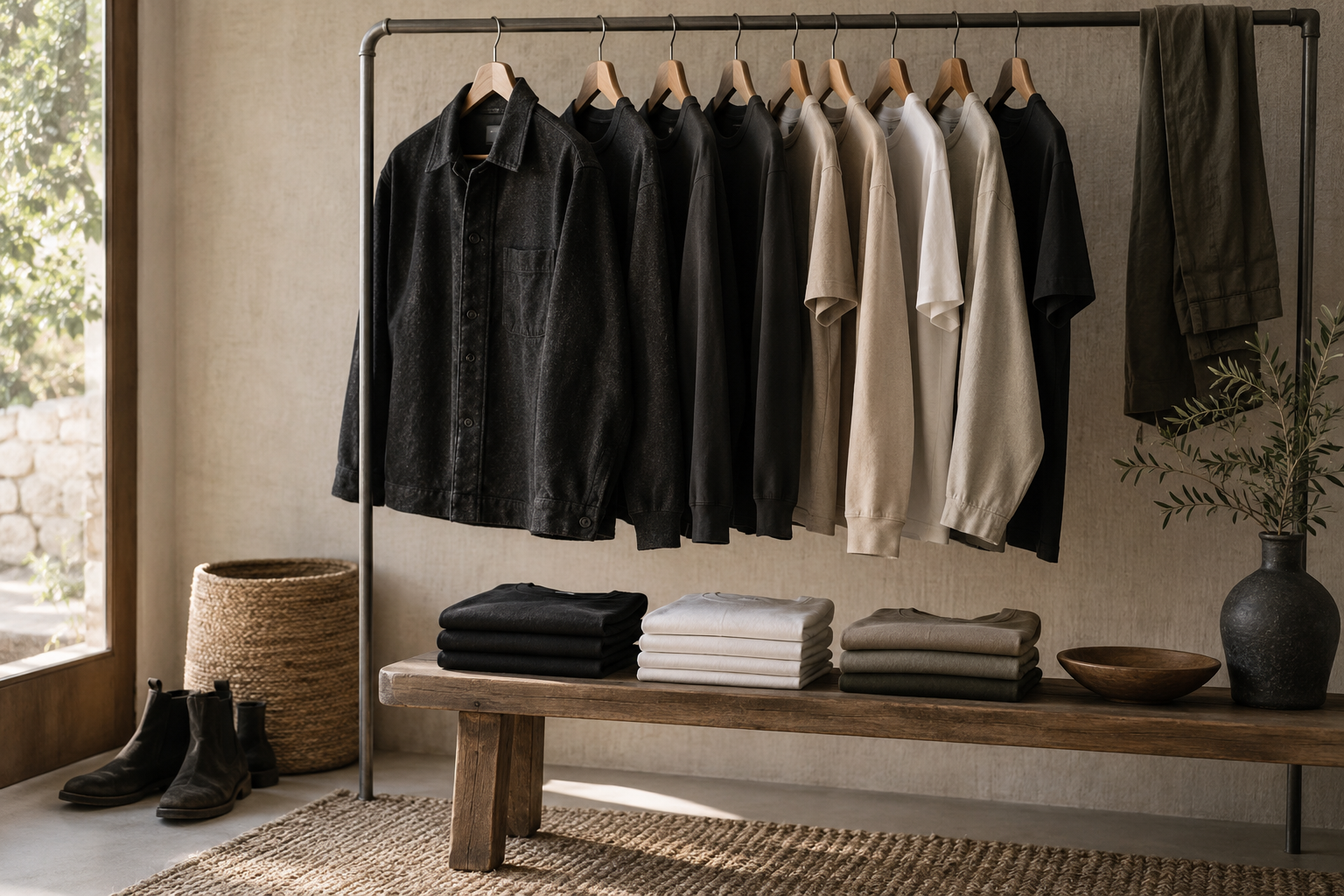
Men's Workwear Capsule Wardrobe 2026: 10 Built-to-Last Staples That Outlast Fast Fashion
With straight-leg denim replacing restrictive cuts and heavyweight workwear dominating modern menswear, building an indestructible wardrobe comes down to fabric density and structural durability. Here is an objective evaluation of 10 market benchmarks.
 Read the story ↗
A Casual Office Capsule Wardrobe: Five Outfits Without Overbuying
Five workdays do not need five separate wardrobes. Build a few compatible combinations that fit the job, the commute and your body.