Style & wardrobe / A closer look
How to Keep Black Clothes from Fading: A Care-Label-First Routine
Before adding a new laundry product, find out whether you are seeing lost color, a surface deposit or loose fibers.
Start here
Repeated care and wear can change the appearance of black fabric; no routine guarantees it will stay new forever. First distinguish faded color from removable residue or lint. Follow the exact care label, sort suitable garments together, use the detergent’s stated dose and choose an allowed drying method. Turning washable garments inside out and reducing unnecessary abrasion may help, but cannot restore lost dye.
As an Amazon Associate, we earn from qualifying purchases. How our links work ↗
1. Check what changed before treating the whole garment
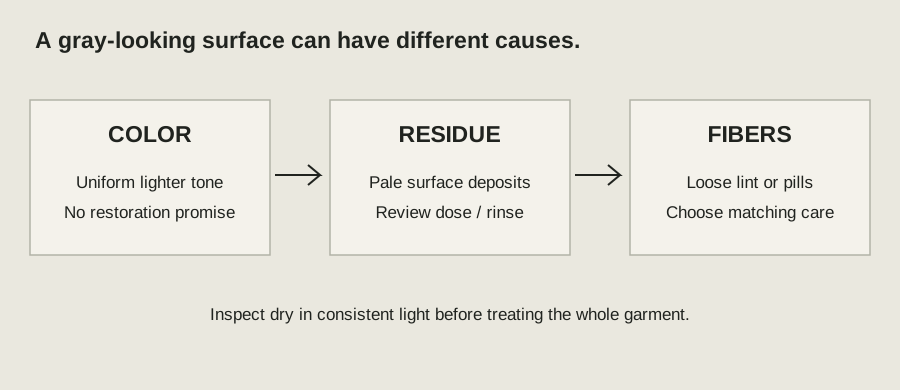
Inspect the shirt or hoodie fully dry in ordinary light. Is it uniformly lighter, covered in pale streaks, dotted with loose lint, or worn mainly at elbows and edges? Take a photograph in the same light before trying a new treatment. Different problems can produce the same initial description: “my black shirt looks gray.”
True loss of color is different from material sitting on the surface. The American Cleaning Institute's laundry troubleshooting resource includes detergent residue and lint as separate issues. Do not assume every pale mark needs dye, stronger detergent or more heat.
Look at an inconspicuous area and the seams for context, but avoid declaring a test result from color differences alone. Lighting, fabric texture and stretching can alter appearance. If the garment has a coating, special finish or dry-clean instruction, consult its maker before performing a home wash intended to remove a deposit.
Your dark-clothing care checklist
Use these checks alongside the detailed steps. Checkmarks last only for this open page.
Download checklist · TXT2. Let the garment and product labels set the routine
Read the care instructions for the complete garment. The fiber composition is useful, but it is not the care instruction. Prints, trims, linings and finishes can impose additional limits. Separate a machine-washable cotton tee from a black sweater that requires a different method, even if their colors match.
Then read the detergent label for dosage and intended use. Do not automatically use less than instructed in an attempt to preserve color, or more in an attempt to remove pale marks. The amount may depend on load size, soil and water conditions. If your previous dose was a guess, making it consistent is a useful first change.
A dark-clothing detergent may be an option when suitable for the garment and machine, but it does not establish that the old routine caused the problem or promise to restore lost color. Keep the first comparison simple. Switching detergent, wash program, load size and drying method together makes it harder to learn which change mattered.
3. Reduce unnecessary washing abrasion within the label
The American Cleaning Institute's guidance for dark clothes suggests measures such as washing suitable items inside out, using an appropriate shorter cycle and choosing cold water and air drying where permitted. Apply these within the garment's own instructions rather than treating them as universal care for every black textile.
Group compatible items so rough hardware or very different care needs do not undermine the routine. Deal with accessible closures as the garment maker advises. Avoid cramming the drum. A heavily packed load is difficult to wash and rinse consistently and does not become gentler simply because the color selection is correct.
Match cleaning to actual use. An odor-free garment briefly worn over another layer may not need the same treatment as workout clothing. A soiled garment still needs appropriate cleaning; color preservation is not a reason to leave stains untreated indefinitely. Follow approved spot-care advice for that fabric rather than rubbing an uncertain product into the visible front.
4. Treat drying as part of the same decision
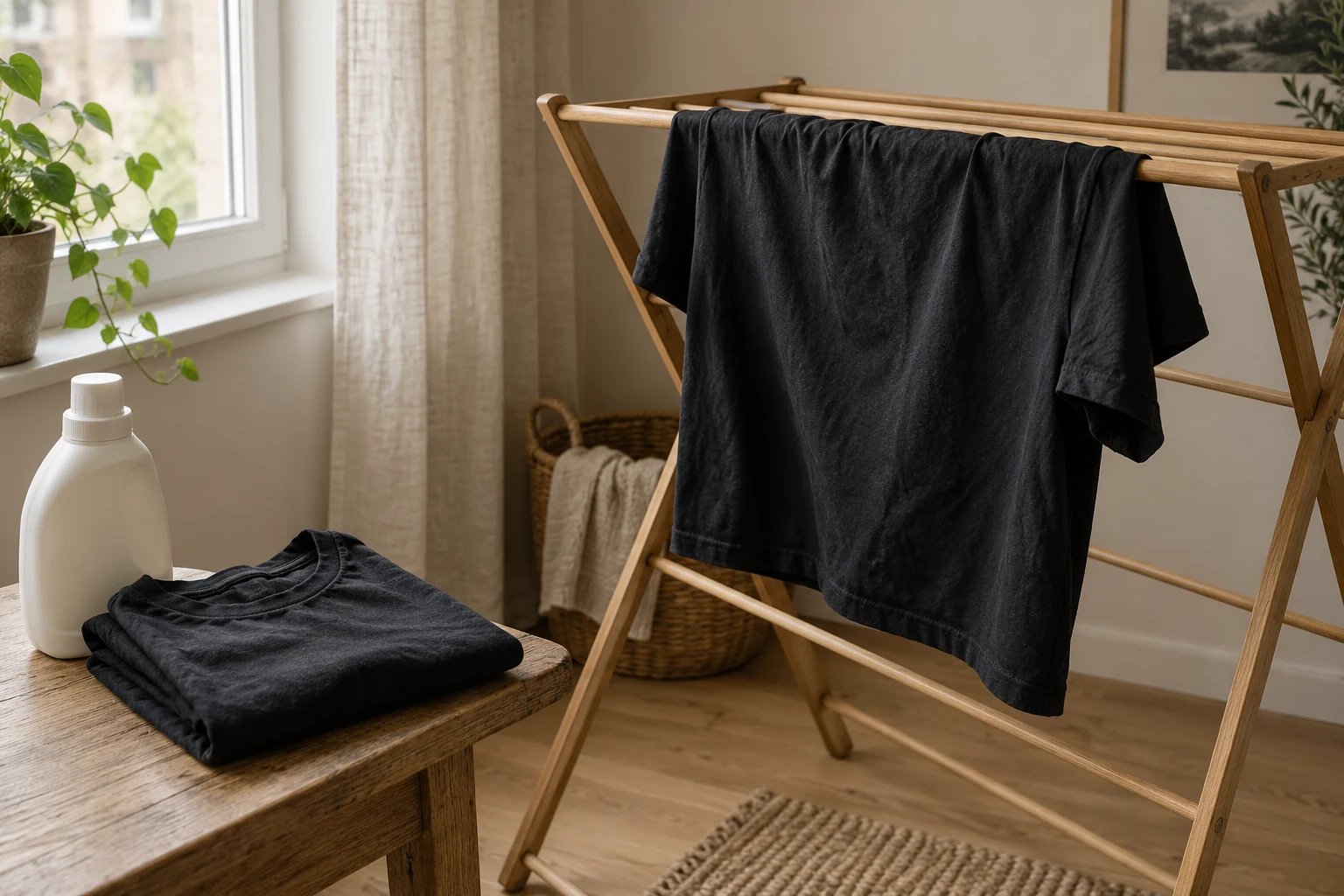
Check the drying symbols and written instruction. A wash-only change leaves half the routine unexamined. If air drying is allowed, choose a supported arrangement with adequate airflow and avoid prolonged strong direct sunlight when the maker cautions against it. A rack near a window is a scene, not proof that every garment should be sun-dried there.
If tumble drying is permitted, use the label's setting and avoid assuming extra time will improve the result. If flat drying is specified, support the item so its wet weight does not distort it. Care that helps the color but damages the fit is not a successful routine.
Let the clothing dry fully before putting it away. Compare the appearance only when it is dry and in the same light as your baseline. Damp black fabric can appear darker, making a supposed improvement disappear later. For a hoodie that also feels smaller, use our dimensional-change guide before attributing everything to fading.
5. If the problem looks like residue or lint
For suspected detergent residue, review the previous dose, load and cycle. Look for an appropriate rinse or rewash procedure in the garment and machine guidance. Do not add another household chemical to an unidentified deposit. A compatible routine with no excess product is a more interpretable check than a mixture of vinegar, dye and detergent.
For loose lint, use a garment-compatible removal method on a small area first. Do not repeatedly shave the entire surface to remove fibers that are not attached pills. Our pilling guide explains the difference between loose material and attached fiber balls.
| Observation | Next step |
|---|---|
| Pale streaks after washing | Review dosing and rinsing; confirm care instructions |
| Loose visible fibers | Test suitable gentle lint removal locally |
| Attached small balls | Assess fabric and an appropriate pilling method |
| Uniform lighter color | Do not expect lint removal to restore dye |
This table directs the next observation; it does not diagnose chemistry from a photograph. If a mark is unexplained or the fabric surface changes during a trial, stop and ask the garment maker.
6. Keep a small care record instead of chasing a guarantee
For a new black garment, save the care label and note the first routine you use. Record the wash program, detergent dose, load grouping and drying method. Photograph the garment dry in ordinary light. If its appearance changes suddenly, you will have a useful comparison rather than an impression based on an old product photograph.
If changing one permitted part of the routine improves removable marks, continue observing without calling it a cure for fading. If the color itself has changed, decide whether the garment still works for your wardrobe. A charcoal appearance can remain usable; restoration and recoloring are separate procedures that require fabric-specific advice.
When buying another black tee or hoodie, ask for its care requirements and consider whether they fit your actual household routine. A garment whose permitted drying method you cannot realistically follow may be a poor choice regardless of its initial color. Useful care is repeatable care, not a promise that a frequently worn fabric will look untouched forever.
For a local trial on removable surface material, record the area and the method and let the garment return to the same dry resting state before comparing it. If a pale deposit disappears but the cuffs remain lighter, you may be observing two issues at once. Continue to describe them separately. Do not increase the treatment strength across the whole garment simply because one small mark responded.
Questions readers ask
Will vinegar keep every black garment from fading?
We do not recommend a universal household recipe. Follow the garment and cleaning-product instructions and identify the problem first.
Can a lint roller restore faded dye?
No. Removing surface fibers can change appearance, but does not replace dye that has been lost.
Should every black garment be washed cold?
Use the exact care label. A color-based routine must still suit the fabric, construction and cleaning needs.
Sources and how this guide was prepared
This is a researched explanation and a practical owner checklist. We reviewed the official sources below on October 5, 2026; we have not performed a laboratory test or claimed firsthand ownership of every device discussed. Worked examples and conceptual diagrams are labeled. Workspace and wearing scenes provide context; use model documentation for specifications and fit. Check the manual and support guidance for your exact model.
- American Cleaning Institute: keeping dark clothes from fading
- American Cleaning Institute: laundering problems and solutions
- American Cleaning Institute: laundry products and detergents
Found a model-specific exception or an instruction that has changed? Use the site's contact information and include the model and official source so the guide can be corrected.
Continue with the relevant guide
The next good question
Keep exploring.
 Read the story ↗
How to Measure a T-Shirt for Online Shopping: Chest, Length and Shoulders
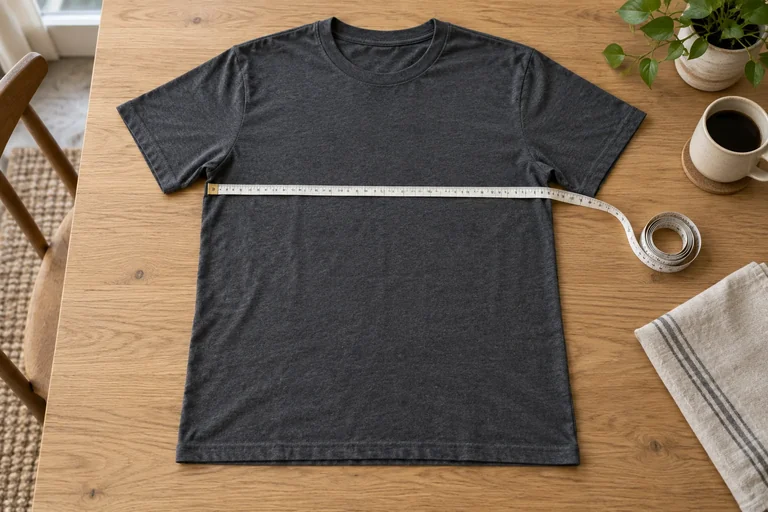
Your favorite washed tee is a useful size reference—as long as you measure it using the same definitions as the seller.
 Read the story ↗
Jeans or Work Pants for the Office? A Fit-First Buying Guide
A neat trouser that feels wrong after ten minutes is not a good office buy. Start with how you sit, move and dress, then choose the fabric.
 Read the story ↗
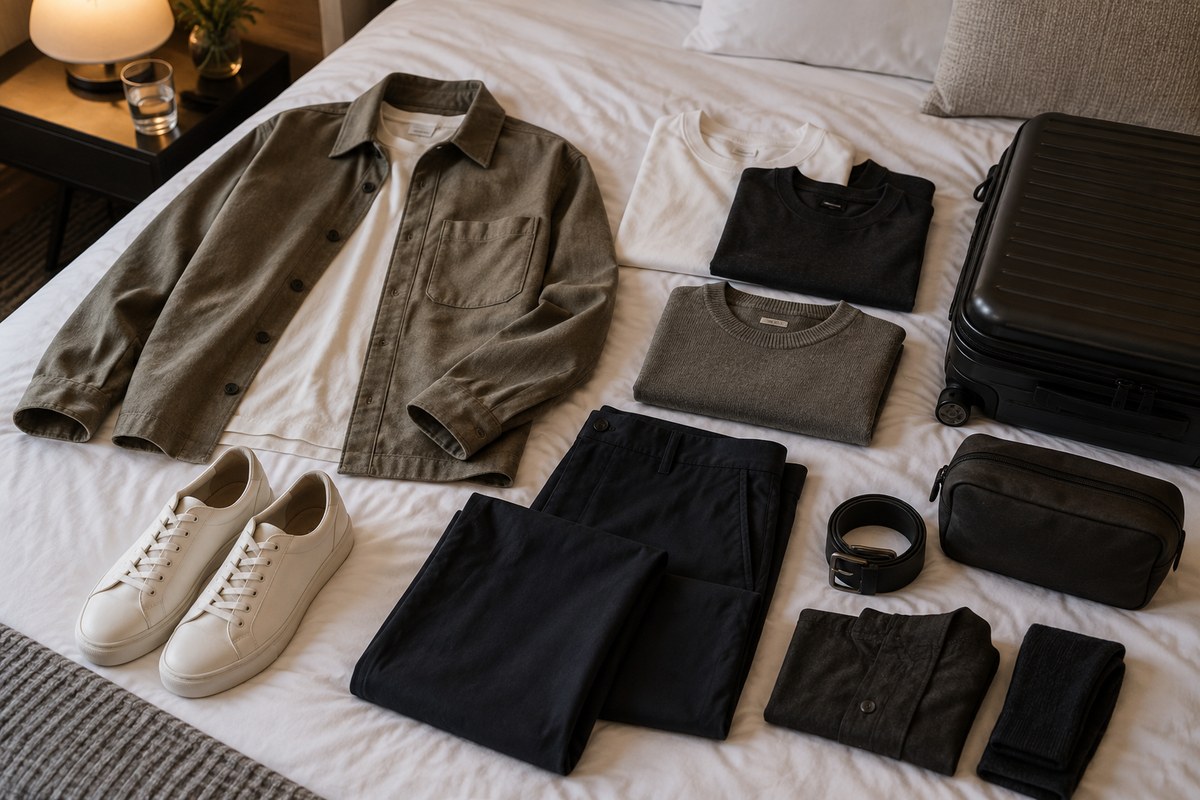
Men’s Travel Capsule Wardrobe: A Practical Packing List for a Week
A useful one-week travel capsule starts with the weather, activities and laundry access, then repeats a small set of compatible colors. A practical baseline is two trousers, one optional short, four or five tops, one versatile outer layer and two shoe choices. Adjust for formal plans, climate and baggage limits rather than packing a fixed internet checklist.