Style & wardrobe / A closer look
How to Measure a T-Shirt for Online Shopping: Chest, Length and Shoulders
Your favorite washed tee is a useful size reference—as long as you measure it using the same definitions as the seller.
Start here
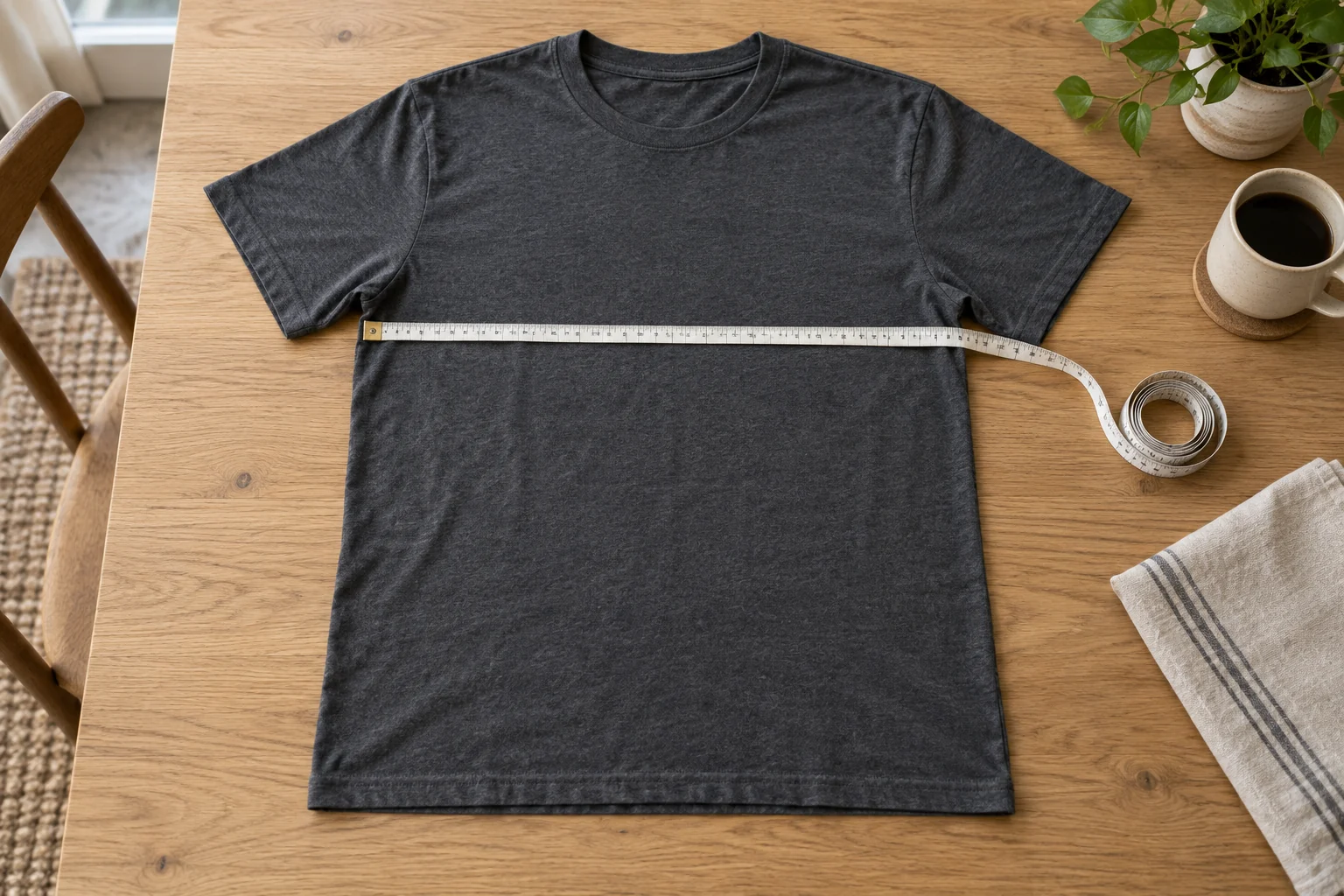
First check whether the retailer’s chart lists body measurements or garment measurements. For a garment chart, lay a dry, relaxed T-shirt flat and measure with the seller’s exact endpoints and units. Record chest width, length, shoulder width and sleeve length separately. A laid-flat width is not a body circumference, and a size letter alone cannot account for different cuts or measurement methods.
As an Amazon Associate, we earn from qualifying purchases. How our links work ↗
1. Identify what the size chart measures
Open the chart for the actual product, not a generic brand chart found elsewhere. Look for wording such as body chest, garment chest, pit-to-pit or laid flat. If a number could mean either width or circumference, ask the retailer before comparing it with your shirt.
A body chart describes the wearer; a garment chart describes the item. Clothing includes design ease, and that ease is not identical across fitted, regular and oversized styles. Doubling a flat chest width gives only an approximate perimeter of that garment at that line. It does not turn the figure into the body size the seller recommends.
Record the units too. Convert consistently if necessary, but do not round halfway through the comparison. A listing that uses centimeters and a tape read in inches can create an avoidable error. Keep the seller's original values alongside your converted ones so you can review the choice later.
2. Choose a reference shirt and prepare it consistently
Use a T-shirt whose current fit you like after its normal permitted care. A new shirt that has not been washed may be a less useful reference for your everyday wardrobe. Choose a similar intended use: a relaxed layering tee and a fitted undershirt are not interchangeable references.
Lay the dry shirt flat on a surface that supports its entire body. Smooth folds lightly without pulling the knit. Align the body so seams and hem rest naturally. If it is twisted or hanging partly off the table, adjust it before reading the tape. Photograph the chosen endpoints.
Keep a short fit note: comfortable chest, sleeves too long, hem right for untucked wear, or neckline tighter than preferred. Measurements are more useful when paired with this assessment. The aim is not to copy every dimension of an imperfect reference shirt, but to know which differences you want from the next one.
3. Measure chest width on the seller’s line
Follow the retailer's specified line across the garment. It may use the underarm level or a measured distance below it. Keep the tape straight across without stretching the knit. Measure once, lift the tape, then repeat. If the readings differ, check alignment and the endpoints.
For a concrete example, ASKET's archived lightweight T-shirt page states that its chart uses flat garment measurements and places the chest line one centimeter below the armpits. That is that product's method, not a universal line for every retailer. It also describes a production tolerance, another reason to read the entire chart rather than treating one value as exact for every item.
In a fictional comparison, your preferred shirt measures 54 centimeters across the seller's chosen line, while two offered sizes list 52 and 55. Those values show relative differences, not a guaranteed fit verdict. Compare the remaining dimensions and the stated cut before selecting the closer chest number.
Your garment-measuring checklist
Use these checks alongside the detailed steps. Checkmarks last only for this open page.
Download checklist · TXT4. Match body-length and shoulder definitions
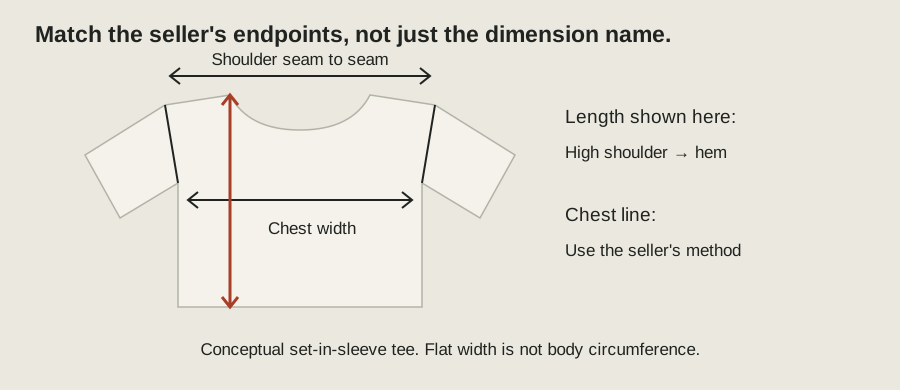
Length can be measured from the highest shoulder point, from the center-back neckline or by another stated method. These starting points produce different numbers on the same shirt. Read the diagram and the text together. Do not measure from the top of the neck rib if the seller measures from a shoulder point.
Keep the tape along the instructed path to the stated hem endpoint. A curved hem, split side hem or longer back panel may require additional measurements. Record the front and back separately where useful. For untucked wear, compare where each version would sit with the trousers you normally use.
For shoulder width, match the retailer's seam-to-seam method if that is what it specifies. A dropped-shoulder tee deliberately places the seam farther down the arm. A raglan shirt has a different seam arrangement. Do not try to force a standard shoulder measurement onto a construction the chart does not describe; ask for the relevant fit dimensions.
5. Check sleeves, hem and the dimensions a chart cannot capture
Read where sleeve length starts. A conventional shoulder seam is one possible reference, but some charts use the neck or center back. Measure to the stated sleeve edge along the specified path. Note whether a cuff is included. An otherwise accurate chest comparison can still produce sleeves you dislike.
If the chart lists hem width, compare it too. A shirt can fit your upper body yet taper more than expected at the waist. For layering, think about both the inner and outer garments. A boxy tee's measurements may suit a relaxed outfit but bunch beneath a narrow overshirt.
Measurements cannot fully describe neck opening, fabric stretch, drape or how a seam feels. Use detail photographs and any specific construction notes as additional information. “Heavyweight” and “oversized” do not replace measurements. A dense tee may drape differently from your thin reference even when several dimensions match.
6. Compare the whole fit and preserve return options
Make a small table with your reference shirt, the seller's two plausible sizes and a column for method differences. Mark the dimensions you want to change. If a size improves length but narrows the chest too much, that cut may simply be unsuitable; choosing a larger size is not the only possible answer.
Ask about unclear tolerances, whether the chart describes a new garment and any stated care-related dimensional change. Avoid subtracting a guessed shrinkage percentage from every cotton tee. Use our shrinkage measuring method when you have actual before-and-after observations, not as a prediction for an untested purchase.
Before ordering, read the seller's fit-check and return conditions. Keep packaging and tags as required, and do not wash the new item before deciding whether that would affect a return. Try it under the allowed conditions, then compare the actual measurements with the chart if the fit is surprising.
Save the record when the purchase works. Over time, a few measured shirts with notes about construction and comfort provide a reliable personal reference. It will not make every size letter consistent, but it makes the next comparison faster and more specific.
When checking a delivered tee against a chart, repeat the retailer's method before sending a discrepancy report. Include the product reference, size, units and photographs showing both tape endpoints. State whether the garment is new or has been washed. A chest reading taken on a different line, or a length taken from the neck rib instead of the shoulder, may explain an apparent mismatch without a production error.
Questions readers ask
Is pit-to-pit width the same as chest circumference?
No. It is a flat garment width measured on a defined line. A body chest chart is a different measurement.
Should I measure a wet T-shirt?
Use a dry, relaxed reference for repeatable comparisons unless the retailer explicitly specifies another method.
Can I choose a size from chest width alone?
It is a useful starting point, but length, shoulders, sleeves, cut and fabric behavior can still change the fit.
Sources and how this guide was prepared
This is a researched explanation and a practical owner checklist. We reviewed the official sources below on October 5, 2026; we have not performed a laboratory test or claimed firsthand ownership of every device discussed. Worked examples and conceptual diagrams are labeled. Workspace and wearing scenes provide context; use model documentation for specifications and fit. Check the manual and support guidance for your exact model.
- ASKET: archived lightweight T-shirt garment chart and measuring instructions
Found a model-specific exception or an instruction that has changed? Use the site's contact information and include the model and official source so the guide can be corrected.
Continue with the relevant guide
The next good question
Keep exploring.
 Read the story ↗
Heavyweight T-Shirt GSM Guide: 180 vs 240 vs 300 GSM
What fabric weight changes—and what it does not—when choosing a substantial T-shirt for a practical capsule wardrobe.
 Read the story ↗
How to Keep Black Clothes from Fading: A Care-Label-First Routine
Before adding a new laundry product, find out whether you are seeing lost color, a surface deposit or loose fibers.
 Read the story ↗
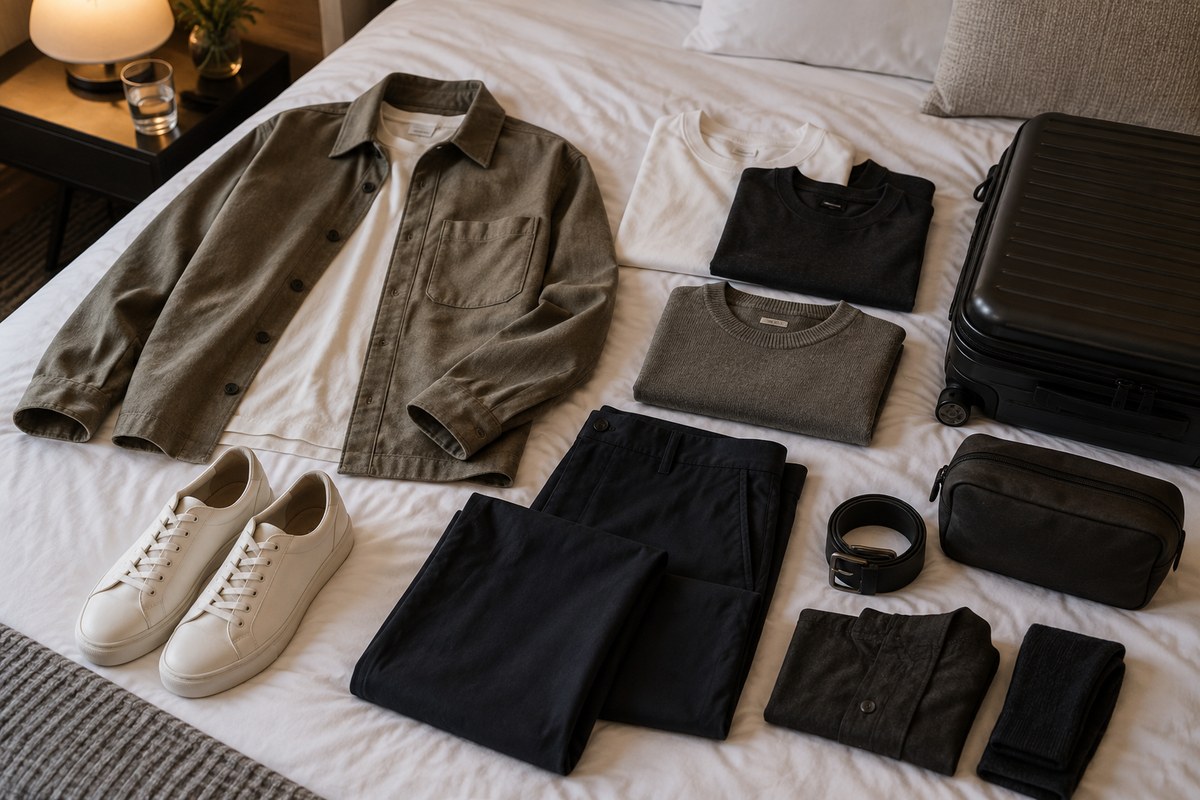
Men’s Travel Capsule Wardrobe: A Practical Packing List for a Week
A useful one-week travel capsule starts with the weather, activities and laundry access, then repeats a small set of compatible colors. A practical baseline is two trousers, one optional short, four or five tops, one versatile outer layer and two shoe choices. Adjust for formal plans, climate and baggage limits rather than packing a fixed internet checklist.