Overshirt Fit and Layering Guide for a Small Capsule Wardrobe
How one well-fitted overshirt can bridge a T-shirt and jacket without becoming another rarely worn layer.
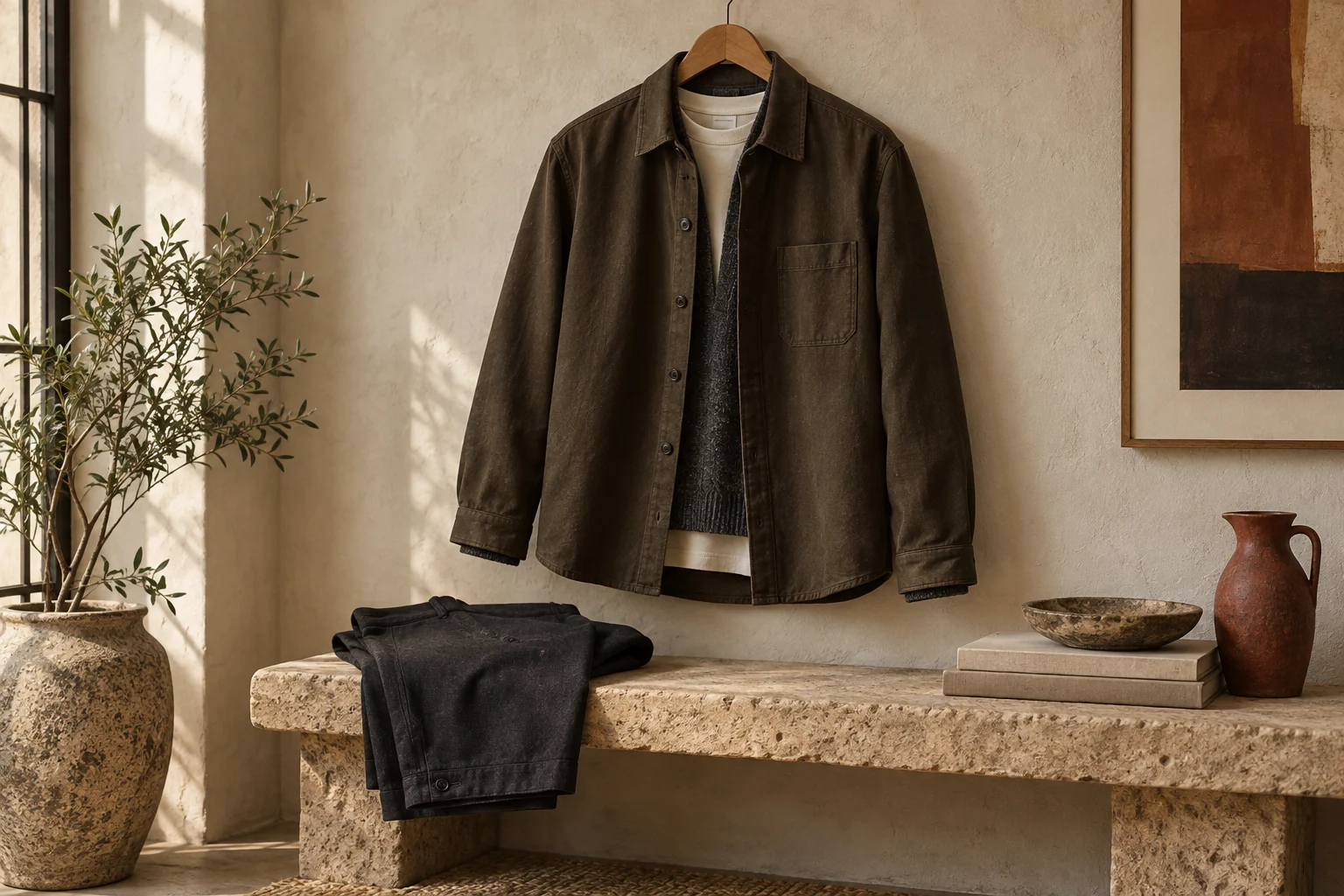
A useful overshirt should close over your heaviest planned midlayer without pulling, yet still look intentional over a T-shirt. Look for a shoulder that sits naturally or drops deliberately, enough chest and sleeve ease for movement, and a hem around the lower hip that does not resemble a long dress shirt. For a small capsule wardrobe, choose a matte midweight fabric in olive, navy, charcoal, or brown, then make sure it works with at least three tops and two trousers you already own.
| Layering role | Fabric direction | Fit target |
|---|---|---|
| Warm-weather top layer | Light twill or ripstop | Room for a tee, clean open front |
| Three-season overshirt | Midweight cotton or blend | Room for tee and light knit |
| Jacket substitute | Heavy duck, wool blend, or lined fabric | Generous sleeve and chest ease |
| Capsule priority | Matte, durable, easy-care neutral | Works open and buttoned with existing clothes |
Define the job before judging the fit
“Overshirt” covers garments from light button-ups to heavy shirt-jackets. A light version may replace a rolled-sleeve shirt on a cool evening. A midweight cotton twill can bridge indoor and outdoor use. A heavy duck or lined style behaves more like a jacket. Fit advice changes with that job. A trim light overshirt can sit over one T-shirt; a jacket substitute needs room for knitwear and movement.
Write down the heaviest layer you expect underneath and the outerwear, if any, that may go over it. This prevents buying a piece that only works in one narrow temperature. In a capsule wardrobe, versatility is not the number of theoretical outfits. It is the number of real weekly situations the garment can enter without creating discomfort or proportion problems.
Shoulders and chest reveal whether layering will work
On a conventional cut, the shoulder seam should land near the shoulder edge. A deliberately relaxed pattern may drop beyond it, but the drop should look balanced on both sides rather than as if the garment is simply too large. Put on the intended base layer, reach forward as if holding a steering wheel, and cross the arms. The back should allow movement without the collar pulling hard or the front buttons straining.
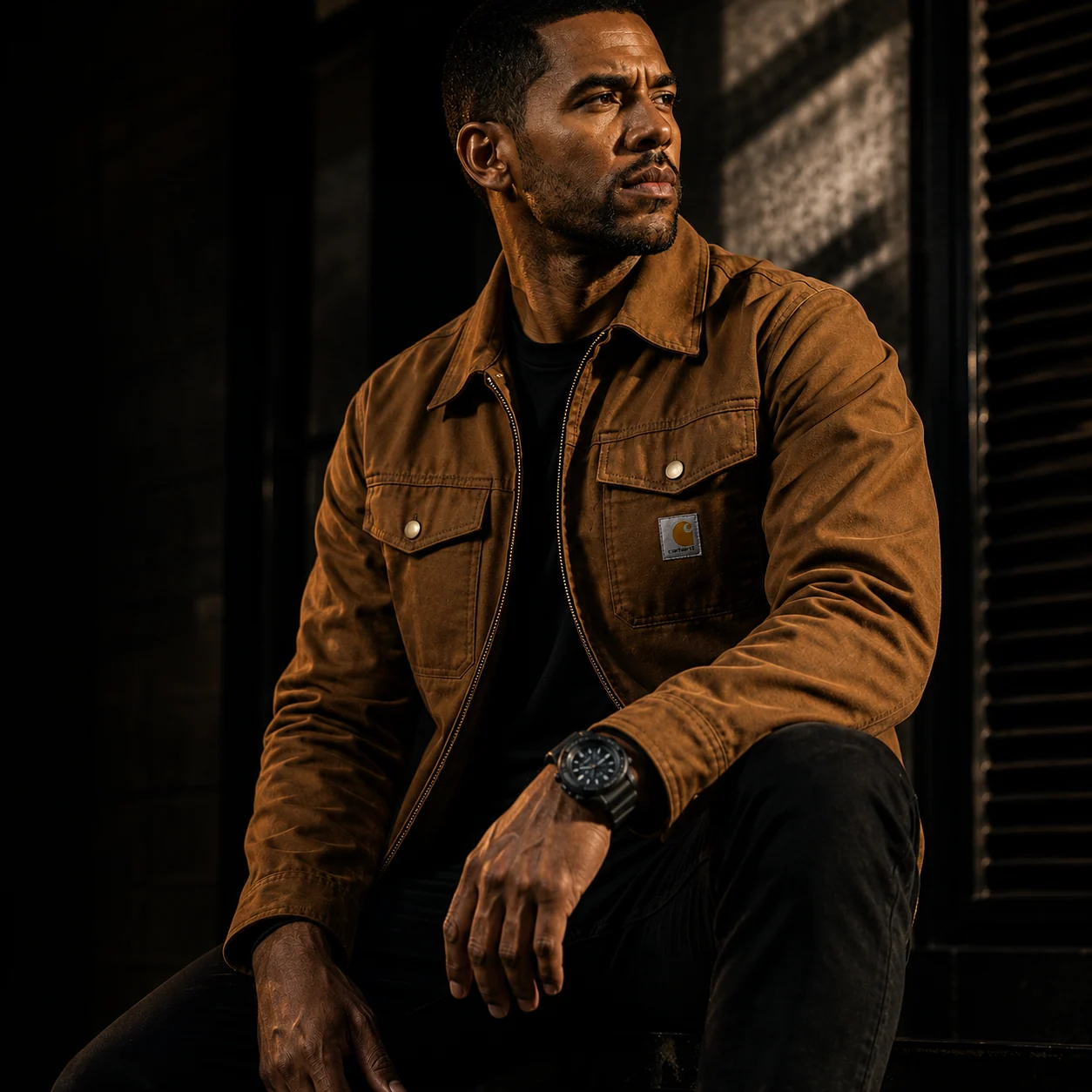
Button the overshirt at the chest. Small diagonal lines from the buttons signal insufficient room. Excess fabric that balloons behind the arm can mean the body is too large or the armhole is poorly shaped. Carhartt’s Rugged Flex overshirt is an example of a garment explicitly cut loose and built for movement, so its size should not be compared directly with a trim fashion shirt. Read the brand’s fit language and compare actual garment measurements where available.
Sleeves, armholes, and cuffs matter more than expected
Layering adds bulk around the upper arm and elbow. A narrow sleeve may look clean over a tee but bind over a knit. Test by bending the elbow and reaching overhead. High, well-shaped armholes can provide movement without excess body fabric, while low deep armholes can lift the entire garment when the arm rises. Heavy fabric needs enough ease to fold rather than press against the elbow.
Cuffs should close over the base layer without compression. Adjustable button positions are useful, especially when the overshirt alternates between bare wrists and a sweatshirt cuff. Sleeve length can be slightly longer than a dress shirt because the garment is outerwear, but hands should remain usable. Rolling a light overshirt is easy; rolling heavy duck creates a thick ring and is better treated as occasional styling than a fit solution.
Length decides whether it reads as a shirt or jacket
A versatile overshirt commonly ends around the lower hip, covering the belt while remaining shorter and squarer than a tucked dress shirt. This length works open over a tee and closed as a top layer. A very long curved hem can look like an untucked office shirt, while a cropped straight hem can create a sharper workwear silhouette. Body proportion and rise of the trousers change the result, so compare the hem with your actual pants rather than an isolated product photograph.
When worn open, the base layer should not hang far below unless the contrast is deliberate. A tee that is one or two centimeters longer can create a relaxed line; a much longer curved tail can make the outfit look accidental. When the overshirt is buttoned, check that sitting does not force the hem to bunch heavily. Side vents or a shaped hem can help, but the garment still needs enough circumference at the hips.
Choose fabric weight for the climate and the wardrobe
Light cotton poplin and ripstop breathe and pack easily but provide little warmth. Midweight twill, canvas, corduroy, and brushed cotton create more structure and work across seasons. Heavy duck, wool blends, and lined fabrics resist wind and feel jacket-like, but they are less comfortable indoors. Carhartt lists one heavyweight Rugged Flex duck overshirt at 11.4 ounces per square yard, or 387 GSM, illustrating how far the category can move toward outerwear.
For a first capsule overshirt, a matte midweight fabric is the safest. It layers over a T-shirt without looking limp, fits under a coat, and can remain on indoors. Small amounts of stretch may improve movement, though pattern and armhole design remain important. Inspect the underside, seams, and pocket bags. A rugged face fabric paired with weak internal construction will not become durable simply because it feels heavy on a hanger.
Use color to connect, not to create a new problem
Olive works with cream, white, gray, navy, faded black, and denim. Navy is quieter and slightly cleaner but can become too close to dark jeans. Charcoal bridges black and gray wardrobes. Brown and tan add warmth and pair naturally with indigo, ecru, and olive trousers. A capsule color should connect items already owned; it should not require a new pair of shoes and two new pants to make sense.
Before buying, lay out three tops and two trousers. The overshirt should produce at least six combinations you would genuinely wear. Include the intended shoes because they set the outfit’s level of formality. A clean navy twill overshirt can work with minimal leather sneakers; a heavy brown duck style may make more sense with boots. Pocket design, contrast stitching, and hardware also move the garment between refined and utilitarian.
A compact seven-piece layering system
Build around two T-shirts, one light knit or sweatshirt, the overshirt, two trousers, and one weather layer. For example: cream and charcoal tees, a gray merino crew, an olive twill overshirt, dark denim, stone chinos, and a simple rain shell. The overshirt works over either tee, over the knit when cut generously, and beneath the shell when the weather turns. Each supporting item also works without it.
Care keeps the system consistent. Follow the label, empty pockets, close hardware that can catch, and avoid unnecessary high heat that can shrink cotton or set creases. Heavy fabric may need reshaping while damp and more drying time. Small fading at edges can add character, but twisted seams and severe shrinkage are not patina. Start with one overshirt, wear it through a month of actual routines, and let the gaps in use—not another trend image—decide what comes next.
The decision in one minute
- Choose light fabric: when the overshirt is mainly sun coverage or an evening layer over a T-shirt.
- Choose midweight fabric: for the most useful three-season capsule role and indoor-outdoor flexibility.
- Choose heavyweight fabric: when it is intended to replace a jacket and has room for real insulation underneath.
- Test six outfits: with three tops and two trousers you own before adding the overshirt to the wardrobe.
Frequently asked questions
Should I size up in an overshirt?
Only when the brand’s intended fit and your planned layers require it. Compare garment measurements and test over the heaviest layer rather than automatically sizing up.
How long should an overshirt be?
A versatile style often ends around the lower hip and covers the belt without the long tail of a dress shirt. Cropped workwear cuts and longer jacket styles can also work when intentional.
Can an overshirt go under a coat?
Yes, if the fabric is not too bulky and the coat armholes and sleeves allow it. Midweight unlined overshirts are generally easiest to use as a middle layer.
What is the best first overshirt color?
Olive, navy, charcoal, and medium brown are reliable. Choose the one that creates the most outfits with your existing trousers, tees, knitwear, and shoes.
How this guide was built
This is a research-based editorial guide, not a claim of laboratory testing or long-term ownership of every product mentioned. We compared manufacturer documentation, standards and workplace guidance where relevant, then translated those details into practical buying questions. We avoid inventing test results, and we link the primary references below so readers can verify specifications and model-specific limits.