Style & wardrobe / A closer look
Cotton vs Cotton-Polyester Hoodies: Fabric, Drying and Everyday Use
The composition label is useful information. It is not a complete forecast of comfort, drying time or how the hoodie will wear.
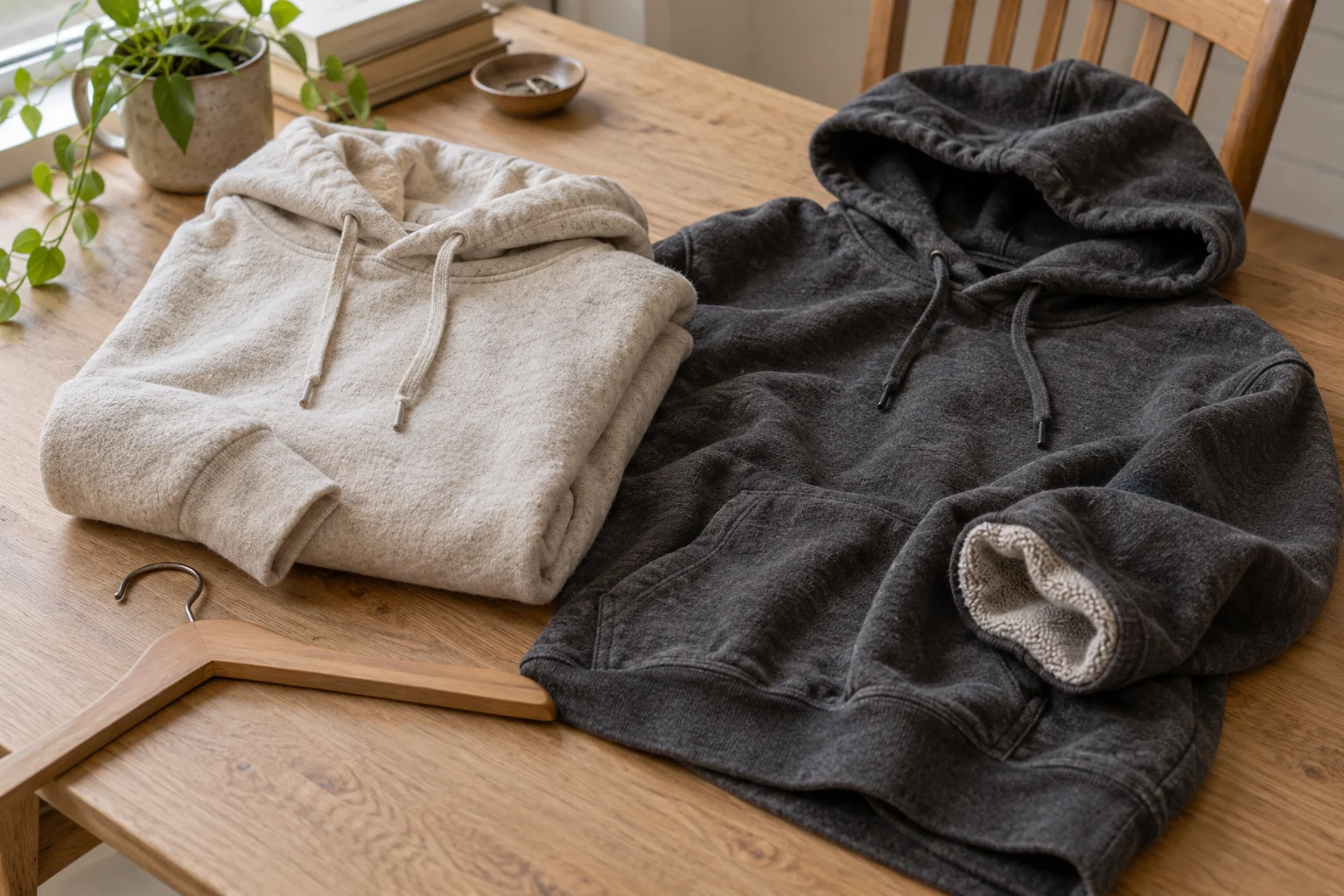
Start here
Choose the individual hoodie using its composition, knit construction, surface, fit and permitted care. A cotton-polyester blend does not automatically guarantee faster drying, less pilling or zero shrinkage. Nor does an all-cotton label establish superior comfort for every use. Compare actual specifications and your routine; treat untested performance claims as questions to verify.
As an Amazon Associate, we earn from qualifying purchases. How our links work ↗
1. Start with the full label, then look at construction
Write down the fiber percentages rather than grouping every blend together. A hoodie that contains mostly cotton and one that contains mostly polyester are different compositions. Then check whether the label describes the main body only or also includes separate information for ribbing, lining or other parts.
Look for the fabric construction and surface description. A loop-back interior, a brushed interior and a smooth double-knit surface can feel different even when their fiber percentages match. The cut, cuffs, seams and hood also affect how the garment wears. Comparing only “cotton versus polyester” discards information you can actually use.
CottonWorks' fabric collection illustrates a range of constructions rather than one universal cotton fabric. This is manufacturing context, not an endorsement of a particular retail hoodie. Ask the seller for the composition, construction, care label and real garment measurements together.
2. Judge comfort in your intended conditions
For a hoodie worn at a desk, think about room temperature, the layers underneath and how the cuffs and hood sit while working. For one used on a walk, think about outer layers, wind exposure and what happens if it becomes damp. Those are different situations; there is no single composition that answers all of them.
If you can inspect the garment, assess the inside surface against the layer you normally wear. Look for bulky seams, an uncomfortable neckline or cuffs that restrict movement. If shopping online, use close photographs and specific descriptions, while recognizing that an image cannot establish how the fabric feels on your skin.
Do not translate “soft” into a guaranteed durability rating or “heavy” into guaranteed warmth. A weight figure can help compare fabric mass, but construction and your layering still matter. Treat seller adjectives as prompts for better questions: is the interior brushed, what is the finished weight, and how does the fit compare with the published chart?
3. Separate moisture movement from drying time
Absorbing liquid, moving it through fabric and losing it to the surrounding air are different processes. A composition label does not tell you how much water remains after your machine's spin, how thick the garment is or how freely air reaches it on your rack. Those variables can change a household drying observation.
CottonWorks' TransDRY explanation is an example of a specific treatment intended to alter moisture behavior. It demonstrates why a finished-fabric claim should name the construction and treatment. It does not mean that an ordinary cotton hoodie has that technology or that every treated garment will dry in your room within a fixed time.
If drying speed matters, ask whether the seller provides a test method and conditions for that exact garment. “Quick drying” without a comparison or method leaves an important question unanswered. For items you already own, record permitted care, drying arrangement and when each becomes fully dry. Do not present two different hoodies dried under different conditions as a controlled fiber experiment.
4. Check dimensional stability without assuming a winner
The blend percentage is not a substitute for a dimensional-change specification. CottonWorks' shrinkage questions and answers discusses manufacturing and finishing conditions, including blended fabrics. That context supports asking about the finished garment rather than assigning a fixed shrinkage rate from the fiber name.
Read the care label and any stated tolerance. If you own the hoodie, measure its dry relaxed length and width before and after the same permitted routine. Our hoodie shrinkage guide provides the formula and a worksheet. A home record can help you assess your item, while remaining different from a standardized test.
For a new purchase, compare with a washed hoodie whose fit works for you. Ask whether the chart is for the new garment and whether the manufacturer states a care-related change. Avoid buying a different size solely because someone claims that all cotton shrinks a particular percentage or that polyester in the label prevents any change.
5. Treat pilling and appearance as garment-level questions
Look at where your current hoodie wears: under a bag strap, against a chair, near cuffs or beneath a jacket. A recurring contact pattern can matter more to your experience than a general claim about a fiber. Compare the intended surface finish and ask about care requirements before assuming a smooth new photograph predicts long-term appearance.
Patagonia's pilling guidance describes the role of fibers and friction. We use that as context, not as a ranking of the two compositions. To assess an existing garment, distinguish pills from lint and damage, then use our careful removal checklist.
For black hoodies, inspect color and surface separately. A garment can look lighter because of lint or residue as well as changes in color. The dark-clothing guide helps separate these observations. Choosing a fiber blend is not a replacement for a compatible wash and drying routine.
6. Make a comparison that admits what is unknown
Use the table below as a purchase worksheet. Fill it for two actual products, not two abstract fiber categories. An unknown is useful information: it tells you what to ask the seller, or what uncertainty you would accept with the purchase.
| Question | All-cotton candidate | Cotton-polyester candidate |
|---|---|---|
| Exact composition and trims | Read the complete label | Record the actual percentages |
| Construction and interior | Verify; do not infer from fiber | Verify; do not infer from blend |
| Dimensions after care | Ask for method or record your own | Ask for method or record your own |
| Drying performance | Unknown without specific conditions | Unknown without specific conditions |
| Routine you can follow | Match the garment's label | Match the garment's label |
For an everyday desk layer, a comfortable cut and manageable care may outweigh an unverified drying claim. For a trip with limited laundry space, evidence about the actual garment's drying arrangement may matter more. For someone sensitive to a particular surface, a returnable fit-and-feel assessment may be decisive.
Finally, compare delivered cost and return conditions after the practical requirements are clear. A composition you prefer can still be offered in an unsuitable cut. A blend you had dismissed may have documented construction and care that suit your routine. The useful outcome is a specific garment chosen for a specific use, with the remaining uncertainties visible.
If you keep an observation record, name the complete product and version rather than just “cotton” or “blend.” Record the size and care routine alongside it. A later revision can change the fabric, finish or cut while retaining a similar product name. This small distinction makes your own experience more useful and prevents a conclusion about one hoodie from becoming an unsupported claim about a whole fiber category.
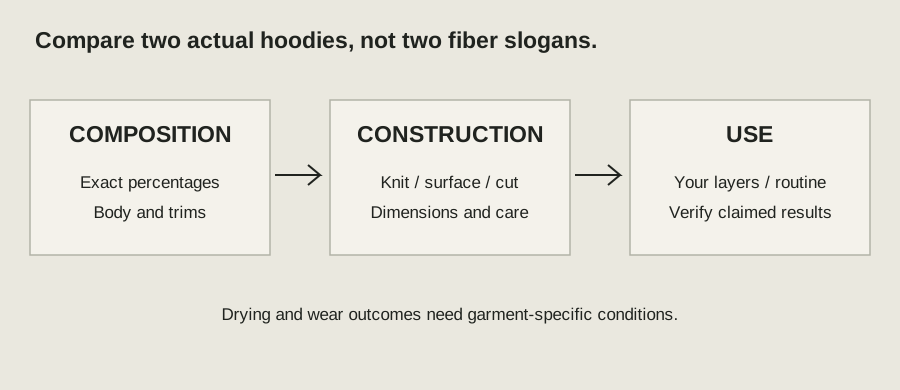
Your actual-garment comparison
Use these checks alongside the detailed steps. Checkmarks last only for this open page.
Download checklist · TXTQuestions readers ask
Do cotton-polyester hoodies always dry faster?
No universal drying time follows from the label alone. Compare actual garments under stated construction, care and drying conditions.
Does a blend guarantee no shrinkage?
No. Ask about the finished garment’s dimensional tolerance and care conditions, or record changes using a consistent method.
Which is better for everyday wear?
Choose by fit, surface, use and a care routine you can follow. The composition is one useful part of that decision.
Sources and how this guide was prepared
This is a researched explanation and a practical owner checklist. We reviewed the official sources below on October 5, 2026; we have not performed a laboratory test or claimed firsthand ownership of every device discussed. Worked examples and conceptual diagrams are labeled. Workspace and wearing scenes provide context; use model documentation for specifications and fit. Check the manual and support guidance for your exact model.
- CottonWorks: examples of cotton fabric constructions
- CottonWorks: specific TransDRY moisture-management technology
- CottonWorks: shrinkage questions and answers
- Patagonia: pilling and garment care
Found a model-specific exception or an instruction that has changed? Use the site's contact information and include the model and official source so the guide can be corrected.
Continue with the relevant guide
The next good question
Keep exploring.
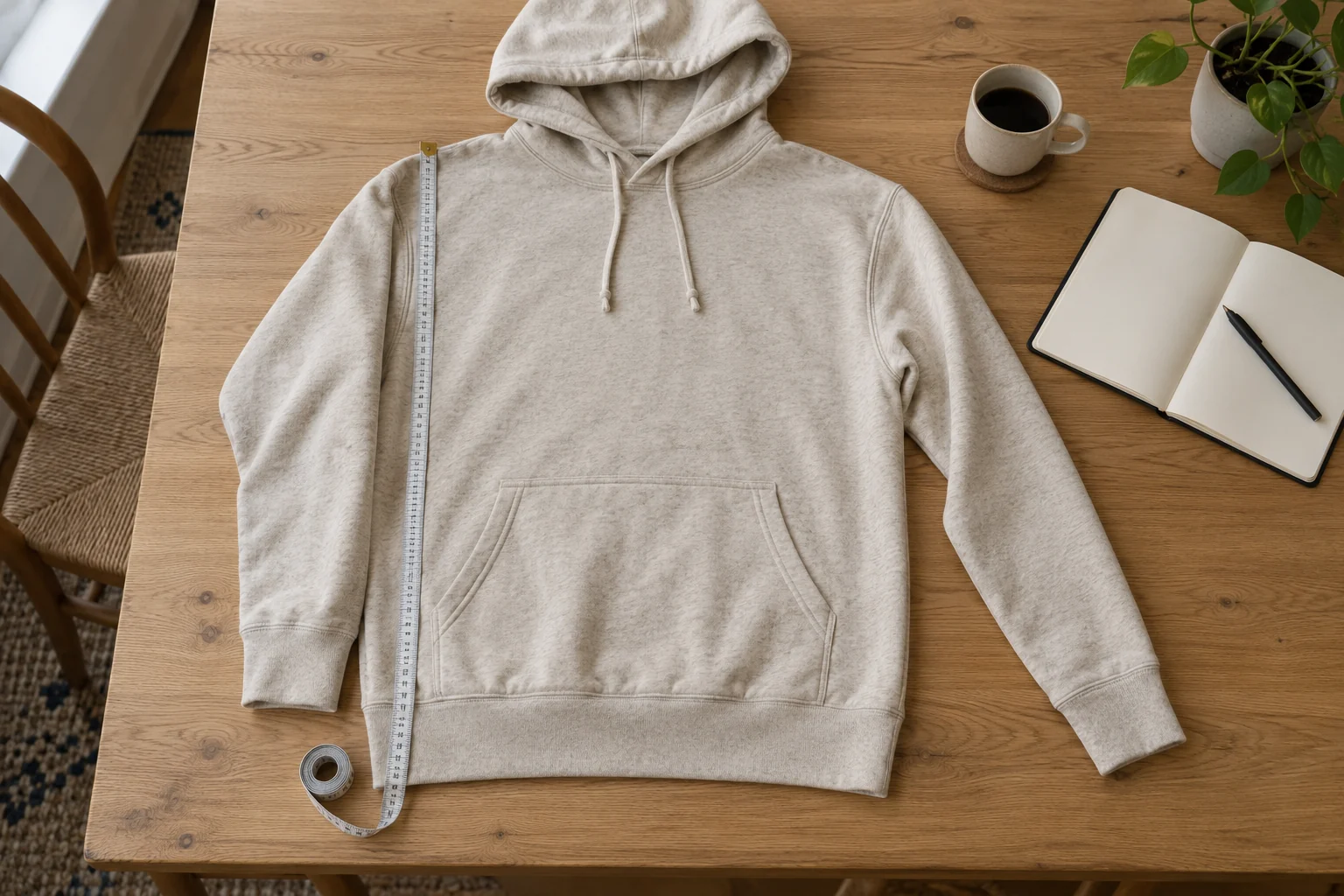 Read the story ↗
Do Cotton Hoodies Shrink? How to Check Fit and Reduce Further Shrinkage
A tighter fit can come from a real size change, measurement differences or the way the hoodie is sitting. Find out which before trying to stretch it back.
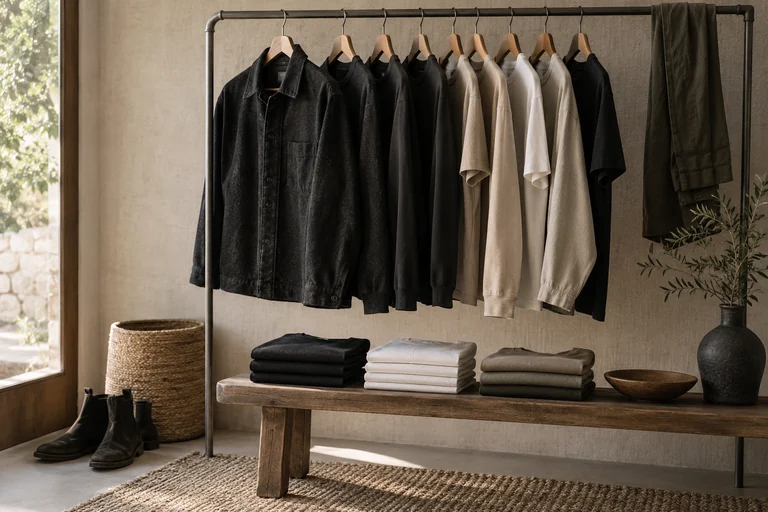 Read the story ↗
Hoodie and Salomon Speedcross 6: Fit, Fabric and Everyday Tradeoffs
Build a practical hoodie-and-trail-shoe outfit. Check fabric weight, garment measurements and Speedcross 6 use cases without invented wash or grip tests.
 Read the story ↗
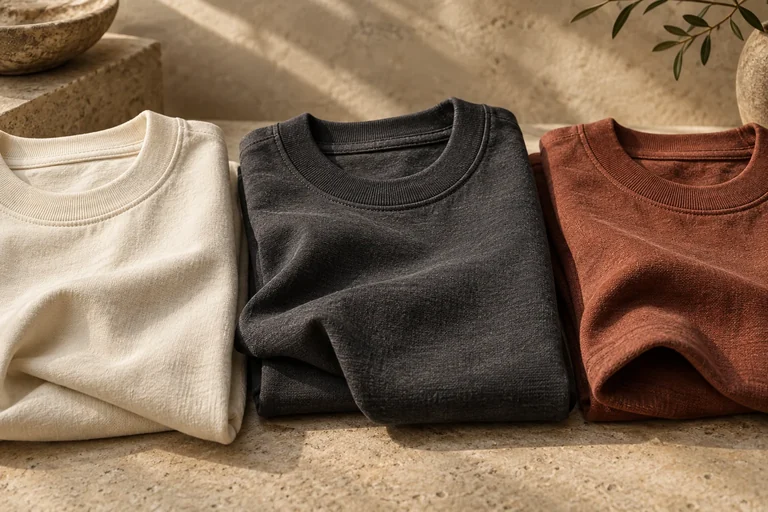
Heavyweight T-Shirt GSM Guide: 180 vs 240 vs 300 GSM
What fabric weight changes—and what it does not—when choosing a substantial T-shirt for a practical capsule wardrobe.