Heavyweight T-Shirt GSM Guide: 180 vs 240 vs 300 GSM
What fabric weight changes—and what it does not—when choosing a substantial T-shirt for a practical capsule wardrobe.
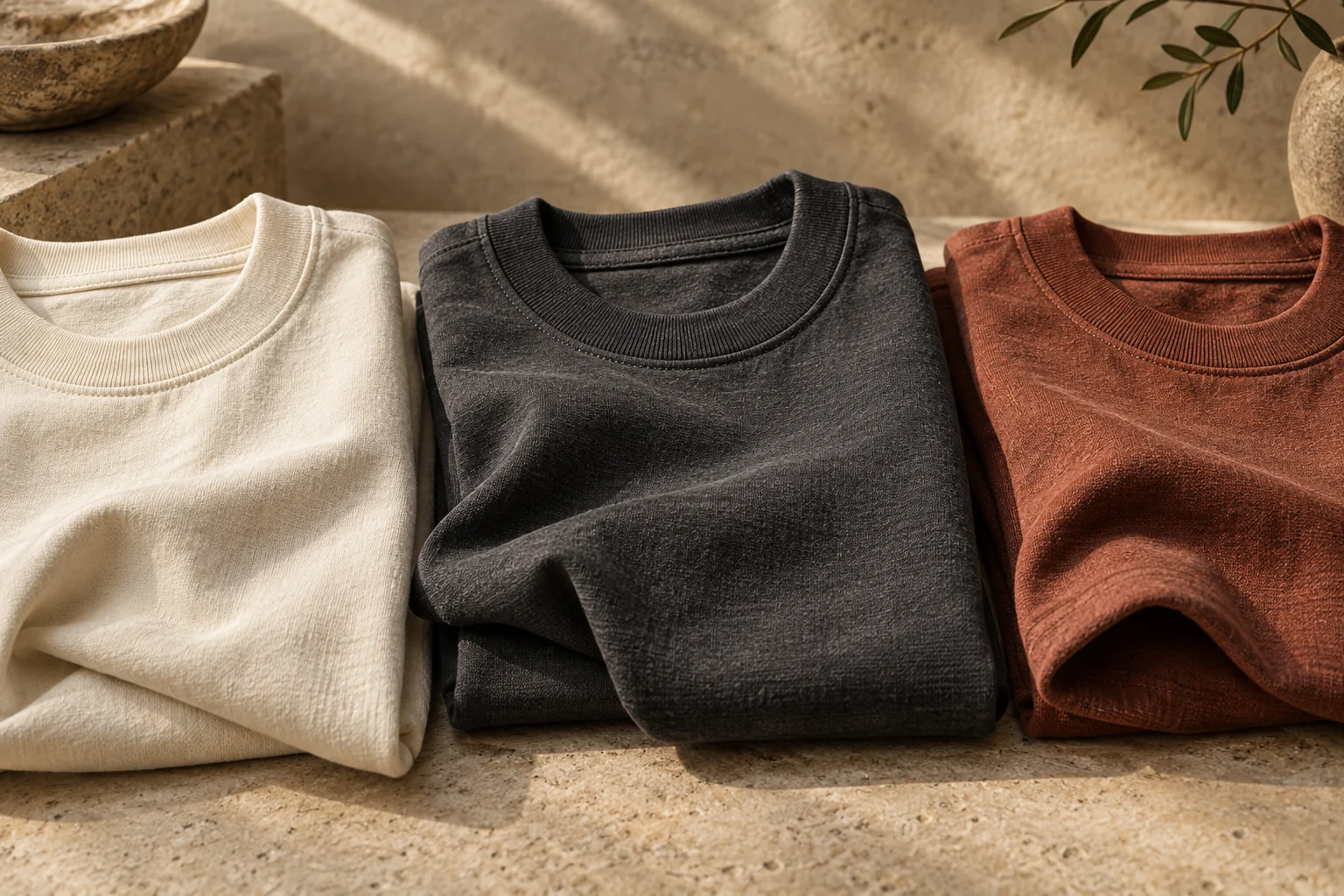
Around 180 GSM is a versatile midweight for year-round layering. Around 240 GSM gives a T-shirt more opacity, structure, and stand-alone presence without becoming extreme. Near 300 GSM feels closer to a light sweatshirt and works best when you deliberately want stiffness, warmth, and a boxy silhouette. GSM measures fabric mass per square meter, not quality. Cotton type, yarn, knit, finishing, pattern, sewing, and shrink control determine whether a heavy shirt actually wears well.
| Fabric weight | Typical feel | Best use |
|---|---|---|
| About 180 GSM | Midweight, flexible, easy to layer | Broad climates and everyday basics |
| About 240 GSM | Dense, opaque, structured | Stand-alone tees and boxier fits |
| About 300 GSM | Very substantial and warm | Cool weather and statement silhouettes |
| Any GSM | Quality still depends on construction | Check knit, seams, collar, and shrinkage |
GSM is a useful number with strict limits
GSM means grams per square meter. It describes the mass of the fabric over a standard area, making it more useful than vague labels such as “premium” or “heavy.” A higher number usually signals more material, greater opacity, and a more substantial hand. It does not tell you whether the cotton fibers are smooth, the knit is stable, the collar recovers, or the pattern fits well. Two shirts with the same GSM can feel very different.
Weight also is not thickness in a perfectly simple sense. Knit density, yarn size, finishing, and moisture affect the result. A compact jersey can feel smooth and dense; a looser knit may feel thicker but allow more light through. Use GSM to narrow the category, then evaluate the garment. The goal is not to buy the largest number. It is to choose a fabric that supports the silhouette and climate you want.
Around 180 GSM: the flexible everyday middle
A shirt near 180 GSM usually sits in a practical midweight range. It can drape under an overshirt, tuck without creating excessive bulk, and remain comfortable across more months of the year. In darker colors it may provide good opacity, while very light colors still depend on knit and yarn. This weight suits fitted, regular, and mildly relaxed patterns because the fabric can follow the body without feeling like paper or armor.
The compromise is limited structure. A wide oversized pattern may collapse rather than hold a clean boxy line, and a thin collar can still curl. If you want one basic tee for layering under knitwear, jackets, and work shirts, 180 GSM is often more useful than a dramatic heavyweight. It dries faster than very dense fabric and packs with less bulk. Look for shoulder taping, consistent stitching, and a collar proportion that matches the body weight.
Around 240 GSM: the modern heavyweight sweet spot
At roughly 240 GSM, cotton jersey begins to behave as a visible part of the outfit rather than a neutral underlayer. The fabric tends to be more opaque, the sleeve can stand away from the arm, and the body can hang in a straighter column. That makes it suitable for relaxed and boxy cuts worn alone with denim, work pants, or wide trousers. Shaka Wear lists its 7.5-ounce Max Heavyweight tee at approximately 245–255 GSM, a useful real product reference for this range.
More mass means more warmth and slower drying. In humid climates, even a short-sleeve shirt can feel heavy. Under a close-fitting overshirt, the fabric may bunch at the shoulder and sleeve. The cut must provide room for the material, and the collar should be substantial enough to look intentional. This range works well when a T-shirt is expected to hold shape through a full day and reduce the cling common to lighter jerseys.
Near 300 GSM: treat it as a special garment
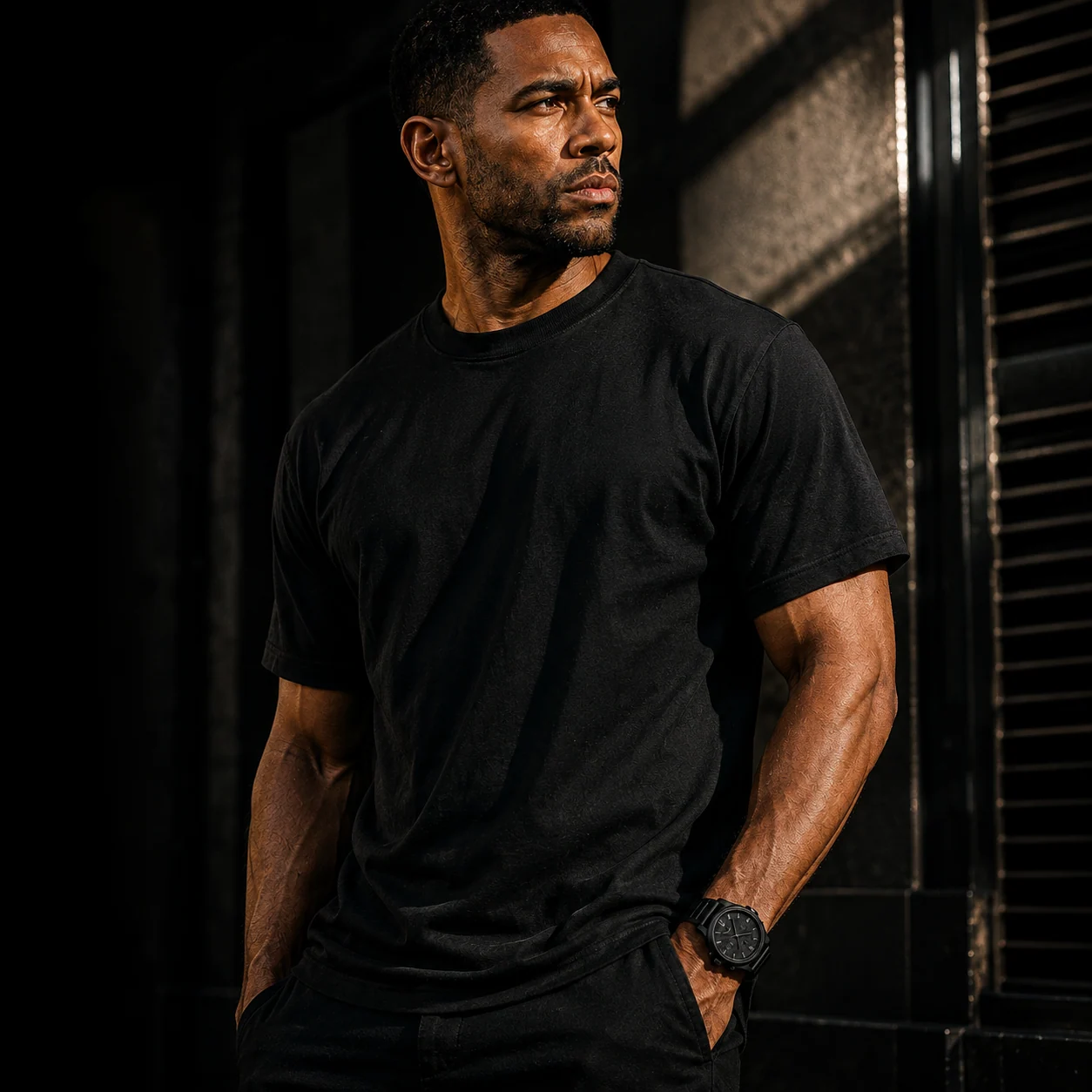
A 300 GSM tee approaches lightweight sweatshirt territory. It can create a strong silhouette, disguise transparency, and feel durable, but it is not automatically more comfortable or longer-lasting. The weight can pull on the collar and shoulder seams if construction is weak. It can also become hot indoors and cumbersome under fitted outerwear. This category makes sense when the T-shirt is the outer layer and the visual structure is deliberate.
Very heavy fabric benefits from a roomy pattern, side vents or adequate hem ease, and careful length. Too long, and the garment becomes a dense vertical block; too short, and it may rise when sitting. Sleeve opening and shoulder drop strongly affect proportion. Buyers who like the look should start with one neutral color and wear it through real temperature changes before rebuilding the entire drawer around the heaviest option.
Fit, collar, and shrinkage decide whether weight works
A heavyweight tee often uses a boxier pattern, but “boxy” should not mean randomly wide. Shoulder placement, chest ease, sleeve angle, body length, and hem width need to form a coherent shape. Compare garment measurements with a shirt you own rather than relying only on S, M, or L. A thick collar can balance the body, while an excessively tight neck may feel restrictive and an oversized opening may lose the structured effect.
Cotton can change after washing. Check whether the garment is preshrunk and whether the brand publishes expected shrinkage. Wash according to the label, avoid unnecessary high heat, and judge fit after the care routine you will actually use. Dense cotton holds more water and may need longer drying time. Twisted side seams, rippled hems, and a collar that no longer lies flat reveal construction problems that the GSM number cannot predict.
Build a capsule with two weights, not one extreme
A practical wardrobe can use midweight tees for layering and one or two heavyweight tees as stand-alone pieces. For example, 180 GSM in white, gray, or black handles undershirt and overshirt duty, while a 240–255 GSM charcoal or earth-tone tee provides shape with simple trousers. A 300 GSM shirt is optional for cooler weather or a very deliberate streetwear proportion. This mix covers more situations than buying five nearly identical heavy shirts.
Judge value by cost per wear, not fabric mass per dollar. A lighter tee that fits, washes well, and layers easily can outperform a dense shirt that stays folded through summer. Start with climate, then silhouette, then fabric weight. Examine the collar and seams, read care guidance, and compare garment measurements. GSM becomes powerful when it supports those decisions rather than replacing them.
The decision in one minute
- Choose about 180 GSM: for year-round basics, tucking, layering, quicker drying, and broad climate use.
- Choose about 240 GSM: for opacity, a structured stand-alone tee, and a modern relaxed or boxy silhouette.
- Choose about 300 GSM: for cool weather and a deliberately substantial statement piece.
- Check measurements: because fabric weight cannot tell you chest ease, length, sleeve proportion, or collar comfort.
Frequently asked questions
Is 240 GSM good for summer?
It can work in dry or mild conditions, but many people will find it warm in high heat and humidity. Fit, color, airflow, and activity level also matter.
Does higher GSM mean better quality?
No. It means more fabric mass per area. Fiber quality, knit stability, finishing, pattern, seams, collar recovery, and shrink control determine garment quality.
What GSM is a normal T-shirt?
There is no universal cutoff, but many everyday tees sit below the heavyweight range. Around 180 GSM is a useful midweight reference rather than a legal category.
Do heavyweight tees shrink more?
Not necessarily, but dense cotton can change if it is not preshrunk or is washed and dried with high heat. Follow the care label and compare post-wash measurements.
How this guide was built
This is a research-based editorial guide, not a claim of laboratory testing or long-term ownership of every product mentioned. We compared manufacturer documentation, standards and workplace guidance where relevant, then translated those details into practical buying questions. We avoid inventing test results, and we link the primary references below so readers can verify specifications and model-specific limits.