Watches / A closer look
Omega Seamaster vs Oris Aquis: What Does the Extra Money Buy?
Both can tell a compelling ocean story. The harder question is which parts of that story you want to pay for.
Start here
The useful answer
As an Amazon Associate, we earn from qualifying purchases. How our links work ↗
The useful answer
Compare exact references rather than treating every Aquis as the same watch. Omega’s green Diver 300M and the Oris New York Harbor II differ in movement specification, case size, dial character and ownership costs. Neither is necessary just to get a capable everyday sport watch.
| Detail | Omega 210.30.42.20.10.001 | Oris 01 733 7789 4187-Set |
|---|---|---|
| Case diameter | 42 mm | 43.5 mm |
| Movement | 8800 | 733-1 |
| Published power reserve | 55 hours | 41 hours |
| Water resistance | 300 m | 300 m |
| Reason to investigate | Master Chronometer specification and Seamaster design | Aqua-green dial and the Harbor II edition story |
There is a point in watch shopping when the sensible questions stop being enough. You know an inexpensive watch can tell the time. You know you probably do not need another one. Yet a particular dial, bracelet or case keeps returning to your thoughts. Luxury-watch comparisons live in that space between an ordinary practical job and a much more personal desire.
Omega Seamaster versus Oris Aquis is an interesting example because both names come with strong identities, and neither collection can be reduced to a single specification sheet. This article compares two exact green-themed references and then asks a broader question: what extra value are you actually trying to buy? It is researched analysis, not a borrowed account of somebody else’s wrist time.
First, stop comparing entire collections
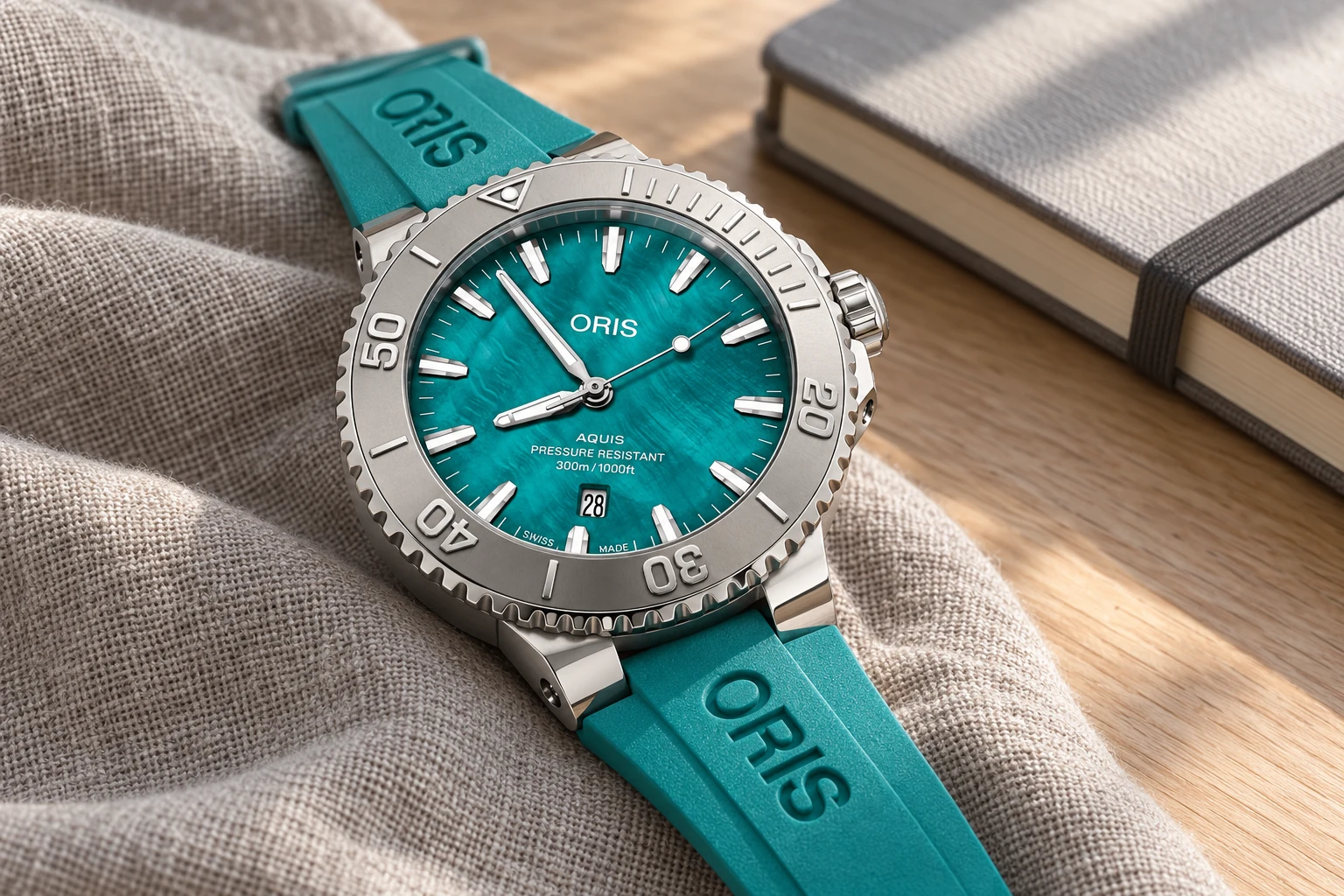
Our Omega is the steel-bracelet Seamaster Diver 300M reference 210.30.42.20.10.001. Our Oris is the New York Harbor Limited Edition II, reference 01 733 7789 4187-Set. That precision is essential. A different Aquis can have a different movement, size and reserve. A different Seamaster can be a substantially different watch despite sharing the family name.
Use the same discipline when shopping. A retailer’s title may emphasize the collection while the important reference is buried lower down. Save it before comparing offers. A lower price for another version is not necessarily a better deal on the one you wanted. The useful question is whether the actual configuration matches your preferences, your wrist and the support arrangement you are comfortable buying.
The verified technical starting point
Omega’s page identifies a 42 mm steel watch with the automatic 8800, 55-hour reserve and Master Chronometer certification. Oris’s current page identifies a 43.5 mm Harbor II with a 733-1 and 41-hour reserve. Both are specified at 300 m. Oris describes an aqua-green oyster-shell-effect dial and an edition of 2,000 pieces supporting its Billion Oyster Project partnership.
Those facts set boundaries. They do not measure how much enjoyment either watch will give you. They also correct an easy mistake: the Harbor II should not inherit the reserve figure of a different Oris movement simply because an article or listing uses the word Aquis. Confirm the exact page, then keep technical comparisons tied to the exact reference throughout the decision.
Certification is valuable when you understand the question it answers
A certification can make a technical promise easier to assess because it connects the watch to a defined standard. That is more useful than a vague statement that a movement is excellent. However, the existence of a stronger technical specification does not automatically tell every buyer how much extra to spend. A feature’s value depends on whether it addresses a concern you actually have.
Think about the kind of confidence you want. Some owners enjoy a movement’s technical story and the documentation around it. Others care more about the look of the dial and are happy with a different ownership proposition. Neither group needs to invent a practical emergency to justify taste. The problem begins when a certification becomes a badge used to dismiss every watch that takes another approach.
The dial can be the whole point
Green is not a single visual experience. A quiet flat tone, a reflective surface and an iridescent effect can behave very differently as the wrist moves. Product photographs can make these differences look obvious or hide them completely. Before spending luxury-watch money, seek views under several kinds of ordinary light rather than choosing from one dramatically lit picture.
Ask yourself whether you prefer a dial that stays visually consistent or one that changes character. Think about your clothes and the settings in which you will wear it. A watch that delights you in a close-up may feel more conspicuous than expected at a desk. That is not a flaw in the object. It is a mismatch between the viewing situation used to sell it and the routine in which you plan to keep it.
Size is not a status contest
The case diameter is useful, but the complete shape matters more than a single number. Look at the distance across the wrist, the way the bracelet or strap leaves the case and the position of the crown. A larger nominal diameter does not always produce the larger-feeling watch. Equally, a compact wrist photograph can conceal how much thickness sits above the wrist.
If possible, try the exact references. If that is not possible, try nearby examples only as rough fit references and keep the differences in mind. Move your hand, bend the wrist and put your normal cuff over the watch. A quick mirror view at arm’s length is often more informative than a close-up photograph that makes every watch look oversized. Your purchase is for daily wearing, not only macro photography.
Bracelets deserve more attention than launch copy gives them
A bracelet is a large part of the thing touching you all day. Link articulation, clasp position, adjustment and the way the end links meet the case can matter more in use than a dramatic dial detail. We have not personally compared these two bracelets, so there is no invented declaration here about which feels smoother or more expensive.
Instead, make bracelet fit part of a store visit. Ask how the chosen watch is sized, what adjustment is available and whether the clasp lands comfortably under your wrist. Confirm the cost and availability of alternative straps for the exact reference. An unusual attachment or width can narrow future choices. The best time to discover that is before buying an expensive watch with a strap you already intend to replace.
Power reserve matters differently to different wardrobes
Someone who wears one automatic every day may rarely think about its reserve. Someone who alternates watches through a weekend may notice it more often. The relevant question is not whether a larger published number looks better in a table. It is whether the watch remains running through the breaks that actually occur in your routine.
Run the thought experiment using your own week. When would you remove it? When would you put it back on? How much do you mind setting it again? This takes the conversation away from abstract superiority and toward the experience you are buying. If you enjoy rotating several watches, resetting may be normal. If you expect a grab-and-go experience after a long break, reconsider whether automatic ownership suits that expectation.
A conservation story should invite questions, not end them
The Harbor II’s connection with oyster restoration gives the watch a story beyond its dial. That can be appealing, particularly if it encourages a reader to learn about the project itself. But an environmental association should not be treated as a universal answer to questions about consumption, production or whether you need another watch.
Separate the product decision from the cause. Read what the organization does, how the brand describes its involvement and what is actually stated about the edition. Do not assume an unspecified amount from every purchase reaches a project, and do not invent a donation figure. You can support a cause without buying a watch, and you can enjoy the watch without pretending that buying it is your only useful contribution.
Luxury value is partly a relationship with the object
Some people are drawn to a familiar name because it connects to a memory, a film, a family member or a milestone. Others find that a less ubiquitous watch feels more personal. These are not measurable movement specifications, but they are real parts of why watches get worn and kept. Ignoring them can lead to a technically defensible purchase that never feels like yours.
Be honest about that emotional component. If the Seamaster is the watch you have wanted for years, a cheaper alternative may become an expensive detour. If you simply want a green sport watch, paying for a particular luxury identity may be unnecessary. The distinction can save more money than finding another small discount on a watch you were not fully committed to buying.
Ownership costs belong in the first comparison
Purchase price is only one part of keeping a mechanical watch. Future servicing, bracelet work, accidental damage and any insurance you choose can change the total experience. Costs depend on the actual watch, service route, location and condition. We are not publishing a made-up universal service bill or a promise about what either manufacturer will charge years from now.
Instead, ask for the current service information before buying and keep the answer with the reference. If purchasing used, ask what work has been done, by whom and with what record. A recent-looking watch is not the same as a recently serviced one. A vague claim that everything is fine is less useful than a clear description of the work, date and any remaining coverage.
Resale should not do the work of a purchase decision
It is tempting to make luxury spending feel safer by talking about future resale. Markets move, condition matters and selling has costs. A headline asking price is not the amount you will necessarily receive. We do not recommend either watch as an investment and cannot forecast which version will hold its value better.
Try a more useful question: would you still enjoy owning it if resale were inconvenient? If the answer is no, you may be buying a transaction rather than a watch. That can be a deliberate hobby, but it is a different one from choosing a dependable companion. Keep the budget comfortable enough that a changing market does not turn a personal pleasure into a source of pressure.
The under-$500 detour can be genuinely sensible
If what you really want is an analog sport watch for ordinary days, there are less expensive routes. Our Shop includes a Citizen BN0151-09L, an Orient Ray II and a Casio Duro. They differ from one another as well as from the luxury models. Check the current delivered offer rather than assuming a permanent price ceiling.
These are not claims of equivalence. A lower-priced watch does not reproduce Omega’s certification, an Oris edition’s dial or the emotional identity of either. It can still do the ordinary job you actually need. If you wear an affordable option for several months and stop wanting the luxury purchase, that is useful information. If the desire remains specific, you will understand it more clearly.
A store visit with a purpose
Go in with a short written brief. Name the exact reference, the clothes you expect to wear with it, the fit questions you need answered and the maximum comfortable total. Ask to see the watch away from the most flattering spotlight. Try the clasp and compare how it sits when your hand is relaxed rather than posed for a picture.
After the visit, leave without buying if you need time. Write down what surprised you before watching another review. Your own observations are valuable: perhaps the dial was subtler than expected, the bracelet mattered more or the size simply did not work. The purpose of trying a watch is to update the decision, not to collect evidence for the conclusion you made before walking in.
Give the decision a cooling-off test
After comparing the watches, write down three things you would be disappointed to lose if you chose the other one. Be specific. A particular dial effect, the way the case sits or an interest in the movement is a clearer reason than a vague impression that one is more prestigious. If the reasons keep changing with every review you watch, take more time before treating the shortlist as settled.
Next, imagine wearing the chosen watch on an entirely ordinary Tuesday. There is no presentation box, store lighting or congratulatory message. You are working, buying groceries and putting on a jacket. Does the purchase still appeal? That question brings the decision back from the moment of acquisition to the months of ownership that follow it.
Finally, check the budget without using a future resale estimate to make it feel comfortable. A luxury watch should not require optimistic assumptions about a market you do not control. If the purchase is comfortably affordable and the preference remains clear after the initial excitement, you have a stronger basis for proceeding. If waiting feels like relief, that is useful information too. A watch comparison should leave room for a good decision that happens later.
A better answer than a universal winner
The Omega makes sense when its particular design, technical specification and brand connection are what you want to own. The Oris deserves consideration when the Harbor II’s dial, edition story and complete package fit your priorities. Neither requires dismissing the other, and neither needs to be justified by pretending an ordinary day demands a luxury diver.
If your budget or priorities point elsewhere, follow the lower-cost options below and compare their actual ownership requirements. If you are choosing between the two luxury references, use this article as a checklist for a serious store visit. The extra money should buy something you can name, appreciate and comfortably keep. Otherwise the most satisfying part of the purchase may be the money you did not spend.
The questions worth asking
Before you decide.
Does every Oris Aquis have the same movement?
No. Aquis is a collection. This comparison uses the New York Harbor Limited Edition II with the 733-1, not a Calibre 400 reference.
Is the Oris reserve 38 or 41 hours?
The current official page for the exact Harbor II reference lists 41 hours. Check the reference rather than carrying a figure across from another version or article.
Are the less expensive Shop watches equivalent?
No. They are separate routes to ordinary sport-watch ownership. They do not reproduce Omega’s certification, finishing or luxury identity.
Featured in this guide
The next good question
Keep exploring.
 Read the story ↗
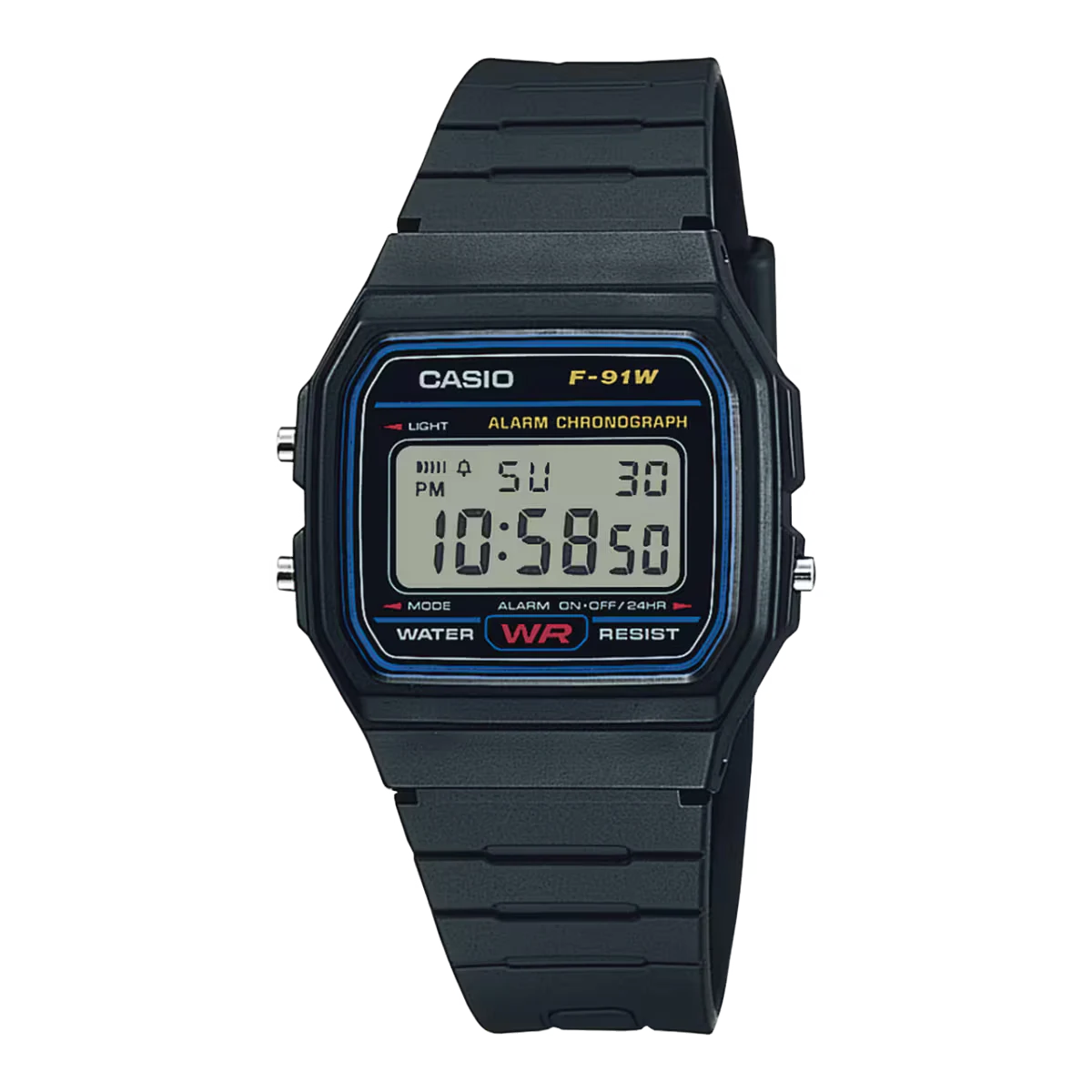
Casio F-91W vs A158WA vs AE-1200 vs A168: Which One Fits?
Compare four classic Casio digital watches by size, display, everyday features and use case, with official specifications and clear trade-offs.
 Read the story ↗
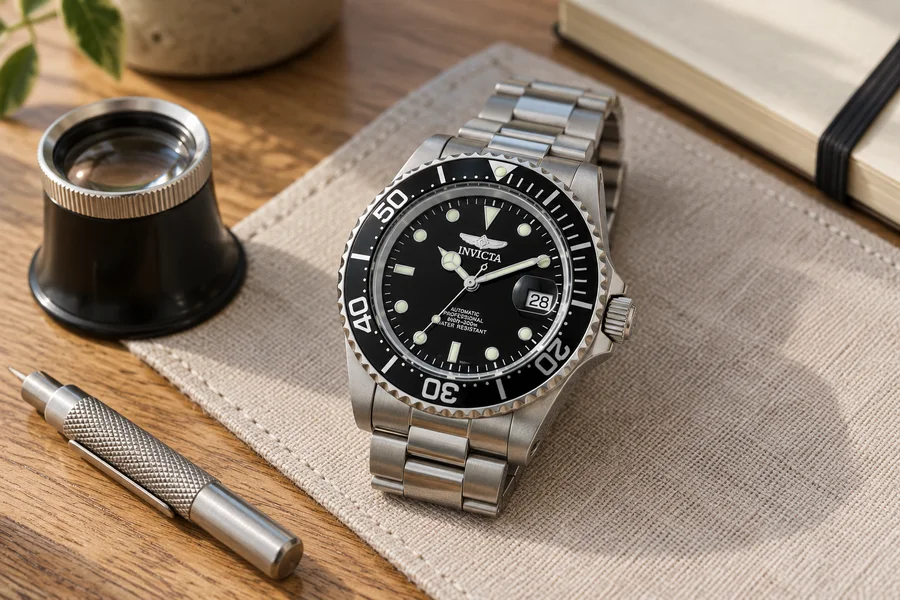
NH35 vs Miyota 8215: Accuracy, Hacking and the Watch You Buy
Start with the version. Finish with the complete watch.
 Read the story ↗
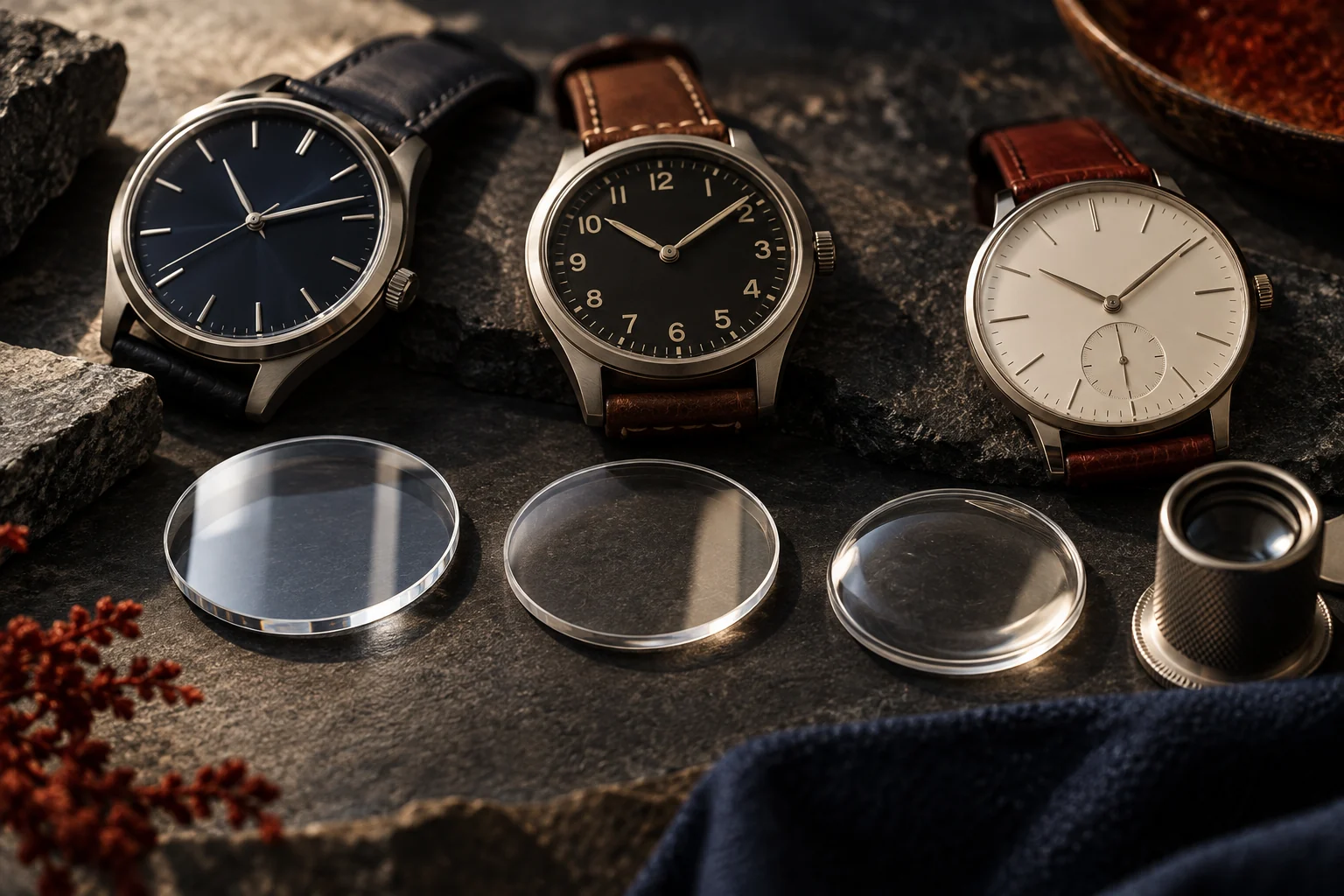
Sapphire vs Mineral vs Acrylic Watch Crystal: The Real Tradeoffs
Scratch resistance is only one part of a watch crystal. Here is how sapphire, mineral glass, and acrylic differ in daily use and repair.