Sapphire vs Mineral vs Acrylic Watch Crystal: The Real Tradeoffs
Scratch resistance is only one part of a watch crystal. Here is how sapphire, mineral glass, and acrylic differ in daily use and repair.
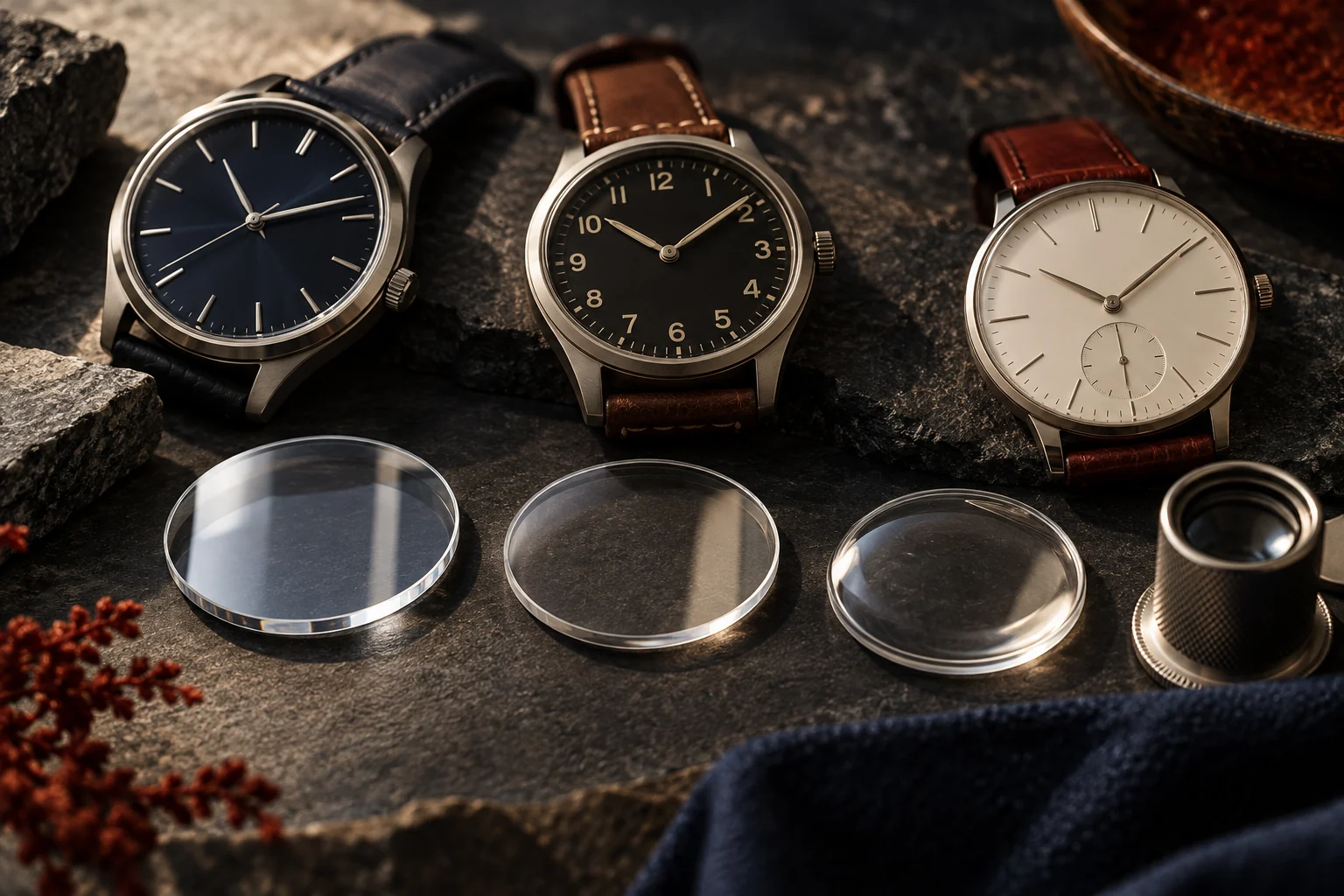
Sapphire is the best choice when avoiding everyday scratches matters most. Mineral glass is a cost-conscious middle ground with reasonable clarity and durability. Acrylic scratches most easily but is light, can be shaped into warm vintage domes, and many marks can be polished. Impact performance depends on thickness, shape, mounting, and the specific material, so “sapphire never breaks” and “acrylic is always tougher” are oversimplifications. Choose the crystal for the watch’s purpose and service path.
| Material | Main strength | Main compromise |
|---|---|---|
| Sapphire | Excellent resistance to ordinary scratches | Cost and reflections without good coating |
| Mineral glass | Balanced cost, clarity, and everyday durability | Scratches more readily than sapphire |
| Hardened mineral / proprietary glass | Brand-specific middle ground | Performance is harder to compare by name alone |
| Acrylic | Light, warm optics, polishable small marks | Scratches easily and can distort more |
The crystal is both a window and a structural component
A watch crystal protects the dial and hands while shaping how the watch looks. Flat crystals can read clean and modern. Boxed or domed crystals create reflections and distortion associated with vintage watches. Thickness, curvature, coatings, gasket design, and how the crystal is seated all influence durability and water resistance. Material names are useful, but they do not describe the complete construction.
Daily wear presents two different threats: abrasion and impact. Sliding a cuff over the crystal, brushing a wall, or contacting grit can create scratches. Striking a hard edge delivers impact energy. A material can resist one mode well and still require thoughtful engineering for the other. That is why simple rankings tend to fail. The right question is which compromise suits an office watch, field watch, dive watch, or historically styled piece.
Sapphire: clean for longer, especially in ordinary wear
Synthetic sapphire is valued because it is very hard and resists the small scratches that accumulate on desks, door frames, hardware, and zippers. A sapphire crystal can help a daily watch look newer after years of careful use. The material is common in midrange and premium watches, and it can be flat or curved. Anti-reflective coating is important because an untreated surface may behave like a mirror in bright conditions.
Coating placement matters. An outer anti-reflective layer can itself show marks even when the sapphire beneath remains intact. An inner coating is better protected but may remove less reflection. Sapphire is not unbreakable; severe edge impacts can chip or fracture it. Replacement cost may be higher, especially for shaped crystals with coatings. For a watch expected to share space with metal tools or stone surfaces, the scratch advantage remains compelling.
Mineral glass: the useful middle
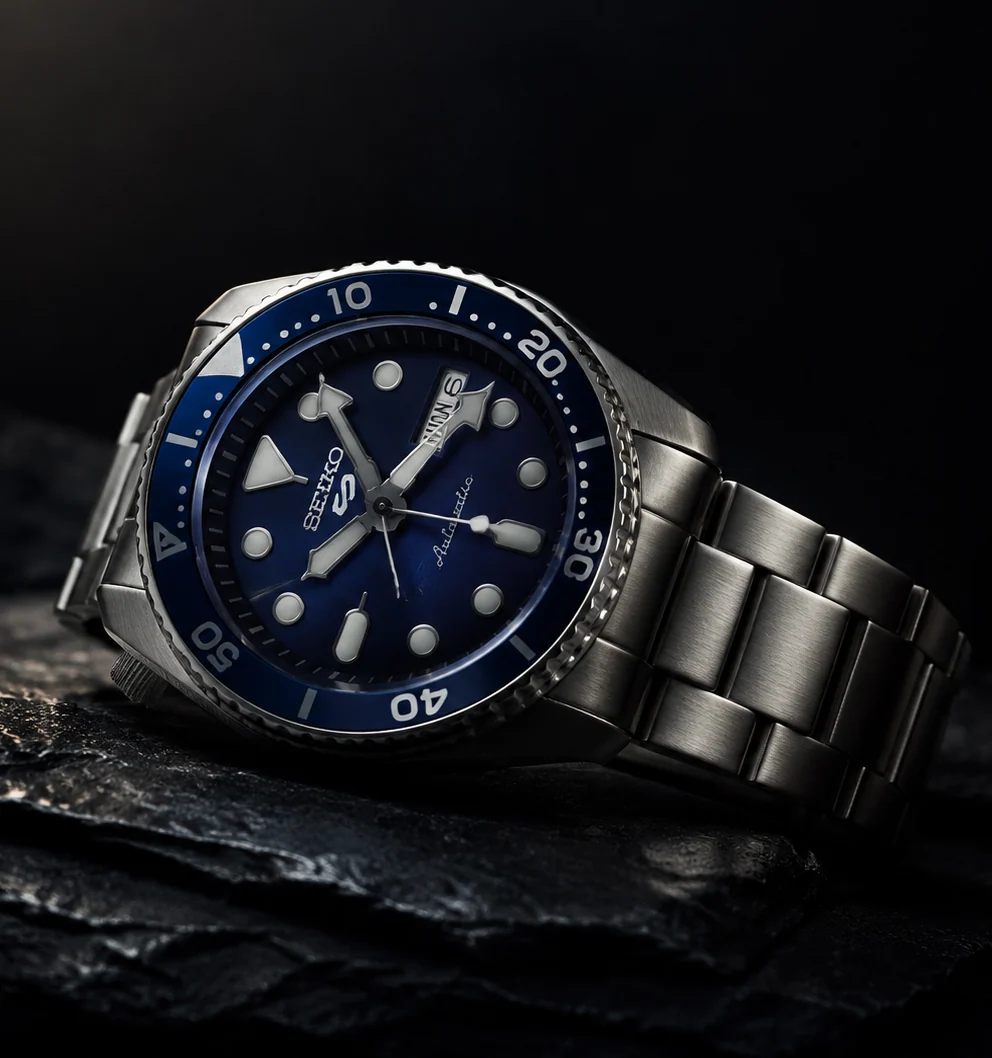
Mineral watch glass is treated to improve hardness and is widely used in affordable watches. It offers clear optics and a familiar glass feel without the cost of sapphire. Brands may use proprietary names or hardening processes; Seiko’s Hardlex is one well-known example, and Seiko publishes it across products ranging from everyday models to dive watches. The label alone does not reveal exact performance, but it locates the material in the broad mineral-glass family.
Mineral glass will generally collect scratches more readily than sapphire, and those marks are difficult to polish cleanly at home. Replacement may be the sensible repair. The tradeoff can still be rational when the watch is inexpensive, the crystal is protected by a bezel, or the design uses a shape that would be costly in sapphire. A small scratch on a tool watch may matter less than a large purchase premium.
Acrylic: flawed, charming, and unusually repairable
Acrylic crystals are a form of plastic and were common on vintage watches. They are light and can be formed into high domes that bend light at the dial edge. That warm distortion is part of the appeal and can make a faithful reissue feel more convincing. The surface scratches easily, sometimes from ordinary clothing hardware, so a pristine appearance requires more attention.
The advantage is that many light surface marks can be polished with an appropriate plastic polish and patient technique. Deep gouges, cracks, crazing, or a damaged seal still call for replacement. Acrylic is therefore friendly to an owner who accepts maintenance and likes visible aging. It is less suitable for someone who wants the crystal to remain optically clean without intervention. On a dress watch or vintage-inspired chronograph, the visual character may be worth that bargain.
Reflections, legibility, and coatings
A scratch-free crystal can still make a watch difficult to read if it reflects the sky, ceiling lights, or a bright shirt. Curvature increases the angles at which reflections appear. Dark dials can act like mirrors beneath the crystal. Anti-reflective treatment can improve contrast dramatically, particularly on sapphire, but manufacturers do not always disclose whether the coating is inside, outside, or both.
Inspect product photographs for a blue or purple coating cast, while remembering that studio lighting can exaggerate it. Reviews taken outdoors are useful for judging real legibility. For a field or dive watch, hands, markers, and lume must remain clear through the crystal. For a dress watch, some reflection and edge distortion can add visual depth. The best material specification cannot compensate for hands that disappear against the dial.
How to choose without overpaying
Choose sapphire for an everyday watch when scratches would bother you and the price difference is reasonable. Choose mineral glass when the total watch value, protective bezel, and likely replacement cost make it a balanced option. Choose acrylic when vintage optics, light weight, or home polishability are part of the point. For hard outdoor use, look at the entire case and crystal geometry rather than assuming one material wins every impact.
Before purchase, confirm the exact crystal, coating, shape, and availability of replacements. After a replacement, water resistance may need professional testing. Do not treat online hardness demonstrations as a complete durability test; real watches fail at edges, gaskets, and mounting points as well as surfaces. The right crystal is the one whose likely wear you can accept and whose repair does not turn an enjoyable watch into a disposable object.
The decision in one minute
- Choose sapphire: when long-term scratch resistance and a clean everyday appearance are priorities.
- Choose mineral glass: when total price matters and the watch has a protective bezel or easy service path.
- Choose acrylic: for vintage character, low weight, dramatic domes, and the ability to polish many light marks.
- Check the coating: because reflections and marks in an outer anti-reflective layer can affect the experience.
Frequently asked questions
Can sapphire watch crystals scratch?
They are highly scratch resistant but not immune to every material or situation. Coatings applied to the outside can also mark even when the sapphire beneath remains intact.
Can mineral glass be polished?
Minor attempts are possible, but the process is difficult and often not worthwhile compared with replacement. Acrylic is much more commonly polished by owners.
Is Hardlex the same as sapphire?
No. Hardlex is Seiko’s proprietary hardened mineral crystal. Seiko lists Hardlex and sapphire separately in its specifications.
Which crystal is best for a dive watch?
There is no automatic winner. Sapphire resists scratches, while overall impact performance depends on construction. Check the complete watch design, certification, bezel protection, and service support.
How this guide was built
This is a research-based editorial guide, not a claim of laboratory testing or long-term ownership of every product mentioned. We compared manufacturer documentation, standards and workplace guidance where relevant, then translated those details into practical buying questions. We avoid inventing test results, and we link the primary references below so readers can verify specifications and model-specific limits.