Watches / A closer look
Orient Kamasu vs Citizen Promaster: Automatic or Eco-Drive?
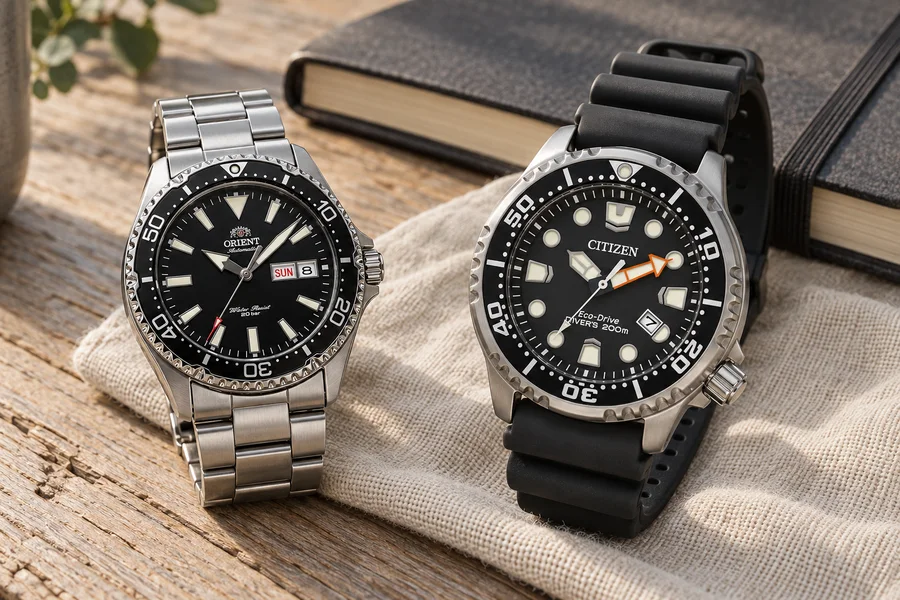
Two black-dial divers. Two very different ownership routines.
Start here
Choose the Kamasu if an automatic movement, sapphire crystal and its steel-bracelet configuration are part of what you want. Choose the Citizen BN0150-28E if a properly charged light-powered watch better suits your routine. Verify the exact references, fit and seller terms; neither choice is settled by a 200m label alone.
As an Amazon Associate, we earn from qualifying purchases. How our links work ↗
The useful details, in one place.
Compare the published details
| Feature | Orient Kamasu RA-AA0001B39B | Citizen Promaster BN0150-28E |
|---|---|---|
| Movement | F6922 automatic | E168 Eco-Drive |
| Crystal | Sapphire | Anti-reflective mineral |
| Listed case width | 41.8mm | 44mm |
| Supplied band | Steel bracelet | Polyurethane strap |
| Lug width | 22mm | 20mm |
| Stored energy claim | Approximately 40 hours | Approximately 6 months after full charge, stated conditions |
| Water designation | 200m manufacturer rating | 200m; Citizen describes ISO-compliant diver |
Manufacturer information checked October 15, 2026. These are published claims, not our sample measurements. Match the exact model, revision and instructions.
The short answer: choose the routine before the movement
Choose the Orient Kamasu if you actively want the small rituals of an automatic watch: setting it after time away, enjoying the moving seconds hand and accepting that daily timekeeping can vary. Choose the Citizen Promaster BN0150-28E if you want a light-powered analog watch that is easier to leave running between wears. That is the main difference. Sapphire versus mineral glass and steel bracelet versus rubber-like strap matter, but they should not distract you from the ownership routine you prefer.
This comparison covers the black-dial Orient Kamasu RA-AA0001B39B on its steel bracelet and the black-dial Citizen BN0150-28E on its supplied polyurethane strap. It is a researched comparison, not a record of diving, pressure testing, scratch testing or timed wrist trials. We use manufacturer specifications and manuals, identify the exact references and explain what still needs checking on a seller's listing. The illustrative scenes illustrate wearing and placement; they do not prove fit, durability, luminosity or water resistance.
Know which Kamasu and which Promaster you are comparing
Kamasu and Promaster are names used across product families and different references. Similar photographs can hide a different dial color, bracelet, strap, case or movement. For this article, the Orient reference comes from Orient Watch USA's Kamasu page, while the Citizen reference comes from Citizen's BN0150-28E page. Keep those model numbers beside you while shopping. A broad search for a black dive watch is not an exact product match.
This matters when comparing prices too. One offer may include a bracelet while another supplies a strap, and a seller may select a different variant when you click a color swatch. Compare condition, seller, shipping, taxes, local warranty and return terms for the exact configuration. We do not quote a fixed Amazon price or present either model as always below a particular budget. A good comparison remains useful after a sale changes because it explains the differences that survive the price change.
Automatic versus Eco-Drive is the decision that keeps coming back
The Kamasu uses Orient's F6922 automatic movement, with hand winding and stop-seconds. It stores energy mechanically and can stop after it has been left unworn long enough. The Citizen uses the light-powered E168 Eco-Drive movement and stores energy electrically. The appeal is not that one system is more authentic; it is that they ask different things of the owner. Think about a normal month, including days when you wear another watch or do not wear one at all.
If you enjoy resetting a mechanical watch, the Kamasu's routine may be part of the reason to buy it. If you regard that task as an interruption, the Citizen is more naturally aligned with your needs. Eco-Drive still requires appropriate light exposure and care, so it should not be treated as a watch that can be forgotten indefinitely in a dark drawer. Our automatic versus solar guide helps you decide whether the category itself matches the way you live.
Accuracy: compare the kind of promise, not a lucky example
An automatic and a quartz-based light-powered watch operate differently, so do not compare a particularly favorable timing anecdote from one owner with a broad manufacturer tolerance for the other. Check the applicable manual and the finished-watch guarantee. We have not logged either model's rate. A seller's claim that a specific unit has been regulated should come with a clear description of what was checked and what support applies if the result does not hold during ordinary use.
Ask yourself how often you need precise agreement with a reference. If you want to put on a watch after several days and leave without resetting it, that preference favors the Citizen's ownership model. If you enjoy observing and occasionally correcting mechanical timekeeping, it does not automatically count against the Kamasu. Keep the distinction practical. Neither watch needs an invented “real-world accuracy score” to explain why it might suit one person better than another.
Reserve and charging are not the same measurement
Orient lists approximately forty hours of power reserve for this Kamasu. Citizen's E168 manual describes approximately six months of running after a full charge under its stated conditions. Those numbers answer different questions, and neither describes the actual energy state of a newly delivered watch. A partly wound automatic can stop sooner than its nominal reserve; an Eco-Drive kept in darkness may need proper charging before it behaves normally. Read the E168 manual for the charging conditions.
For the Kamasu, follow the matching instructions for starting and setting the movement. For the Citizen, establish a sensible light-exposure routine rather than assuming a few minutes under any lamp fully restores a depleted cell. Avoid improvising a charging method that overheats the watch. The useful buying question is whether you are happier winding and setting an automatic or maintaining ordinary light exposure for a solar watch. Neither routine should be disguised by an attractive desk photograph.
Sapphire versus mineral: an advantage with boundaries
The Kamasu's sapphire crystal is a meaningful feature if resistance to everyday scratching is high on your list. Citizen lists anti-reflective mineral glass for the BN0150-28E. That difference can justify your preference, but it should not become a claim that sapphire is unbreakable or that mineral glass makes a watch unsuitable for ordinary wear. Scratches, impacts, coatings and repair costs are different considerations. We have not carried out a comparative scratch or impact test.
Think about what the watch regularly encounters. Desk edges, grit, door frames and working environments create different kinds of contact. A crystal that remains visually clean is useful, but so is a strap and case you are comfortable wearing throughout the day. If glass type is the decisive issue, investigate the cost and availability of replacement parts through the appropriate service route. Buying a product solely because of one material can leave you accepting a larger daily compromise elsewhere.
The case numbers are only the beginning of fit
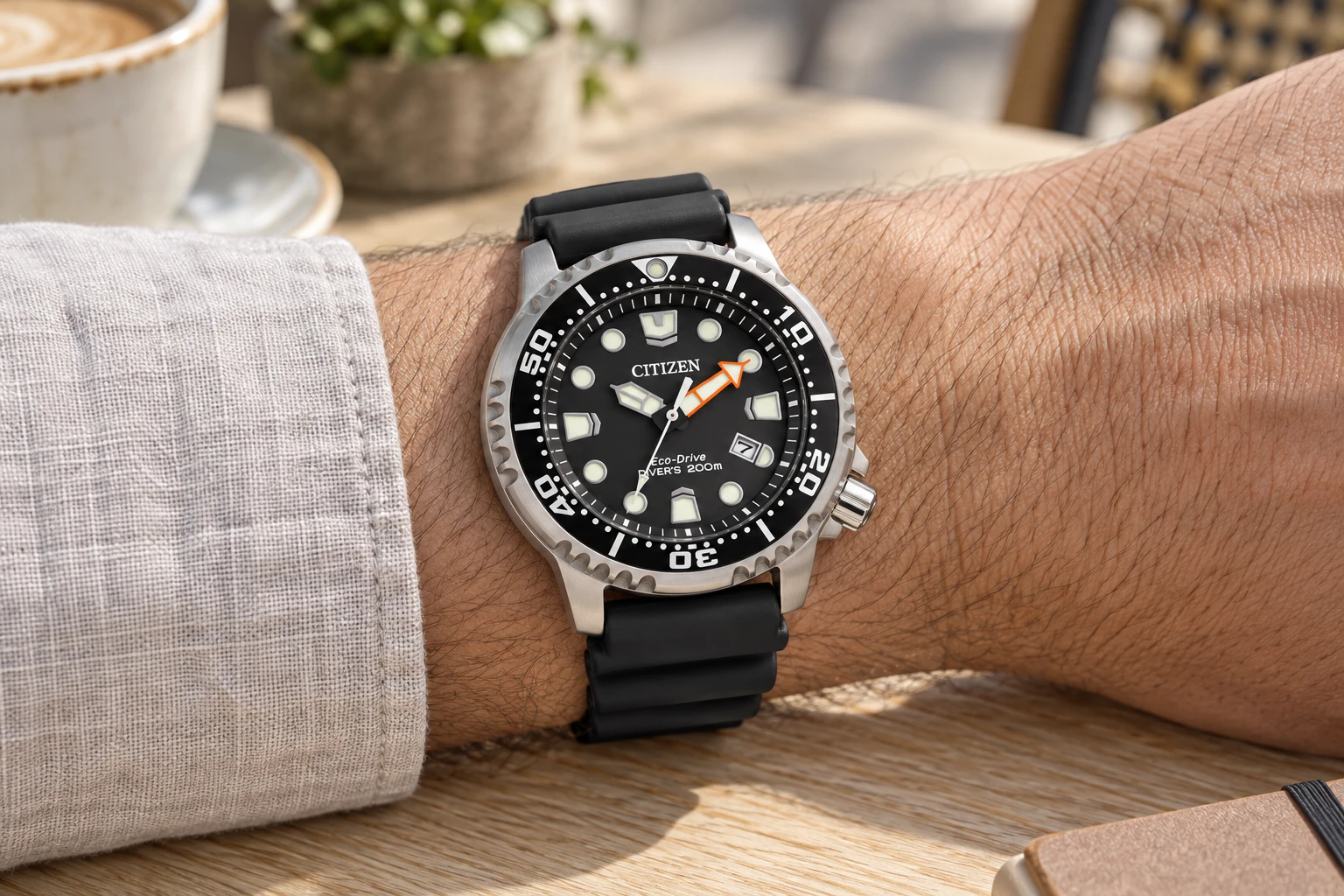
Orient lists a 41.8mm case for the reference discussed here, while Citizen lists 44mm for the BN0150-28E. Do not translate that directly into a guaranteed wearing verdict. Case shape, crown position, lug geometry, strap flexibility and bracelet end links influence how a watch sits on a wrist. Compare the complete profile with a watch you already find comfortable. A paper diameter circle helps with scale, but it cannot reproduce the way a case and strap wrap around your arm.
If you can try either model, rest your forearm on a desk and bend the wrist gently through ordinary movements. Check the crown against the hand, the underside of the clasp or buckle and whether the watch shifts when you type. If buying online, use the return window within the seller's terms rather than relying on a wrist illustration as a sizing tool. Our 38mm, 40mm and 42mm fit guide explains why diameter alone rarely settles the question.
Bracelet versus polyurethane changes the day-to-day feel
The reference Kamasu here comes on a steel bracelet, while the Citizen comes on a black polyurethane strap. A bracelet can suit someone who wants a metal watch that also works with everyday office clothing. It may need sizing, and the clasp's adjustment range matters when the wrist changes through the day. Include any sizing cost in the purchase rather than treating the listed watch price as the complete bill. Keep removed links if the bracelet is adjusted.
The Citizen's strap offers a different wearing experience and uses a buckle rather than a metal bracelet clasp. Try its flexibility, hole spacing and keeper arrangement before deciding that it is automatically more comfortable. Aftermarket straps can change either watch's appearance, but order the correct lug width and hardware. Citizen lists 20mm for this reference; Orient lists 22mm for the Kamasu. A strap listing that simply says “fits dive watches” is not a sufficient compatibility statement.
A 200-metre label does not make the documentation identical
Both manufacturers publish a 200m water-resistance designation for the references covered here. Citizen also describes its Promaster as an ISO-compliant diver in the product information. Do not turn the shared depth figure into an assumption that every aspect of the watches' testing, certification or instructions is identical. Use the exact manufacturer's documentation for the activity you intend. We have not pressure tested either watch or established the current sealing condition of a particular used example.
If water use is important, buy from a seller whose support and warranty arrangements you understand. Check crown operation, condition and any service history that could affect sealing. A watch opened for repair or strap-related case work should not be assumed to retain its original condition without appropriate checks. The comparison here helps with choosing a product; it is not a substitute for the manufacturer's instructions or professional assessment of a specific watch that will be used in demanding conditions.
Legibility needs your eyes and your lighting
Look at the hands, hour markers, minute track and date display in the lighting where you normally check the time. The Citizen's distinctive minute hand and the Kamasu's day-date layout offer different visual priorities. A close product image lets you inspect the design, but it does not reproduce glancing at the watch while walking, working or wearing glasses. If the extra weekday display is useful to you, count that as a genuine feature rather than dismissing it as a complication you are supposed to outgrow.
Do not infer a measured lume winner from a long-exposure photograph. Exposure, charge conditions and elapsed time can change the apparent result. We have not run a controlled luminosity test on either model. During an ordinary return-window evaluation, see whether the dial is easy to read for your own routine. If night-time reading is central, seek a reproducible test with stated conditions and compare that evidence with alternatives designed around your actual visibility requirements.
Setting and maintenance should fit your patience
Both watches have crown procedures that deserve a quick read before use. Follow the matching manual for releasing a screw-down crown, setting the calendar and securing it afterwards. Do not force the mechanism if something feels wrong. Calendar restrictions are model-specific, and a setting shortcut borrowed from a different watch is not a reliable instruction. Keep the manual link or PDF with the order so you can find it after the first week, when the packaging has been put away.
The mechanical and light-powered systems also have different maintenance needs, but neither should be described as permanently maintenance-free. Seals, crowns, straps and other parts of the completed watch can still need attention. For Eco-Drive, distinguish avoiding routine disposable-battery changes from never needing any service. For the Kamasu, ask the authorized or qualified service route about costs and condition when appropriate. We do not invent a universal service interval or a repair price that may not apply in your country.
Read owner reviews for recurring questions, not an invented score
Owner comments can be useful for identifying things to inspect: bracelet adjustment, strap fit, crown feel, date readability or whether a watch arrives needing a proper charge. Read comments attached to the same reference and distinguish a product issue from shipping or seller service. A review describing another color, bracelet or movement variant may be less relevant than its star rating suggests. Use the observation to formulate a question you can verify on the unit you buy.
We have not sampled and coded a representative set of Amazon reviews for this comparison, so we do not publish a satisfaction percentage, average defect rate or claimed conversion ranking. A useful guide does not need those invented numbers. Keep the evidence layers visible: manufacturer specifications, the seller's actual offer, relevant owner observations and your own acceptance checks after delivery. When those disagree, ask for clarification instead of averaging incompatible claims into a reassuring-looking score.
Compare the total ownership offer, especially if buying used
For a new watch, compare the delivered price, condition, seller, warranty eligibility, return route and any necessary sizing. For a used watch, ask about remaining bracelet links, strap condition, crystal damage, crown behavior, service history and water-resistance verification where relevant. A low price is not the full story if the bracelet cannot fit your wrist or the seller cannot explain the condition. Photographs should show the actual item when condition is part of the decision.
Avoid assuming that every marketplace offer receives the same manufacturer warranty. Regional terms and authorized-seller arrangements can differ. Read the terms that apply to the purchase rather than copying a warranty length from another country's site. If you follow an Amazon search link from this article, confirm the selected reference before buying. Search results can include straps, accessories, older versions and other watches. That extra model check is a small step compared with organizing a return for the wrong product.
Make the final choice with two ordinary-day scenarios
Picture a Tuesday morning after the watch has been off for several days. If setting the time and calendar feels like part of the pleasure, the Kamasu remains a strong candidate. If you want to fasten a strap and leave with minimal preparation, the Citizen is easier to align with that expectation when it has been kept appropriately charged. Then picture a long day at the desk. Decide which case, clasp or strap you would rather wear, rather than choosing from an isolated specification table.
The Kamasu is the more natural shortlist option for someone who specifically wants an automatic, sapphire and the supplied steel-bracelet configuration. The BN0150-28E is the more natural option for someone who prioritizes the light-powered routine and its particular strap-equipped diver design. Neither recommendation depends on a fabricated hands-on story. Verify the exact offer, accept the tradeoffs you understand and keep enough of the return period to test a normal week. That is how a comparison becomes a useful purchase decision.
Make the next step concrete.
Your before-you-buy checklist
Use this as a personal decision list. The boxes stay in this page session; your answers are not submitted.
Mark the checks that you have completed.
Clear answers, without the shortcuts.
Questions readers ask
Which is easier to leave running between wears?
A properly charged Eco-Drive fits that goal more naturally than an automatic left off long enough to stop. The Citizen still needs appropriate light exposure and care; it should not be forgotten indefinitely in darkness.
Does the Kamasu have sapphire and the BN0150 mineral glass?
For the exact references covered here, Orient lists sapphire and Citizen lists anti-reflective mineral. That is a material distinction, not proof of a comparative impact or scratch test.
Is the 44mm Citizen guaranteed to fit worse than the 41.8mm Orient?
No. Case shape, lugs, crown position and the band affect fit. Compare with a watch you already wear comfortably and check the actual unit within the seller’s terms.
Did you dive or pressure-test these watches?
No. This comparison uses published manufacturer information and manuals. We have not tested water resistance, lume, scratch resistance or timing on samples.
When the checks are settled.
Compare the exact offer
The links below open model-specific Amazon searches and may include other versions, accessories or unrelated results. Check the selected reference, seller, condition, delivered total, warranty and return terms before ordering.
As an Amazon Associate, we earn from qualifying purchases. We do not publish unverified live prices, availability, sales counts or star ratings. How our links work.
Explore the everyday picks →Evidence and limits.
Sources and how this review was prepared
This article was prepared by NextGen Editorial Desk from the published manufacturer specifications and manuals, checked October 15, 2026. It is a researched assessment. We have not claimed hands-on ownership, laboratory measurements, pressure tests, scratch tests or a representative analysis of Amazon reviews. Suggested arrival checks and arithmetic examples are guidance, not results from a tested sample.
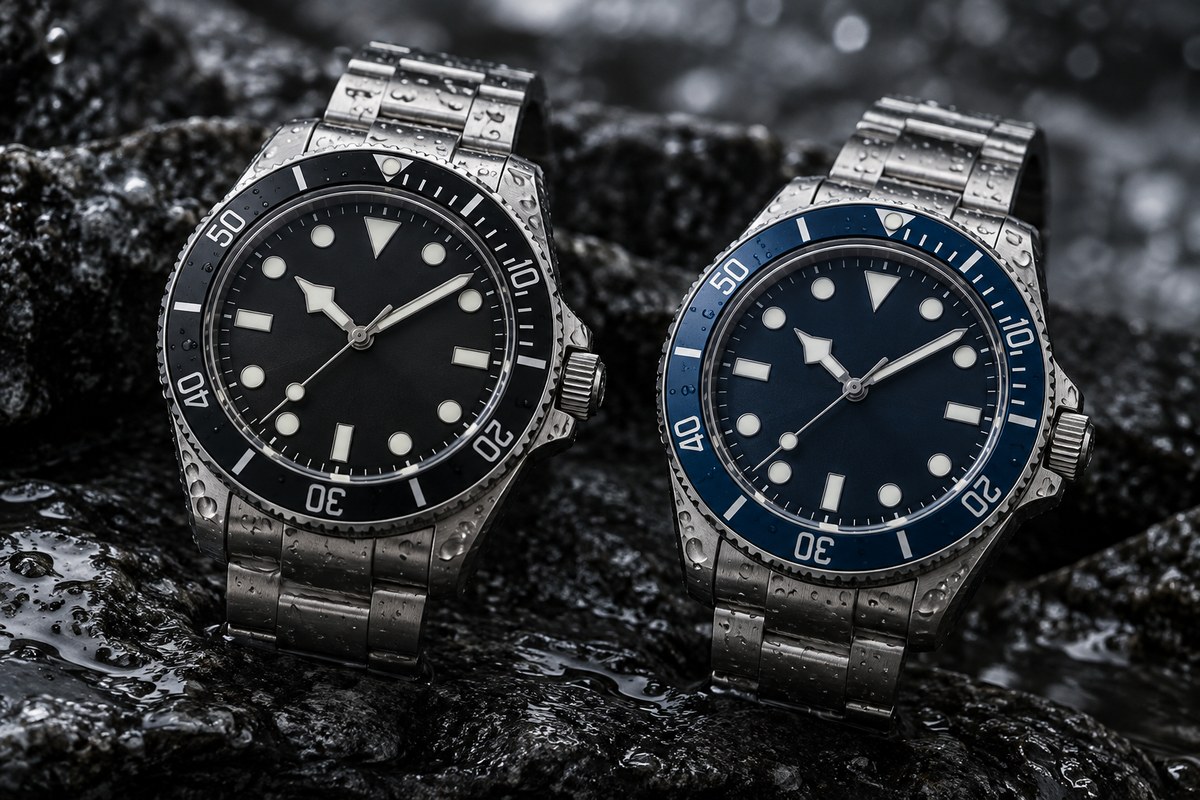
Lifestyle scenes illustrate everyday settings and styling. They do not establish exact dimensions, fit, color accuracy or performance. Use the manufacturer's original product information to verify fine details. Manufacturer claims, our interpretation and your own checks are kept distinct.
- Orient Watch USA: exact Kamasu reference and specifications
- Citizen: BN0150-28E exact reference and published specifications
- Citizen E168: charging, setting and use instructions
If a specification or model revision has changed, use the site contact information and include the exact reference and source. An update should improve the evidence, not merely change the date.
Keep following the useful question.
Read next
The next good question
Keep exploring.
 Read the story ↗
Citizen Eco-Drive vs Casio Tough Solar: Two Solar Watch Approaches
Citizen Eco-Drive and Casio Tough Solar both use light to power watches, but they serve different design priorities across broad product families. Eco-Drive spans many analog styles; Casio solar models often pair charging with digital features or rugged designs. Compare the exact reference, display, charging guidance, reserve, service options and current price.
 Read the story ↗
Casio F-91W vs A158WA vs AE-1200 vs A168: Which One Fits?
Compare four classic Casio digital watches by size, display, everyday features and use case, with official specifications and clear trade-offs.
 Read the story ↗
Seiko 5 vs Orient Kamasu: Compare Use, Fit and Water Rating
Seiko 5 and Orient Kamasu are not one-to-one alternatives: Seiko 5 covers a broad range of casual sports watches, while Kamasu references are more explicitly diver-style. Compare the exact case dimensions, crystal, water-resistance marking, movement, bracelet and price. Choose by intended use and fit, not by brand generalizations.