Watches / A closer look
How to Choose an Everyday Watch You’ll Actually Wear
Start with your Tuesday, not somebody else’s collection. A practical route from daily routine to a watch that earns its place.
Start here
The useful answer
As an Amazon Associate, we earn from qualifying purchases. How our links work ↗
The useful answer
Choose the watch that fits your routine and wrist before comparing prestige or specifications. Digital quartz suits low-fuss timekeeping; light-powered analog suits regular wear with fewer battery changes; an automatic suits someone who enjoys setting and maintaining a mechanical watch. Then check dimensions, readability, water-use instructions and the exact seller offer.
Compare the buying routes ↓| Your everyday priority | Start here | Check before ordering |
|---|---|---|
| Minimal setting and low weight | A compact digital quartz watch | Display visibility, strap fit and water-use instructions |
| Analog display without daily winding | A light-powered watch | Charging routine, dimensions and strap material |
| Mechanical interest | An automatic watch | Setting instructions, timing tolerance and service budget |
| One watch with office clothes | A restrained, comfortable case | Cuff clearance, bracelet sizing and actual dress code |
An everyday watch has a surprisingly demanding job. It needs to feel right while you type, survive the way you move through a day, and still make sense with the clothes you own. A beautiful watch that comes off your wrist before lunch is an expensive bedside ornament. A simpler one that you forget you are wearing can be the better purchase.
This guide is for choosing one useful watch rather than building a collection. The examples are identifiable models already covered on NextGen. They are research-based options, not a ranking of Amazon sales, and we have not personally tested every watch. Treat the photographs as a way to understand the style; use the published manufacturer information and the exact retailer listing to confirm the product you will receive.
1. Write a brief for the day you actually live
Before looking at a dial, write three sentences. Where will you wear the watch most often? What annoys you about checking the time now? What would make you stop wearing it? Answers such as “office and train,” “I want to leave my phone in my bag,” and “anything that presses into my wrist while typing” are much more useful than “something versatile.”
Think through an ordinary week, including the awkward bits. You might work at a desk, cycle home, cook dinner and spend Saturday outdoors. Those activities do not automatically demand a large sports watch. They do suggest checking comfort, water-use guidance, strap cleaning and whether the display remains easy to read in your actual lighting. If your work has clothing or safety restrictions, those come first.
Separate needs from preferences on a short list. Accurate time, a comfortable strap and a usable display might be needs. A blue dial, an exhibition case back and a famous logo might be preferences. Preferences are allowed; enjoying the object is part of owning a watch. The distinction simply helps you avoid paying for a feature while overlooking the reason you wanted the watch.
Give yourself one deal-breaker. Perhaps it must slide under a shirt cuff, or you refuse to reset a stopped watch on Monday. That rule will remove more unsuitable options than an hour of scrolling. It also makes comparison calmer: you are solving your own problem rather than trying to win an imaginary specification contest.
2. Choose the ownership routine before the movement
The most important movement question is not which mechanism earns more respect. It is which routine you will tolerate. A battery-powered quartz watch is a sensible starting point if you want dependable timekeeping without winding. A digital model adds a clear numeric display and, depending on the model, practical functions. Battery replacement still involves a cost and the right service procedure.
A light-powered quartz watch uses a rechargeable energy store and needs adequate light according to its instructions. It is useful for someone who wants an analog dial and wears the watch regularly. It is not a promise of permanent operation in a dark drawer. Charging time depends on the model and light conditions, and an energy store can eventually need professional attention. “Solar” is a way to power a watch, not immunity from maintenance.
An automatic watch winds through movement and may also allow manual winding. It can stop when left unworn long enough. You then set it again, following its instructions, especially around calendar adjustment. Mechanical timing varies with movement, condition, position and use. If seconds matter to your work, look at the stated tolerance before falling in love with the sweeping seconds hand.
For a concrete example, Seiko lists the SRPD55 with a 4R36 automatic movement and approximately 41 hours of power reserve. That is a useful planning figure, not a guarantee that every owner's watch will run for an exact duration in every condition. If that setting routine sounds enjoyable, consider it. If it sounds like another chore, choose a different movement without apology.
3. Fit is a set of measurements, not one diameter
Case diameter is only a starting point. The distance from one lug tip to the other, case thickness, shape of the case back, bracelet end links and strap stiffness all influence how a watch sits. Two watches with the same advertised diameter can feel very different. Your wrist circumference does not capture its flat upper surface or how tightly you prefer a strap.
Measure a watch you already like, if you have one. Record its case diameter, approximate thickness and the space it occupies across your wrist. If you do not own a watch, try several in a store before purchasing online. A paper outline can help reject something obviously oversized, but it cannot simulate weight, clasp pressure or the feel of a bracelet.
When trying a watch, relax your hand and let your arm hang normally. Then type, bend your wrist and pull a sleeve over it. Check whether the crown digs in, whether the case slides around and whether the clasp rests on the desk. Do not judge only with your arm lifted for a photograph. That pose can hide the exact pressure point that becomes annoying during a workday.
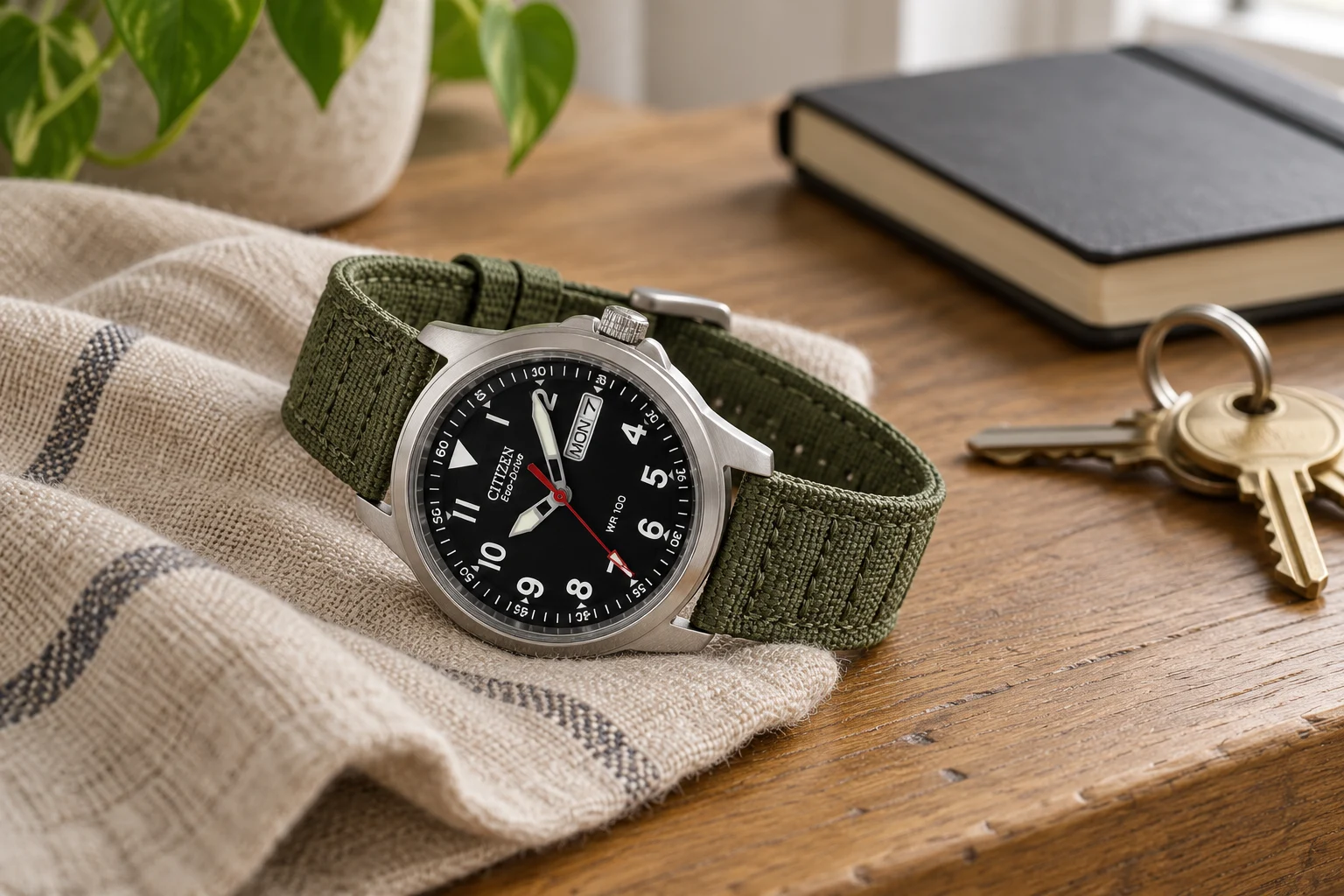
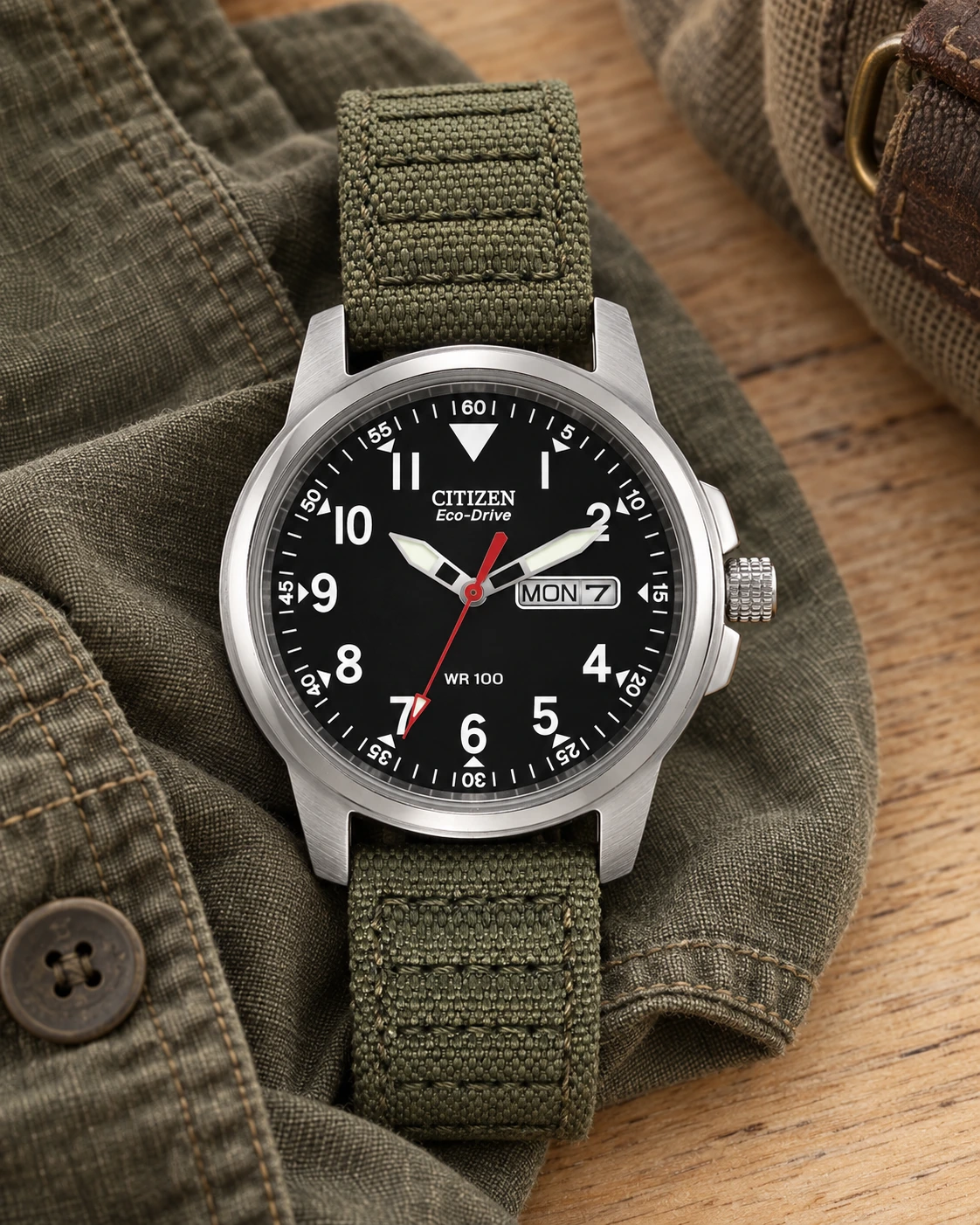
Citizen specifies the BM8180-03E at 37 mm, while the SRPD55 specification lists a 42.5 mm diameter and 46 mm lug-to-lug distance. Those figures illustrate why they deserve separate fit checks. They do not prove that one is universally a small-wrist choice or that the other is too large. Case shape and your own preference still decide.
4. Test readability without relying on a glamour photograph
A dial that looks dramatic in a close-up may be hard to read from normal wrist distance. Look for enough contrast between hands and dial, a minute track you can interpret and a date window you can actually see. Decorative detail is harmless until it competes with the information you check several times a day.
Consider where you need to read the watch. A bright office, dim train carriage and dark bedroom ask different things of a display. Luminous paint requires prior exposure to light and its usefulness changes over time. An illuminated digital display behaves differently. Do not infer either feature's performance from a heavily edited night photograph or a seller's phrase such as “excellent visibility.”
If you can inspect the watch in person, glance at it briefly rather than staring. Can you tell the time without moving your wrist into a particular angle? Can you distinguish the hour and minute hands? For a digital watch, check the viewing angle and whether your normal glasses make the display comfortable. These are ordinary tests, but they answer a question a movement specification cannot.
Decide whether you need the date. A day-date display can be useful, but it creates another thing to set after a stopped mechanical watch. Conversely, a watch without a date may be easier to put on quickly. Neither layout is inherently more sophisticated. Choose the information you will use, then leave room for a dial you enjoy seeing.
5. Match water guidance to your activities
Water-resistance markings are not a literal invitation to use a watch at the printed depth. Start with the manufacturer’s activity guidance and the watch’s condition. Seals age, impacts happen and service history matters. A used watch with an impressive original rating can be a worse choice for water exposure than a new, properly checked watch with clear instructions.
If swimming is part of your routine, select a watch explicitly suitable for that activity and follow the crown and button instructions. Do not operate controls underwater unless the manufacturer allows it. If water exposure is occasional, a watch may still need precautions around soap, heat or steam. Check the manual rather than borrowing advice from a different model in the same brand.
The familiar Casio F-91W is worth considering for compact digital simplicity, but do not turn internet water experiments into a swimming guarantee. A video in which one watch survived something does not establish what your watch is rated or warrantied to do. Buy for the intended use rather than an anecdote.
Strap choice also matters here. A fabric strap that gets soaked needs time to dry; leather has different care needs; a metal bracelet needs its own cleaning routine. If a wet strap bothers you during a commute, address that before paying extra for a bezel. If you need a purpose-built diving instrument, get appropriate training and equipment rather than treating this everyday-watch guide as diving advice.
6. Build a shortlist with different strengths
Start with three candidates that solve your brief in different ways. For a person seeking low fuss, the F-91W, Citizen BM8180-03E and Seiko SRPD55 are a useful contrast. The first represents compact digital quartz, the second light-powered analog, and the third automatic ownership. The point is not to pretend these are interchangeable watches at an identical price.
Choose the F-91W route if low bulk and a straightforward digital display are central to your routine, after checking the exact model's functions and water instructions. Pass if its small display or styling does not suit your eyesight or office. A low entry price cannot make an unsuitable display easier to use. Our Shop card links to the reference so you can inspect it properly.
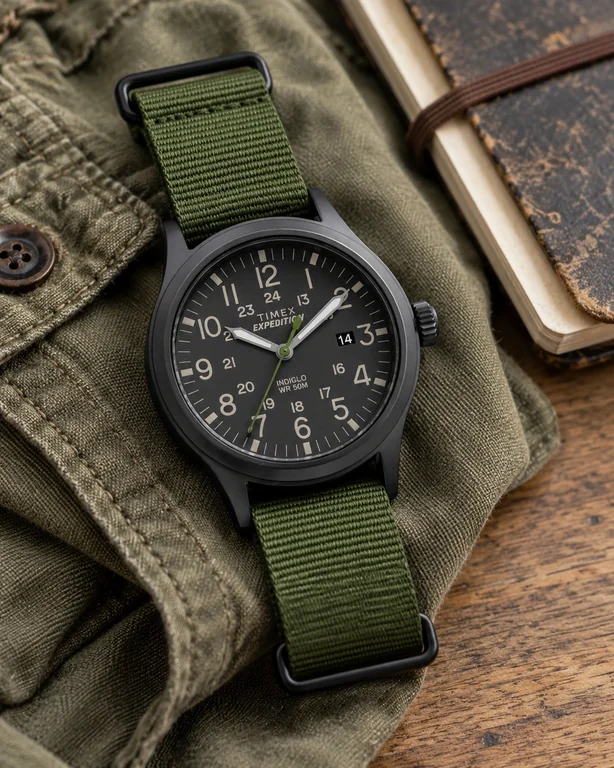
Choose the Citizen route if you want readable analog time and are willing to maintain a sensible light-exposure routine. Pass if the field-watch appearance or supplied strap does not fit your clothes, or if you will keep it unworn in darkness for long periods. A replacement strap can help, but add its cost and confirm compatibility before counting on that solution.
Choose the Seiko route if you actually want the mechanical experience and its case fits. Consider the Orient Kamasu guide as another automatic comparison when its exact reference and delivered price suit your budget. Do not call either a guaranteed bargain under a price threshold: seller offers change, and the best candidate is the one whose compromises you can live with.
7. Budget for the complete watch, not the headline price
The checkout total is the start of ownership cost. Add delivery, applicable taxes, bracelet sizing and any strap you genuinely need. Consider a future battery change or service without pretending to know a universal fee. Ask a local qualified service provider for a realistic quote if maintenance cost would change your decision. Mechanical service can be material relative to an inexpensive watch's purchase price.
A useful budget has a ceiling and a reason. For example, “I can spend this amount because I will wear it most workdays” is more stable than “the sale ends tonight.” Write down the maximum delivered total before looking at promotions. If a watch only fits the budget after ignoring required sizing or shipping, it does not fit the budget.
Be careful with gifts. Bracelet sizing, wrist preferences and display readability are personal. A return-friendly purchase can be more valuable than a small discount, but verify the actual seller's terms rather than assuming every Amazon offer has the same policy. Check who sells and fulfills the item, what condition is listed and whether a regional warranty applies.
Cost per wear is a useful way to reflect on a purchase, not a sales trick. A cheaper watch you dislike may remain unused, while a comfortable one could become part of your daily routine. That does not justify an unlimited budget. It means comfort, suitability and confidence in the seller deserve a place alongside price.
8. Inspect the offer before you leave for checkout
Match the full reference, not just the family name. Similar-looking watches can use different movements, case sizes, crystals, bracelets or colorways. Compare the retailer's model code with the brand page and photographs. If a listing combines several versions, make sure your chosen variant is the one shown in the cart. Save the relevant offer details for your records.
Read customer reviews for specific questions rather than a reassuring average. Look for comments about clasp adjustment, display readability, strap stiffness or the exact variant you want. Distinguish a product issue from a seller sending the wrong item. A few repeated, detailed observations can be useful prompts for further checking; they are not a controlled test or a guaranteed prediction of your experience.
Our Amazon buttons may open a model-specific search rather than one fixed listing. That lets you compare current offers, but it also means other products can appear. Match the reference before ordering. We may earn a commission from qualifying purchases, and that does not turn the first search result into our recommended seller. The listing still needs your final inspection.
If an offer lacks a clear reference or its photographs contradict the description, pause. Ask the seller a precise question or choose a clearer offer. A good buying guide should occasionally help you avoid a purchase. The time saved by skipping an ambiguous listing is worth more than rushing through a button because you have already spent an evening researching.
9. Use a short arrival checklist
Keep packaging and tags intact while you confirm the reference, condition and contents. Check the time-setting instructions before using the crown. Inspect the clasp and strap attachment, then try the watch indoors for ordinary tasks within the seller's permitted return conditions. Do not remove links, expose it to water or alter it before you understand what affects your options.
If an automatic watch's timing concerns you, record a fair observation over several days using a reliable reference and a consistent routine. Do not declare a defect from one short comparison. Check the brand's tolerance and instructions, then contact the seller or service provider if appropriate. Avoid opening the case or attempting regulation simply because an online clip makes it look easy.
For a light-powered watch, follow the charging instructions before judging its operation. For a digital watch, set the time and explore the controls without assuming a similar-looking model uses the same button sequence. The aim is to learn whether the watch works for your life, not to stress-test a new purchase beyond its intended use.
After a week, ask the simplest question: do you reach for it without persuading yourself? If yes, your selection process worked. If not, identify the reason before buying another one. A smaller case, different strap or clearer dial may solve the problem more directly than moving up a price bracket.
Before you decide
Common questions
What is the best movement for a first everyday watch?
For low-fuss timekeeping, start by considering quartz or light-powered quartz. Choose an automatic when you enjoy the mechanical ownership routine and accept its setting and maintenance requirements. There is no single best movement for everyone.
Should I buy by wrist circumference alone?
No. Use circumference as a starting point, then check lug-to-lug length, thickness, bracelet shape and how the watch sits while your wrist bends. An in-person try-on is more informative than a universal size chart.
Do I need to buy a new strap immediately?
Only if the supplied strap fails a real requirement. First confirm lug width, attachment compatibility, water-care needs and total cost. An extra strap should solve a problem rather than rescue a watch you already find uncomfortable.
Featured in this guide
The next good question
Keep exploring.
 Read the story ↗
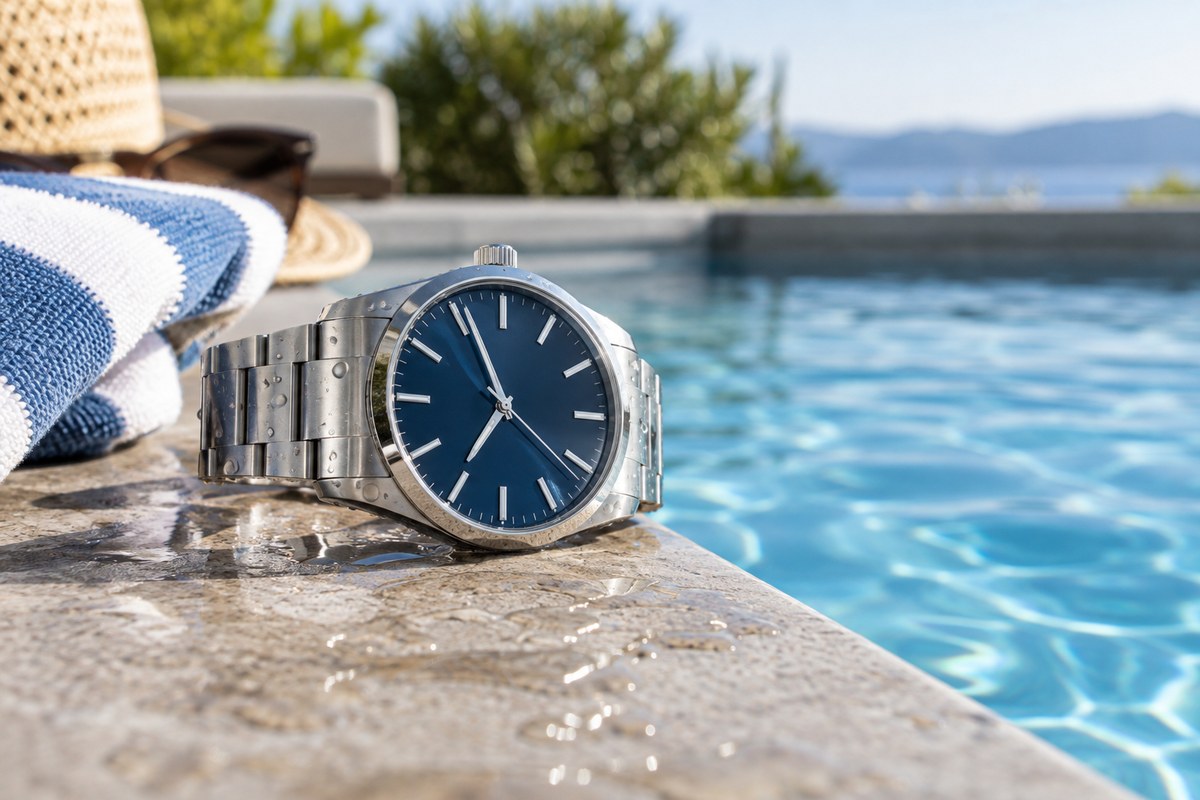
100m vs 200m Water Resistance: What Watch Ratings Actually Tell You
A 100m or 200m marking is a laboratory-rated pressure specification, not permission to dive to that depth in ordinary conditions. Use the exact manufacturer instructions, check crown and gasket condition, and distinguish everyday water resistance from a certified diver’s watch. The extra rating is useful margin, but it does not replace maintenance or correct use.
 Read the story ↗
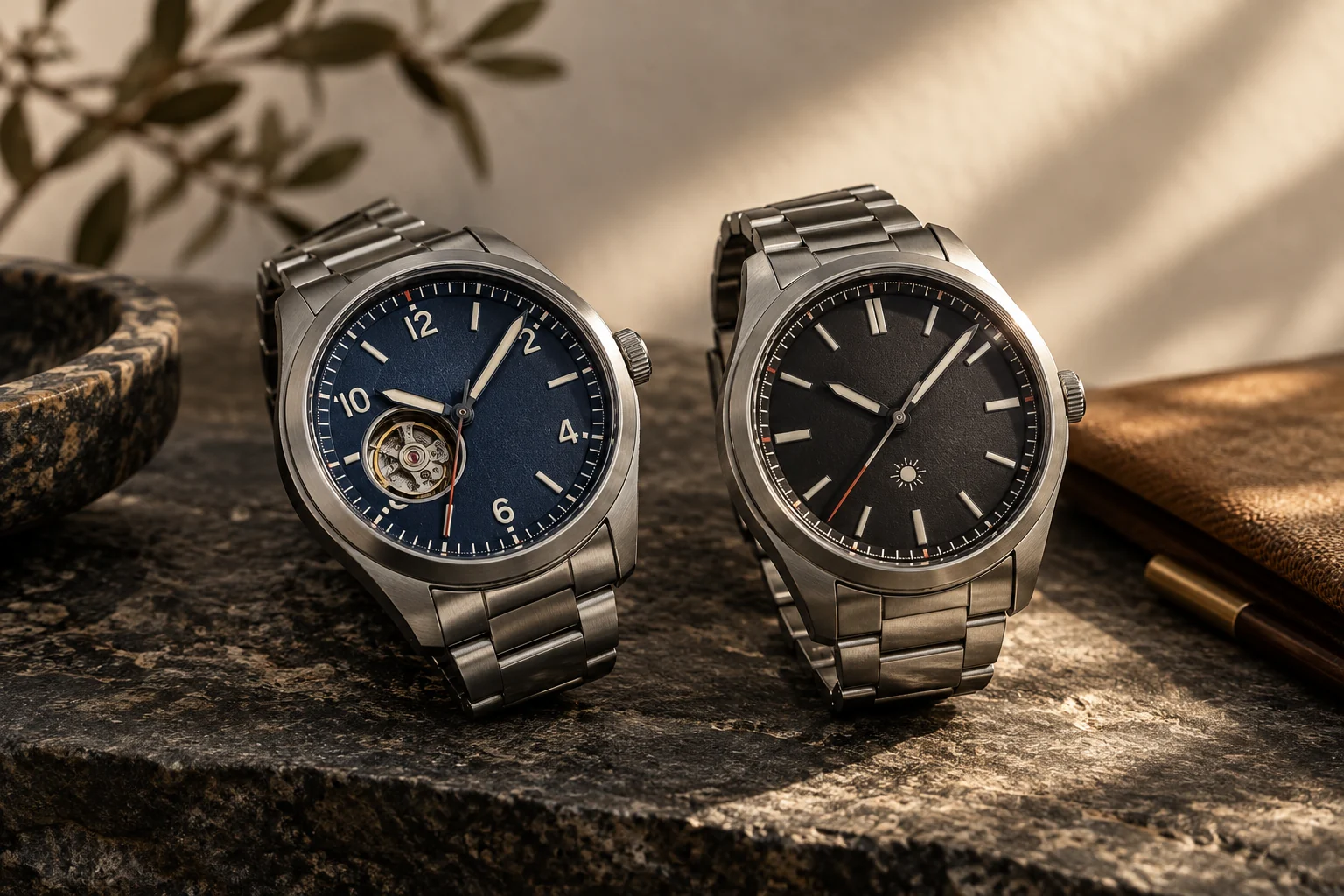
Automatic vs Solar Watch for Everyday Wear: Which Movement Fits Your Life?
A practical movement guide for choosing the charm of an automatic watch or the low-maintenance reliability of a light-powered watch.
 Read the story ↗
Best Field Watch for Everyday Wear: Why Simple Still Works
A field watch does not need a fictional expedition to earn its place. A busy ordinary day is a demanding enough brief.