Watches / A closer look
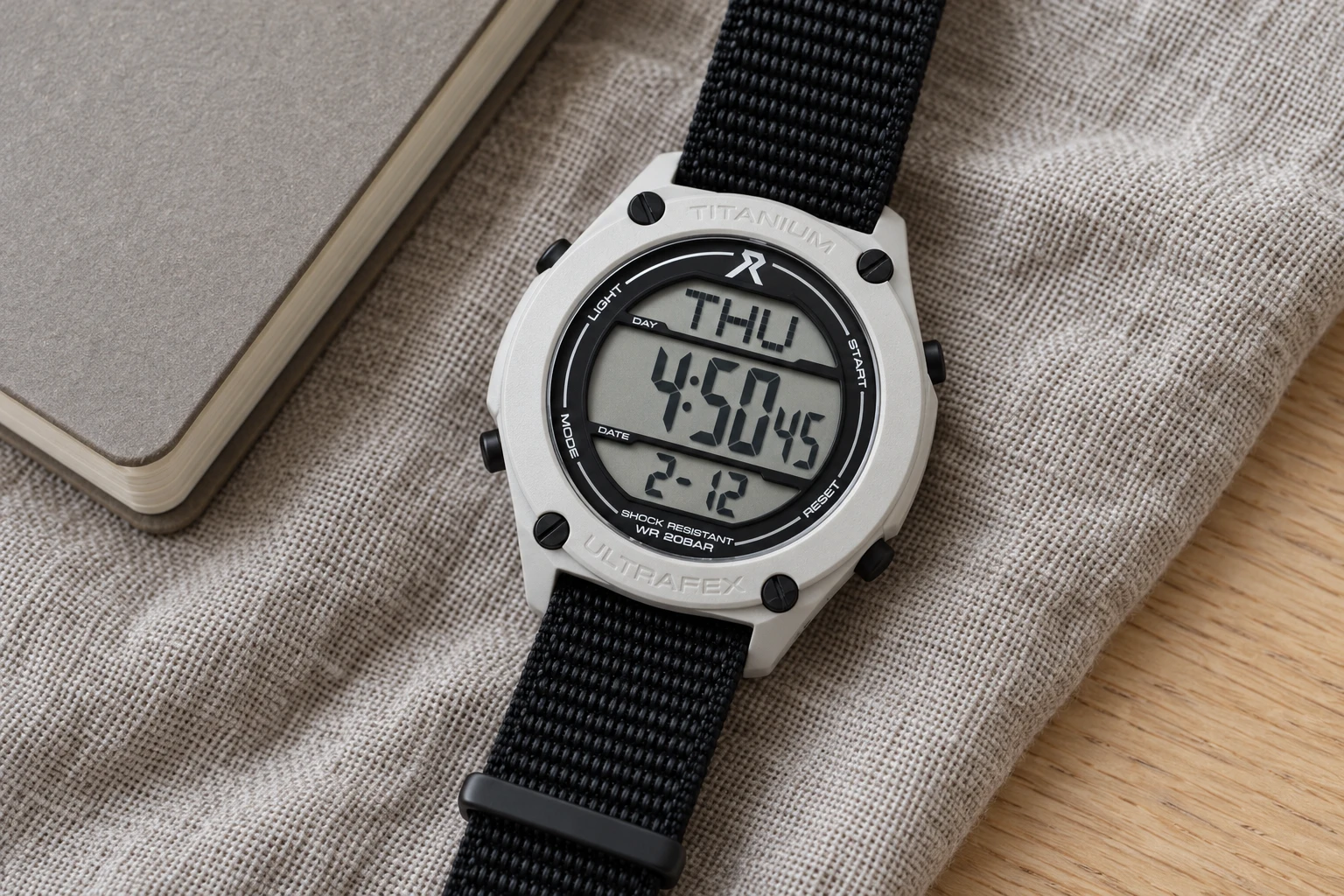
RZE UTD-8080: A Small Digital Watch Story With a Big Question
The interesting part is not another countdown timer. It is the idea that a newer watch need not make your older one obsolete.
Start here
The useful answer
As an Amazon Associate, we earn from qualifying purchases. How our links work ↗
The useful answer
RZE has announced an upgrade route for existing UTD-8000 owners alongside the UTD-8080. That is worth watching, but delivery dates, service terms and the actual need for the extra functions matter more than the novelty of the announcement.
| Your situation | The sensible next question |
|---|---|
| Own a UTD-8000 | Do the additional functions solve something you actually miss? |
| Considering a new UTD-8080 | Can you wait for the announced delivery window? |
| Need a dependable digital now | Would an established Casio already cover the routine? |
| Care most about long ownership | What support remains available after the initial purchase? |
A new watch usually arrives with a quiet instruction: admire this one, and start finding reasons to replace the one you already have. Different dial, revised movement, another anniversary. It is an effective way to keep a hobby moving. It is also why a fairly modest digital-watch announcement can feel more interesting than another spectacular mechanical complication.
RZE’s UTD-8080 raises a useful question. What if the exciting new part could go inside a watch somebody already owns? That question deserves more attention than a launch photograph. It touches the difference between collecting something because it is new and buying something because you expect to keep using it. Neither approach is wrong, but they lead to very different shopping decisions.
What RZE has actually announced
According to RZE’s announcement, its RZE-8080 digital module adds dual time, a timer, multiple alarms and an FSTN display. The white UTD-8080-ST is announced at US$399 with November 2026 delivery. Other versions are listed at US$299 for March 2027. Existing UTD-8000 owners are offered a US$100 module upgrade from January 2027. These are announced terms checked October 21, 2026, rather than promises from us about stock or delivery.
That is the factual centre of the story. The ownership question is what to do with it. Someone who already loves an older watch has a different decision from someone choosing a first digital. The first person is evaluating a service. The second is evaluating an entire product and a company’s ability to support it. Mixing those two situations makes an exciting announcement harder to judge clearly.
Upgradeable is a useful idea, not an automatic reason to upgrade
Imagine that your current digital watch already does everything you ask of it. It gives you the time, survives the commute and does not need attention every evening. An extra function can be interesting without being useful enough to pay for. Buying an upgrade simply because it exists recreates the same replacement habit in a slightly smaller box.
Now imagine that you regularly work across two time zones and keep reaching for your phone to check the other one. A second time display could remove a recurring irritation. The value comes from that repeated task, not from the number of functions printed in a launch announcement. Write down the inconvenience first. If you cannot name one, waiting is a perfectly strong decision.
A timer can matter more than an impressive specification
A countdown timer sounds ordinary until you think about how often ordinary tasks repeat. A short work interval, a break before returning to a screen, a reminder that the laundry is nearly done. A watch can handle these without inviting you into messages, feeds and notifications. The point is not that a phone is incapable. The point is that taking it out can change what happens next.
There is a catch. A function that is awkward to set may stay unused. Before buying any digital watch for its timer, read the operating instructions. Count the actions needed to set the interval you actually use. A well-chosen five-minute timer should be easier than a small argument with four buttons. We have not operated this module, so that is a question to verify rather than a conclusion to announce.
Readability is personal and surprisingly difficult to judge online
An attractive display photograph is not the same as a readable display on your wrist. Screen reflections, viewing angle, indoor lighting and the way you bend your arm all affect the experience. A carefully lit straight-on image removes many of the conditions that make a watch frustrating in daily use. That applies to expensive digitals as much as inexpensive ones.
Our practical buying advice is to look for more than the hero picture. Ask for ordinary-angle photographs and consult independent observations when they become available. If you need reading glasses, think about the smallest information you expect to read. Time digits may be clear while mode labels remain awkward. A brighter-looking advertisement cannot answer that individual fit question for you.
The ownership value is in the service, not the slogan
RZE says the older module remains covered and describes an authorised-service upgrade route. The meaningful part will be how that service works for an actual owner. A repairable object needs an accessible path between the person wearing it and the people who can work on it. An impressive promise is more useful when the instructions are clear and the practical steps are manageable.
Before sending a watch anywhere, establish the destination, expected turnaround, shipping responsibility and what happens if the case or seals need additional work. Keep a copy of the service description alongside the receipt. These are sensible questions for any watch service, not an accusation against this one. An ownership story becomes convincing through repeatable support, not through the confidence of the first press release.
There are two different kinds of future-proofing
One kind is functional. The watch continues to tell the time and remains useful even when nothing about it changes. The other is developmental. A manufacturer can improve something inside the same physical platform. The first can exist without the second, and the second is not especially valuable if the original object was unpleasant to wear.
This is why an upgrade programme should not distract from basic fit. You still need to like the case, the strap and the way the watch behaves under a sleeve. A theoretical future service cannot make an awkward present-day purchase comfortable. If a watch suits you now and has a credible support path, the combination is appealing. If it only suits the person you imagine becoming, take a little longer.
Preorders ask you to buy on a different kind of evidence
Buying an available watch and ordering an announced watch are different transactions. With an available model, you may be able to inspect owner photographs, read established instructions and compare several sellers. With an announced model, more of the decision rests on a company’s published plans. That does not make a preorder unreasonable. It changes the questions you should ask before paying.
Check cancellation terms, the stated delivery window, shipping destination and how delays will be communicated. Decide whether a change in timing would genuinely inconvenience you. Someone buying a watch for an upcoming trip has less flexibility than someone adding a future piece to a collection. Do not turn an estimated month into a personal deadline that the seller never agreed to meet.
Why the digital-watch story is bigger than smartwatches
The word digital can make people think immediately of apps, charging cables and a bright touchscreen. A conventional digital watch offers a different bargain. Its information is narrower and its interface is usually simpler. That can be a limitation or a benefit depending on what you want on your wrist. A device need not do less badly just because it does less overall.
For an enthusiast, the appeal can be quite specific: a self-contained timekeeping object with a distinctive case and a small set of useful functions. You do not have to pretend it replaces every fitness or communication feature of a connected watch. It can simply be the watch you prefer when you want to leave the rest of your digital life in your pocket.
The Casio comparison is about priorities, not declaring a winner
An established square G-SHOCK belongs in the conversation because it gives a buyer another route to an ordinary digital routine. In our Shop, the all-black DW-5600BB and the solar GW-M5610U represent different priorities. They are alternatives to investigate, not replicas of the RZE and not proof that one specification decides the entire purchase.
The useful comparison begins with your priorities. Do you want a restrained dark face, a positive display, solar ownership, a particular material or the small-brand story? Write the priorities in order before looking at prices. Otherwise a long specification list can quietly replace the reason you started shopping. An interesting new watch should earn its place against the routine you already understand.
What would make the upgrade story convincing over time?
The strongest follow-up reporting would be ordinary rather than dramatic. An owner sends a watch in, receives clear communication, gets the promised function changes and continues wearing the same familiar case. A few months later, the process is still available to the next owner. That would tell us more about the programme than a staged endurance scene.
We would also want to know whether the instructions remain easy to find and whether the distinction between the old and new modules stays clear in resale listings. Buyers should not have to guess which version is inside a watch. A service record, model identification and a clear description help both the original owner and whoever buys it later. Good documentation is part of a long-lived product.
A buying exercise that takes five minutes
Before choosing any new digital watch, write three columns on paper: what your current watch does well, what repeatedly annoys you, and what you want only because you saw it today. Put each desired feature in one column. The last column is allowed to exist. Enjoyment is a real reason to buy a watch. It is simply helpful to recognise it honestly.
Then sketch the actual cost of the decision. Include the purchase or service, any likely shipping, import charges where relevant and the possibility that you will keep your current watch anyway. This is not an investment calculation and it does not predict resale. It is a way to stop a small advertised upgrade from turning into an unexpectedly large shopping project.
What not to conclude from a launch announcement
We cannot conclude that an announced display is the clearest in its category, that a service programme will remain unchanged forever or that an attractive case makes every competing watch obsolete. Those claims require evidence beyond an announcement. We also should not reverse the mistake and dismiss a small brand simply because a much larger company offers a cheaper digital.
The fair position is curious and specific. The upgrade route is a concrete idea worth following. Its practical value will depend on delivery, support and whether the functions solve a real problem for the person wearing the watch. That gives future reporting something useful to check. It also gives you permission to enjoy the story without turning interest into an immediate order.
The second owner is part of the design question
An upgrade route becomes especially interesting when a watch changes hands. A second owner may not know which module was fitted originally, whether a service has been completed or which instructions apply. Clear documentation can make the difference between a confident used purchase and a watch that arrives with an interesting but unverifiable story. The programme is easier to understand when the physical object and its service history remain connected.
If you eventually sell an upgraded watch, retain the service record and describe the version accurately. If you buy one used, ask for that record rather than treating a seller’s short description as proof. This is not a prediction about resale value. It is a practical consequence of making a product changeable: the identification system needs to remain understandable after the original buyer is no longer explaining it.
There is also a useful distinction between repairing an old function and purchasing a new one. An owner with a fault should first establish the appropriate support route rather than assuming a paid upgrade is necessary. An owner with a working watch can evaluate the upgrade as an optional change. Keeping those conversations separate prevents a promising ownership idea from becoming confusing at the moment somebody actually needs help.
For the wider watch industry, that is the question worth following. Can a product remain recognizable, supported and well documented while its internal capability changes? We do not need to declare a revolution before the service begins. We can simply ask for evidence of a straightforward process, then revisit the story when owners have had the opportunity to use it. That makes follow-up reporting more useful than repeating a launch announcement with stronger adjectives.
The watch you keep can be the interesting one
Watch collecting often rewards the next thing. An upgradeable digital invites a slightly different kind of enthusiasm: paying attention to what happens after the first purchase. That is a good direction for the conversation, even for readers who never intend to buy this particular model. Ask a better ownership question and the whole shortlist can improve.
If you need a digital now, compare established options by fit and daily use. If you already own the earlier RZE, wait for the complete service instructions and decide whether the added functions matter. If you are considering the new model, check the current announcement and order conditions directly. A thoughtful purchase can be exciting without being hurried, and an interesting watch story does not need to end with everybody buying the same watch.
The questions worth asking
Before you decide.
Is the UTD-8080 already shipping?
As checked October 21, 2026, RZE describes November 2026 delivery for the white ST version. Treat that as an announced schedule and confirm the current order terms.
Must UTD-8000 owners upgrade?
No. RZE says the original module remains covered by its guarantee. Additional functions are a reason to consider the service, not a requirement to keep using the watch.
Is this a hands-on review?
No. This is reporting and ownership analysis based on RZE’s published information. We have not measured display performance, battery life or shock resistance.
Featured in this guide
The next good question
Keep exploring.
 Read the story ↗
Best Small Automatic Watches Under $300: A Fit-First Shortlist
For a smaller-wrist automatic under $300, prioritize case diameter, lug-to-lug length, thickness and lug shape before movement names or brand prestige. A compact watch with a short lug span can wear smaller than its diameter suggests. Prices and availability change, so treat this as a measurement-led shortlist and confirm exact dimensions on the current listing.
 Read the story ↗
Why Does My Automatic Watch Stop Overnight? A Practical Checklist
A quiet day can leave less energy than you expect. Start with a controlled observation before buying a winder or assuming the movement is broken.
 Read the story ↗
Best Automatic Watches Under $200: A Budget-Honest Buying Guide
A smaller shortlist. A complete bill. A watch you will actually wear.