Watch Size Guide: 38mm vs 40mm vs 42mm on the Wrist
Case diameter is only the beginning. This guide explains why lug-to-lug, dial opening, thickness, and wrist shape decide how a watch really wears.
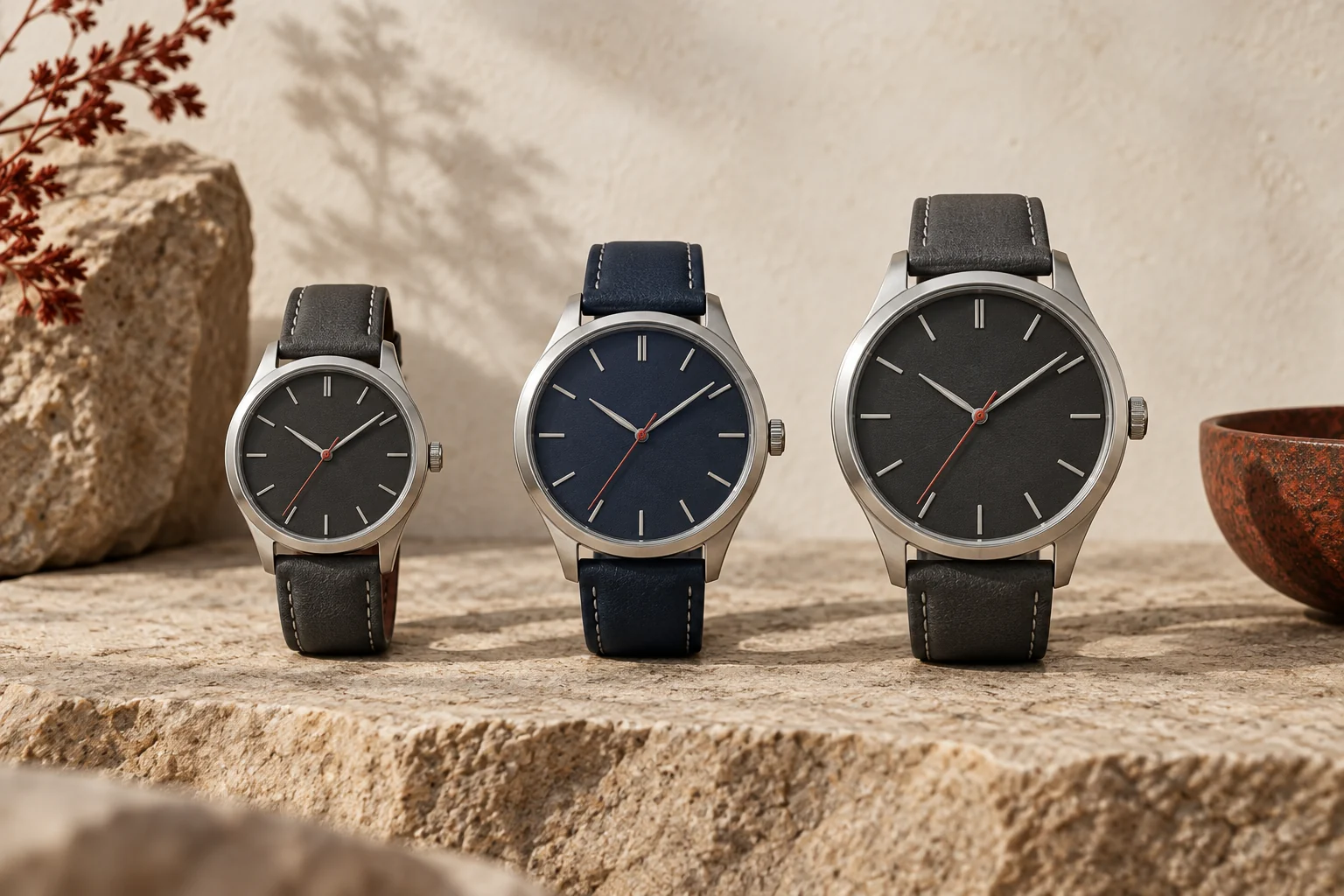
A 38mm watch is the safest compact choice for smaller wrists, dressier proportions, and buyers who dislike visual overhang. A 40mm case is the most versatile middle ground for many everyday watches. A 42mm case works well when the wrist is broader, the bezel reduces the visible dial, or bold legibility is the goal. Diameter never tells the full story: compare lug-to-lug length, thickness, dial opening, bracelet shape, and the flat top surface of your wrist before deciding.
| Case diameter | Typical visual effect | Often works best when |
|---|---|---|
| 38mm | Compact, classic, dial-forward | Wrist is smaller or style is understated |
| 40mm | Balanced, contemporary, versatile | You want one everyday size across styles |
| 42mm | Bold, legible, more wrist presence | Wrist is broader or bezel is visually heavy |
| Any size | Can wear larger or smaller than stated | Lug-to-lug and dial opening change the result |
Why diameter alone produces bad advice
Watch diameter is easy to publish and easy to compare, so it dominates sizing conversations. Yet two 40mm watches can look unrelated on the wrist. A slim dress watch with a narrow bezel exposes a large dial and may appear broad. A 40mm dive watch with a thick timing bezel has a smaller visible dial and can wear more compactly. Case shape, color, crown, crystal, and bracelet also influence how much visual space the watch occupies.
The wrist is not a perfect circle either. Two people with the same measured circumference can have different flat top widths. A flatter wrist may support longer lugs, while a rounder wrist can make those lugs approach the edge sooner. This is why rigid charts based only on wrist circumference are rough starting points. The real task is matching the watch’s contact points and visual mass to the surface that carries it.
Lug-to-lug is the measurement to find next
Lug-to-lug measures from the tip of the upper lugs to the tip of the lower lugs. It approximates how much length the case occupies along the wrist. When those tips extend beyond the flat top of the wrist, the watch may overhang and the strap can drop awkwardly. Short curved lugs can make a larger diameter surprisingly wearable; long straight lugs can make a smaller diameter feel broad.
Bracelets complicate the number. A fixed first link or male end link can extend beyond the published case length, creating an effective lug-to-lug that is longer than the specification. Flexible female end links usually conform sooner. Product side photographs, wrist shots from comparable wrist sizes, and a measurement of the first rigid bracelet span are useful. If buying online, ask the seller or brand when that dimension is missing.
How 38mm tends to wear
A 38mm case often feels composed and easy. It can slide under a cuff, keep weight centered, and leave visible wrist around the case. This size suits simple field watches, compact divers, and dress watches, but the genre changes perception. A 38mm watch with a wide open dial may look closer to a 40mm sports watch with a thick bezel. Light dials also tend to appear larger than dark dials because their boundary is more visually prominent.
Do not assume 38mm is only for a small wrist. Many people with larger wrists prefer the vintage proportion and comfort. The choice communicates restraint rather than inadequacy. The possible downside is legibility when the dial is crowded with subdials or a rotating scale. Check the actual hour-marker size and hand contrast. A clean 38mm three-hander can be easier to read than a busy 42mm chronograph.
Why 40mm is the flexible center
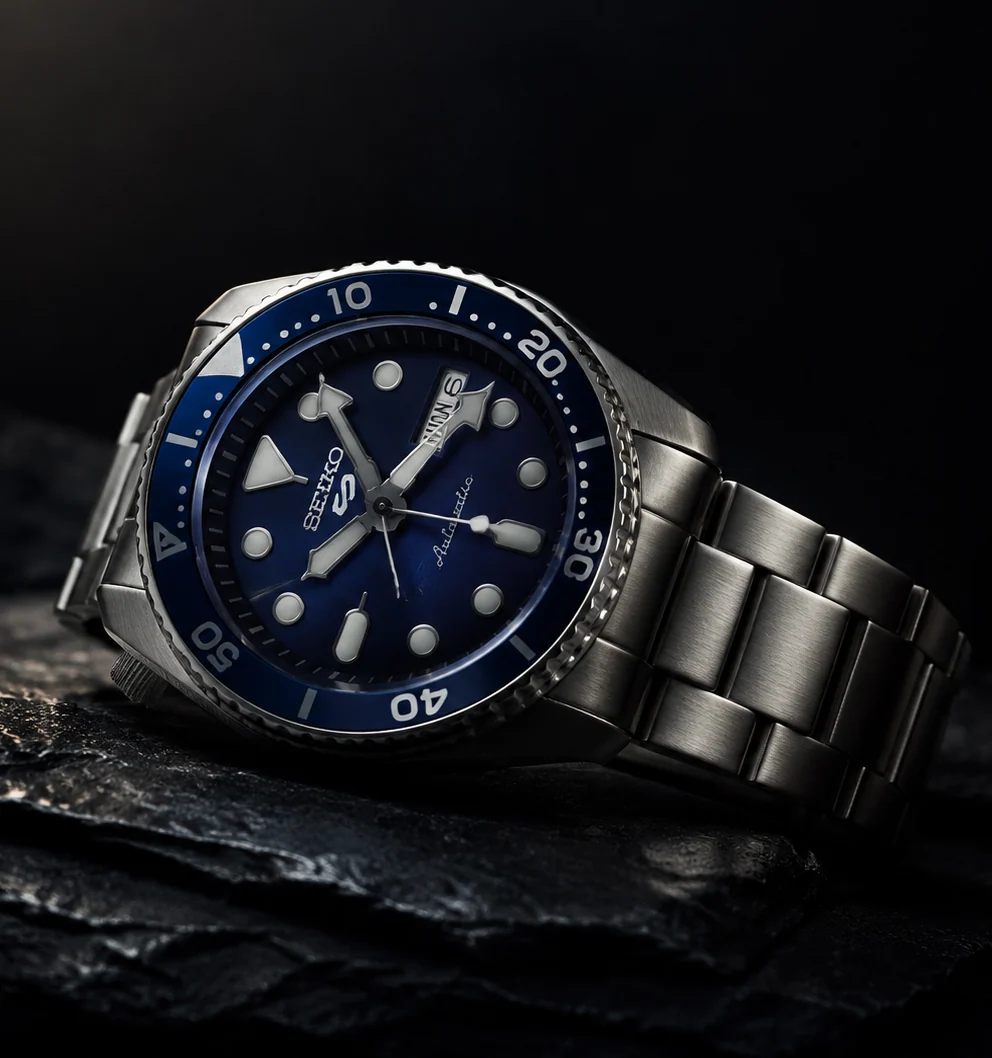
Forty millimeters has become a useful everyday reference because it can carry strong sports-watch details without dominating many wrists. It gives brands room for clear markers, practical lume, a date window, and water-resistant construction while remaining compatible with a jacket cuff. For buyers who cannot try on a watch, a reasonably short-lugged 40mm model is often a lower-risk choice than chasing either extreme.
Still, “40mm” does not guarantee moderation. A thin bezel and long lugs can make the watch appear large. A thick case can make it feel top-heavy even when the footprint fits. Compare thickness with diameter and look at how the case back sits. A watch that carries most weight above a narrow contact patch can wobble unless the strap is tight, while a broad curved case back may remain stable at the same listed thickness.
When 42mm makes sense
A 42mm case provides visual presence and can support large luminous markers, timing bezels, chronograph registers, and protective crown structures. On a broad wrist it may look balanced rather than oversized. On a dive watch, the visible dial can remain moderate because the bezel occupies several millimeters around it. Dark cases and dials can further reduce apparent size, while polished surfaces and bright dials emphasize it.
The risks are overhang, crown contact, cuff interference, and weight. Pay attention to the crown position and guards if the watch will be worn on the left wrist. A short 42mm cushion case may fit better than a long 40mm field case. If the watch uses a bracelet, confirm that enough links can be removed and that the clasp offers useful adjustment. A large watch that slides to the outside of the wrist will feel larger still.
A reliable online sizing method
Measure wrist circumference and the flat top width with a flexible tape or paper strip. Record the diameter, lug-to-lug, thickness, and first rigid bracelet span of a watch you already know fits. Compare new candidates with that reference rather than a generic chart. Print a simple top-view outline at actual size, cut it out, and place it on the wrist. This will not reproduce thickness or curvature, but it reveals obvious footprint problems.
Finally, decide what proportion you want. A dress watch can intentionally look small; a tool watch can intentionally look bold. There is no rule requiring the lugs to fill a fixed percentage of the wrist. Comfort and coherence are the limits. If the case stays centered, the lugs do not visibly overhang, the crown does not dig in, and the watch expresses the intended style, the size works—even if an internet chart suggests another number.
The decision in one minute
- Choose 38mm: for compact comfort, classic proportion, cuffs, smaller wrists, or a deliberately understated look.
- Choose 40mm: for an adaptable everyday size and the broadest middle-ground selection.
- Choose 42mm: for stronger presence, broad wrists, large markers, thick bezels, and tool-watch character.
- Check lug-to-lug: before every online purchase, especially when the bracelet has rigid end links.
Frequently asked questions
What watch size is best for a 7-inch wrist?
Many 38–42mm watches can fit, depending on lug-to-lug length and wrist shape. Start around 40mm, then compare measurements with a watch you already like.
Should watch lugs stay inside the wrist?
Visible overhang is a useful warning sign because it can affect comfort and strap drape. Style remains personal, but lugs that sit within the flat wrist surface usually wear more securely.
Does a light dial look larger?
Often yes. Bright dials and thin bezels emphasize the dial opening, while dark dials and thick bezels can make the same case diameter appear smaller.
Is thickness as important as diameter?
Yes. Thickness affects cuff clearance, weight distribution, and how prominently the watch sits. Case-back shape and strap position also change stability.
How this guide was built
This is a research-based editorial guide, not a claim of laboratory testing or long-term ownership of every product mentioned. We compared manufacturer documentation, standards and workplace guidance where relevant, then translated those details into practical buying questions. We avoid inventing test results, and we link the primary references below so readers can verify specifications and model-specific limits.