Matte vs Glossy Monitor in a Bright Room: Manage Reflections First
In a bright room, a matte monitor finish is often easier to live with because it diffuses reflections, while glossy screens can look more vivid in controlled lighting. Neither finish makes glare disappear. First position the display perpendicular to windows, adjust blinds and test at your normal seat; then compare the exact coating and room conditions.
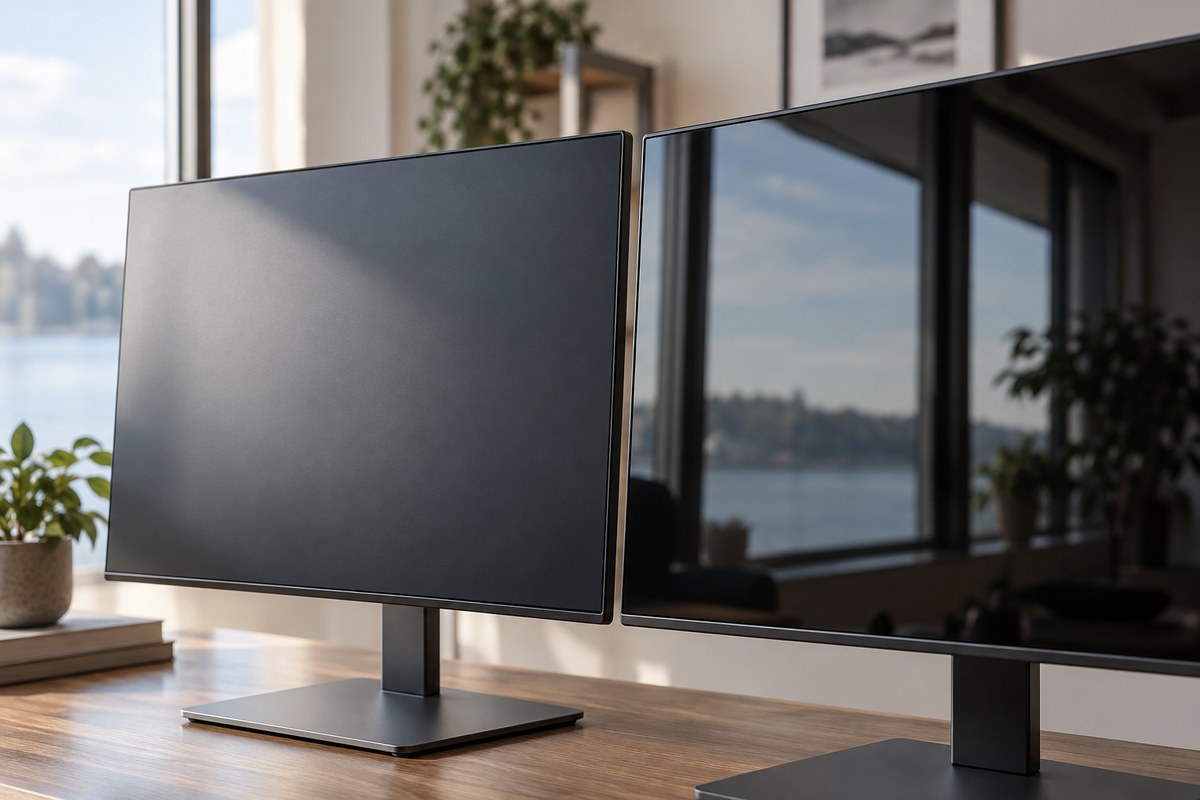
In a bright room, a matte monitor finish is often easier to live with because it diffuses reflections, while glossy screens can look more vivid in controlled lighting. Neither finish makes glare disappear. First position the display perpendicular to windows, adjust blinds and test at your normal seat; then compare the exact coating and room conditions.
| Option | Strength | Tradeoff |
|---|---|---|
| Matte finish | Diffuses many reflections | Can look less glossy or slightly textured |
| Glossy finish | Crisp, vivid appearance | Shows direct reflections more clearly |
| Placement | Often the highest-impact fix | Depends on room and window direction |
What to compare first
A matte coating scatters incoming light, which can make a reflected window less mirror-like. That diffusion may slightly soften the image or reduce perceived contrast for some viewers. The degree varies by coating, so a panel review or in-person comparison is more useful than a simple matte/gloss label.
For a reader comparing matte vs glossy monitor bright room, this detail is most useful when it is checked against the exact item rather than inferred from a category label. Write down the model number, read the maker’s current specification, and compare the measurement or feature with your own setup. If the listing leaves a key point unclear, treat that uncertainty as a reason to verify before buying.
How this affects everyday use
Glossy screens can present a clean-looking image in a controlled room and may appear more saturated to some people. In a room with windows, ceiling lights or a lamp behind the user, the surface can show distinct reflections. The same screen can look excellent at night and distracting at noon.
Turn this into a simple shopping check: note what you currently own, what problem you want to solve, and the one measurable change that would count as an improvement. Compare that against the exact product page and its return terms. A familiar brand or attractive image cannot answer questions about fit, compatibility, care, or whether the item suits your actual routine.
Check the exact specification
Map the light sources from your seated position. OSHA suggests placing a monitor perpendicular to a window to reduce glare. If possible, move the screen before shopping, then close blinds or reposition a lamp. A different orientation can improve an existing display without sacrificing color appearance.
The practical tradeoff is personal: the “best” choice depends on the room, wrist, body, equipment, weather, and habits behind the search. Use this point to narrow the shortlist, then evaluate two or three current options using the same criteria. Consistent comparison makes differences visible and helps avoid paying extra for features that do not solve the problem described in this guide.
Fit the choice to your setup
Brightness is not a complete cure. Raising it can make content more visible against ambient light, but a bright panel in a dim environment can feel harsh. Check whether the monitor supports a comfortable brightness range and whether the automatic sensor can be disabled or adjusted.
Before checkout, confirm the precise version, current price, seller, stock, included accessories, warranty and return policy. Product families change and marketplace listings can group variants. Specifications and images on the live listing should take precedence over any older editorial reference. This guide is a decision aid, not a guarantee that every current offer has identical features.
Avoid common buying assumptions
Consider task type. Text-heavy work benefits from low distraction and readable contrast; photo work may favor a finish that preserves perceived image punch but needs controlled lighting. If you frequently review color, evaluate the panel’s uniformity and color behavior as well as the finish.
A sensible low-risk test is to measure or inspect the part of your setup this recommendation affects before ordering. Keep the box until you have checked fit and operation. If the product does not improve the issue without introducing a new one, use the stated return process. That is more dependable than trying to predict personal comfort from a product photo alone.
A low-risk way to decide
Screen size and viewing angle also change reflection geometry. A large glossy monitor can reflect a larger patch of a window, while tilting the panel may move the reflection but worsen posture. Adjust seat, screen and window treatments together rather than angling the monitor away from the body.
Do not overvalue a single headline number. A specification helps narrow options, but the complete experience also depends on materials, design, compatibility, manufacturing variation and maintenance. Look for the maker’s manual or support page for the exact reference, and compare independent evidence where the difference matters to your decision.
Final pre-purchase checklist
If buying online, use the return window as a real-room test. Check the display at the time of day you work, with the same lamps and blinds. Keep protective film on until setup is confirmed and follow the maker’s cleaning instructions for the coating.
This guide avoids claiming that the editorial team tested or owned every item. The image is generated editorial illustration and is not a photograph of the product in the link. We use the image to set the scene; always rely on the current manufacturer and retailer listing for product appearance, exact dimensions, available colors and included features.
A practical comparison before you buy
Make a short two- or three-option comparison using the real constraint behind “matte vs glossy monitor bright room.” Record the exact reference or version, one feature that matters, one tradeoff you can accept, and the return period. This keeps the decision anchored to your own needs and makes differences between current listings easier to spot. If two products appear equal, favor the clearer documentation, better fit and more dependable seller terms over a dramatic but unverified headline claim.
The affiliate link below opens a search for relevant current listings, not a promise that a single item is best or in stock. Search results can include variants, marketplace sellers and changing prices. Open the precise offer, compare the model number with the manufacturer’s page, and read recent buyer feedback for recurring fit or compatibility concerns. We do not quote review averages as research data because ratings change and listings may combine versions.
The decision in one minute
- Choose by use: In a bright room, a matte monitor finish is often easier to live with because it diffuses reflections, while glossy screens can look more vivid in controlled lighting. Neither finish makes glare disappear. First position the display perpendicular to windows, adjust blinds and test at your normal seat; then compare the exact coating and room conditions.
- Check the exact version: For matte vs glossy monitor bright room, confirm the specific model, listing details and current manufacturer guidance.
- Test the fit: Measure your own desk and computer setup before ordering.
- Keep expectations honest: Prices, stock, seller, specifications and return terms can change; verify them on the current product page.
Frequently asked questions
Is matte always better near a window?
It often helps, but a direct reflection can still distract. Screen placement and window angle matter.
Does glossy look sharper?
Some viewers perceive a clearer, more vivid image, but this is subjective and varies with panel coating and room light.
Can brightness solve glare?
A brighter screen may help in some conditions but can cause discomfort and higher power use; placement is usually the first step.
How this guide was built
This is a research-based editorial guide, not a claim of laboratory testing or long-term ownership of every product mentioned. We checked manufacturer, standards or workplace references where relevant and translated them into practical buying questions. We do not invent customer-review statistics. Confirm current availability, specifications, seller, price and return terms on the live product page.
Affiliate disclosure
Links to Amazon may earn NextGen Essentials a commission from qualifying purchases at no additional cost to you. The illustration is generated and is not product photography. Confirm the exact item details on the linked listing.